
Not all brushing routines are created equal. While standard advice suggests brushing twice a day for two minutes, this one-size-fits-all approach overlooks individual needs, such as gum sensitivity, plaque hotspots, or inconsistent technique. In this article, we’ll explore how to craft a personalized brushing routine—one that adjusts to your unique habits, mouth zones, and lifestyle. With the help of smart toothbrushes like BrushO, you can transform brushing into a precision-based wellness ritual.
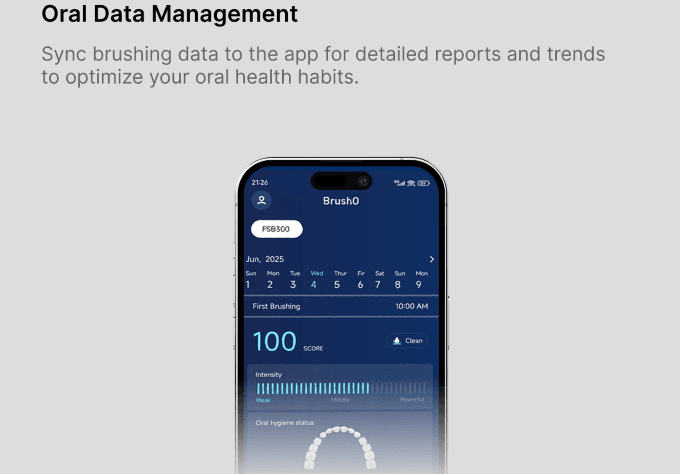
Most people brush by habit, not by design. That means they may miss:
• Hard-to-reach areas
• Brushing too hard or too soft
• Favoring one side of the mouth
• Ignoring early signs of gum inflammation
Personalization closes this gap. Just like skincare or fitness, oral care should reflect your unique biology and behavior patterns. Whether you have sensitive gums, wear braces, or just tend to rush your evening routine, a custom plan ensures long-term oral health—not just surface-level cleanliness.
Divide your mouth into key areas: outer, inner, and chewing surfaces of upper/lower left and right teeth. Each zone needs equal attention. Most people overbrush their dominant side and neglect the opposite one.
✅ BrushO Tip: BrushO divides your mouth into 6 zones and 16 surfaces, and tracks real-time coverage, so you never miss a spot.
Using too much force can cause gum recession and enamel wear. Too little may leave plaque behind.
✅ BrushO Tip: The AI engine detects pressure and gives haptic feedback when you’re brushing too hard or too soft, helping you find the ideal balance.
Different teeth require different care:
• Sensitive Teeth: Use a gentle mode with softer bristles.
• Stain-Prone Areas: Focus on whitening mode with deeper polishing.
• Braces or Implants: Use a mode designed for precision and gum protection.
✅ BrushO Tip: Smart toothbrushes offer customizable modes based on your brushing history and goals.
The “2 minutes twice a day” rule is a baseline. But if you have orthodontic appliances or poor oral history, you may need longer sessions or extra mid-day brushing.
✅ BrushO Tip: Use the app’s reminder function to schedule brushing, rinsing, or flossing throughout your day.
Consistency beats perfection. Use your brushing report to spot trends:
• Are you skipping weekends?
• Is plaque accumulating in certain zones?
• Are you rushing the evening session?
✅ BrushO Tip: The habit tracker visualizes streaks, progress, and coverage accuracy, helping you improve week by week.
Modern smart toothbrushes like BrushO eliminate guesswork through:
• AI-powered brushing analysis
• Surface-by-surface zone detection
• Smart reminders & habit scores
• Reward system with $BRUSH tokens
This tech turns oral care into a game-like, rewarding experience while delivering real-time improvements in gum health, plaque control, and user confidence.
A personalized brushing routine is more than self-care—it’s preventive healthcare. It helps:
• Reduce dentist visits
• Lower risk of cavities and gum disease
• Build sustainable habits for lifelong oral wellness
You don’t need a new set of teeth—you need a smarter brushing strategy. Personalizing your routine with the help of AI tools like BrushO transforms oral care from a chore into a customized, goal-driven journey. Start small, stay consistent, and let data guide you.
Jan 21
Jan 21

The uncontrolled hypertension is the condition that the dental practice meets in the patient who presents with the elevated pressure that the guideline does not permit for the elective treatment, and the management of this patient requires the deferral of the dental procedure and the referral to ...

The closure of the extraction space in the orthodontic treatment is the phase that demands the careful selection of the mechanics and the monitoring of the force that the appliance delivers. The sliding mechanics that rely on the continuous archwire and the power chain that connects the brackets ...

The transverse discrepancy of the maxilla is the problem that the crowding and the posterior crossbite often hide, and the maxillary expansion is the treatment that addresses the width of the arch rather than the position of the individual tooth. The clinician who diagnoses the constriction early...

The local anaesthesia is the daily procedure that the modern dentistry treats as the routine, and the complications that follow it range from the transient and the trivial to the permanent and the serious. The clinician who injects by the habit without the anatomy in the mind is the clinician who...

The hypertension is the condition that the dental practice meets in the every day, and the patient who carries the elevated pressure without the symptoms is the patient who presents the risk that the chair-side measurement reveals. The dental team occupies the position that no other profession ho...

The glass-ceramic crown has become the default restoration for the anterior and the many posterior teeth, and the material selection within the family is the decision that determines the strength, the aesthetics, and the longevity of the result. The lithium disilicate, the leucite, and the zircon...

The dental phobia is the extreme form of the dental fear that prevents the patient from attending the treatment that the oral health requires, and the management of the phobia demands the skill that extends beyond the routine behaviour guidance. The systematic desensitization, the exposure therap...

The dental fear of the child is the condition that shapes the attitude for the lifetime, and the clinician who manages the first visits with the skill builds the patient who attends the recall without the dread. The fear that the child develops follows the many sources, and the practice that reco...

The patient with controlled hypertension is the patient who requires the dental care that the oral health demands and the treatment that the blood pressure permits, and the clinician who manages the controlled case safely follows the guideline that the evidence supports. The controlled hypertensi...

The ceramic veneer is the restoration that the aesthetic dentistry depends on, and the bond that retains the veneer on the enamel is the critical link that determines whether the restoration survives the function or fractures and debonds. The clinical technique from the preparation to the cementa...


Address: RM 1427, 14/F RADIO CITY 505, HENNESSY RD CAUSEWAY BAY, HONG KONG
Code: 000000
Phone: +852-53758652
Email: customerservice@brusho.com
