
Brushing your teeth doesn’t have to be a chore. By turning oral hygiene into a fun, engaging, and rewarding experience, you can build long-lasting habits that benefit your health and boost motivation. This article explores proven ways to make brushing enjoyable for kids and adults alike—from gamification and smart feedback to rewards systems like BrushO Points. Whether you’re a parent trying to instill healthy habits in your child, or an adult looking for motivation to brush better, the right approach and tools can turn your daily routine into something to look forward to.
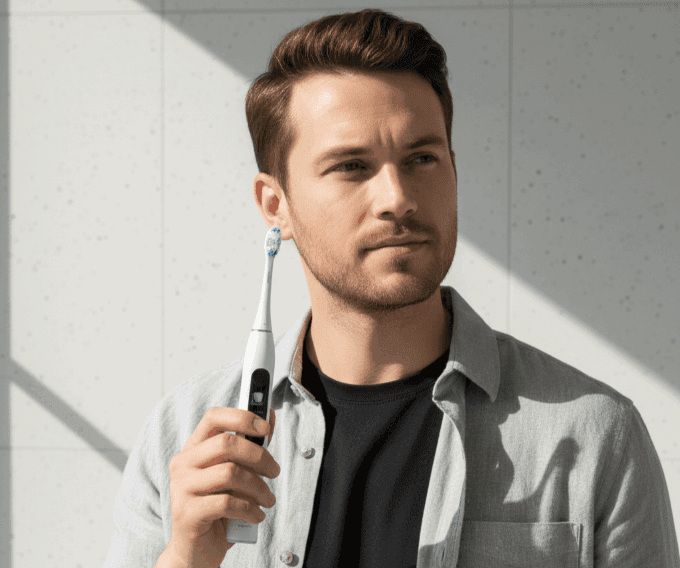
For many people—especially children—brushing teeth can feel repetitive, boring, or even stressful. Reasons include:
• Lack of immediate reward (unlike sugary snacks!)
• Poor brushing technique leading to discomfort
• No real-time feedback or sense of accomplishment
• The feeling that it’s “just a task,” not a positive routine
But what if brushing could feel more like a game—or a personal challenge you want to win?
Gamification involves applying game elements to non-game activities to increase engagement. In brushing, this could mean:
• Earning points for brushing consistently
• Unlocking badges for technique improvement
• Seeing progress charts that reward improvement
• Personalized feedback after each session
BrushO’s AI-powered toothbrush and app leverage these elements to make brushing both enjoyable and motivating.
With BrushO, users can earn points every time they brush, following proper technique and completing sessions. These points can be redeemed for real value, such as:
• Free brush head refills
• Exclusive access to promotions or giveaways
• Entry into raffles or loyalty tiers
• Participation in seasonal brushing challenges
This creates a direct connection between healthy habits and tangible rewards, driving consistent engagement.
🎯 For Kids:
• Let them pick their brush color or design
• Use storytelling or character voices while brushing
• Play their favorite song for a 2-minute timer
• Track their brushing on a fun sticker chart or app
• Celebrate small wins (“7 days in a row!”)
🎯 For Teens:
• Use tech-powered tools like smart toothbrushes with scoring
• Let them compare scores with family members
• Tie brushing performance to digital rewards or privileges
🎯 For Adults:
• Set personal goals (“No missed nights for 30 days!”)
• Join brushing challenges in the BrushO app
• Use data reports to track and improve technique
• Enjoy the self-care benefits of clean teeth and fresh breath
Studies show that positive reinforcement is more effective than punishment in forming habits. By associating brushing with:
• Instant feedback
• Sense of achievement
• Progress tracking
• Tangible benefits
Users are more likely to stick to the habit and feel good about it—leading to better oral and overall health outcomes.
BrushO uses FSB (Fully Smart Brushing) technology to:
• Detect which zones and surfaces are missed
• Evaluate pressure, duration, and angle in real time
• Give users a performance score and improvement tips
• Reward users with BrushO Points based on brushing quality and consistency
• Send daily/weekly reports via app to reinforce positive habits
This smart feedback loop keeps users informed, empowered, and excited to improve.
Brushing doesn’t have to feel like a task—it can be a game, a reward, and a form of self-care. With innovative tools like BrushO, you can turn a mundane routine into something you and your family look forward to. Remember: when brushing becomes fun, it also becomes effective and sustainable.
Jan 28
Jan 28

The posterior maxilla is the most demanding site in implant dentistry, because the pneumatized maxillary sinus frequently leaves the clinician with less bone than the implant requires. Maxillary sinus augmentation, the surgical procedure that raises the sinus floor to create vertical bone, has be...

The rubber dam is the oldest and still the most effective isolation device in restorative dentistry, and its reputation as an inconvenient extra step survives among practitioners who have never measured the time it actually saves. The dam isolates the field from the saliva, the tongue, and the ch...

The margin is the most vulnerable line in fixed prosthodontics, because it is the only boundary between the prepared tooth, the restoration, and the oral environment that the clinician cannot fully seal by effort alone. A restoration that fits seamlessly at the margin resists leakage, caries, and...

The masticatory system is built for function, yet much of its damage comes from habits that serve no purpose. Parafunctional habits, the clenching, the grinding, and the tongue pressing performed outside of normal function, sit behind much of the tooth wear, the temporomandibular pain, and the my...

Chronic mouth breathing in the growing child is seldom a dental problem in origin and almost always a facial one in consequence. The child who sleeps with the mouth open bypasses the physiologic benefits of nasal respiration, and the posture that the airway forces upon the tongue, the mandible, a...

The immediate denture is the prosthesis placed on the day the teeth are extracted, sparing the patient the edentulous interval the conventional denture imposes and preserving the occlusal vertical dimension, the facial support, and the appearance through the transition. The clinical literature ha...

The Class III malocclusion in the growing child carries a special urgency, because the maxillary deficiency that marks the pattern does not correct itself and the window for the growth-modifying treatment closes with the skeletal maturity. Elastic protraction, the orthopedic therapy that pulls th...

The denture is the only prosthetic device in medicine that its owner is expected to wear daily and to clean personally, yet it is also the device most commonly neglected until the signs of disease appear. A biofilm that forms on the acrylic base within hours is a reservoir of candida and bacteria...

The complete denture stands or falls on the impression, because the impression determines how well the base follows the mucous membrane and how evenly the occlusal load is distributed across the basal seat. For a century the profession has argued about whether the impression should record the muc...

The all-ceramic crown has moved from a niche product to the default restoration for the anterior single tooth in a single clinical generation, driven by patient demand for metal-free appearance and by materials that now survive functional loading as reliably as their metal-ceramic predecessors. A...


Address: RM 1427, 14/F RADIO CITY 505, HENNESSY RD CAUSEWAY BAY, HONG KONG
Code: 000000
Phone: +852-53758652
Email: customerservice@brusho.com
