
Think your brushing routine is just a two-minute task? Think again. If you’re using a smart toothbrush like BrushO, every brushing session creates a data-rich report—one that reveals more about your habits, risks, and long-term dental health than you might expect. This article breaks down what your brushing report says about you, and how it can help you improve your smile.
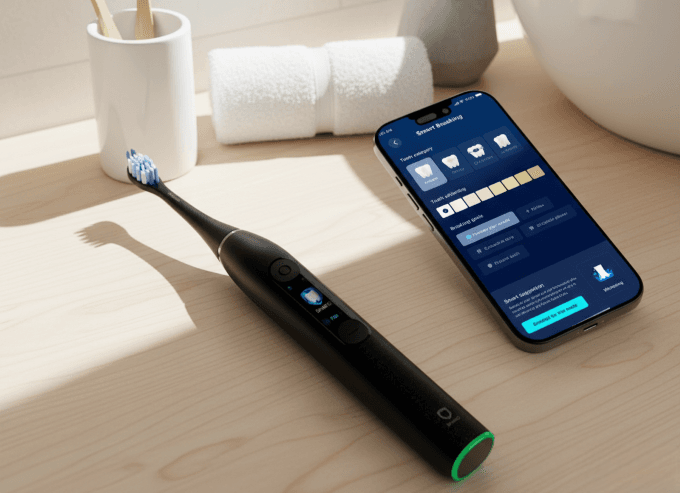
A brushing report is a summary of your oral care performance, automatically generated by your AI-powered smart toothbrush. With BrushO, this report includes:
• Time spent in each zone of the mouth
• Coverage accuracy across 6 zones and 16 surfaces
• Pressure levels applied during brushing
• Brushing frequency, consistency, and skipped sessions
• Habit streaks and daily performance scores
What was once a matter of guesswork is now measurable. And it turns out, that data tells a very personal story.
A good smile is built on habit, not hype. Your report shows:
• How often you brush
• If you miss morning or evening sessions
• Which days you tend to forget
Insight: Inconsistent brushing leaves you vulnerable to plaque buildup, bad breath, and gum inflammation. BrushO flags skipped sessions so you can fix patterns early.
Even if you brush every day, poor technique can undermine your efforts. Your report shows:
• Zones frequently missed (like molars or the gumline)
• Overbrushing certain areas at the expense of others
• Imbalanced pressure, which can cause enamel erosion or gum recession
Insight: The BrushO app maps your brushing patterns visually, so you can see where you’re going wrong—and fix it in real time.
Based on repeated behaviors, the report may reveal risk trends:
| Brushing Pattern | Associated Risk |
| Skipping tongue cleaning | Bad breath |
| Consistently high pressure | Gum recession, enamel wear |
| Poor lower molar coverage | Cavities in hard-to-reach areas |
| Brushing <2 minutes | Incomplete plaque removal |
Insight: These subtle trends often go unnoticed without smart feedback. BrushO helps you intercept them before they become dental problems.
BrushO tracks your improvement over time:
• Increases in coverage accuracy
• Reduced pressure alerts
• Longer brushing durations
• Habit streaks and rewards
Insight: These metrics turn oral care into a motivating journey, not a daily chore. Plus, you earn $BRUSH tokens for sticking to your goals.
Your brushing report isn’t just a recap—it’s a guide for better behavior. BrushO’s smart features include:
• Live Feedback: Real-time pressure alerts and zone guidance
• Personalized Modes: Adjust settings for sensitivity, whitening, or deep clean
• Parent Monitoring: Track children’s brushing in the app remotely
• Gamified Rewards: Earn points and $BRUSH tokens for good habits
By translating your brushing into visual data and alerts, BrushO helps you course-correct daily—and prevents long-term dental issues.
🦷 A clean report = peace of mind
💡 A flawed report = chance to improve
📈 A tracked report = a healthier smile over time
Without insight, brushing is a guessing game. With BrushO, it becomes precision self-care.
Your brushing report reflects more than time—it reflects your intentionality, discipline, and risk awareness. With BrushO, you’re not just brushing—you’re learning. And with each report, you move one step closer to stronger habits and a healthier, brighter smile. Let your report speak—and listen closely. Your teeth will thank you.
BrushO is an AI-powered smart toothbrush that transforms your brushing routine into a personalized, data-driven habit. With real-time zone tracking, pressure alerts, brushing reports, and a reward system using $BRUSH tokens, BrushO helps you build a smile that’s not just beautiful—but truly healthy.
Jan 21
Jan 21

The uncontrolled hypertension is the condition that the dental practice meets in the patient who presents with the elevated pressure that the guideline does not permit for the elective treatment, and the management of this patient requires the deferral of the dental procedure and the referral to ...

The closure of the extraction space in the orthodontic treatment is the phase that demands the careful selection of the mechanics and the monitoring of the force that the appliance delivers. The sliding mechanics that rely on the continuous archwire and the power chain that connects the brackets ...

The transverse discrepancy of the maxilla is the problem that the crowding and the posterior crossbite often hide, and the maxillary expansion is the treatment that addresses the width of the arch rather than the position of the individual tooth. The clinician who diagnoses the constriction early...

The local anaesthesia is the daily procedure that the modern dentistry treats as the routine, and the complications that follow it range from the transient and the trivial to the permanent and the serious. The clinician who injects by the habit without the anatomy in the mind is the clinician who...

The hypertension is the condition that the dental practice meets in the every day, and the patient who carries the elevated pressure without the symptoms is the patient who presents the risk that the chair-side measurement reveals. The dental team occupies the position that no other profession ho...

The glass-ceramic crown has become the default restoration for the anterior and the many posterior teeth, and the material selection within the family is the decision that determines the strength, the aesthetics, and the longevity of the result. The lithium disilicate, the leucite, and the zircon...

The dental phobia is the extreme form of the dental fear that prevents the patient from attending the treatment that the oral health requires, and the management of the phobia demands the skill that extends beyond the routine behaviour guidance. The systematic desensitization, the exposure therap...

The dental fear of the child is the condition that shapes the attitude for the lifetime, and the clinician who manages the first visits with the skill builds the patient who attends the recall without the dread. The fear that the child develops follows the many sources, and the practice that reco...

The patient with controlled hypertension is the patient who requires the dental care that the oral health demands and the treatment that the blood pressure permits, and the clinician who manages the controlled case safely follows the guideline that the evidence supports. The controlled hypertensi...

The ceramic veneer is the restoration that the aesthetic dentistry depends on, and the bond that retains the veneer on the enamel is the critical link that determines whether the restoration survives the function or fractures and debonds. The clinical technique from the preparation to the cementa...


Address: RM 1427, 14/F RADIO CITY 505, HENNESSY RD CAUSEWAY BAY, HONG KONG
Code: 000000
Phone: +852-53758652
Email: customerservice@brusho.com
