
You might think your toothbrush is just for cleaning your teeth—but a smart toothbrush knows a lot more about your daily habits than you might expect. With built-in sensors, app integration, and AI analysis, devices like BrushO monitor how long you brush, how much pressure you apply, which areas you miss, and whether your oral care is improving over time. This article explores exactly what your smart toothbrush knows about you, and why that information matters for your long-term dental health.
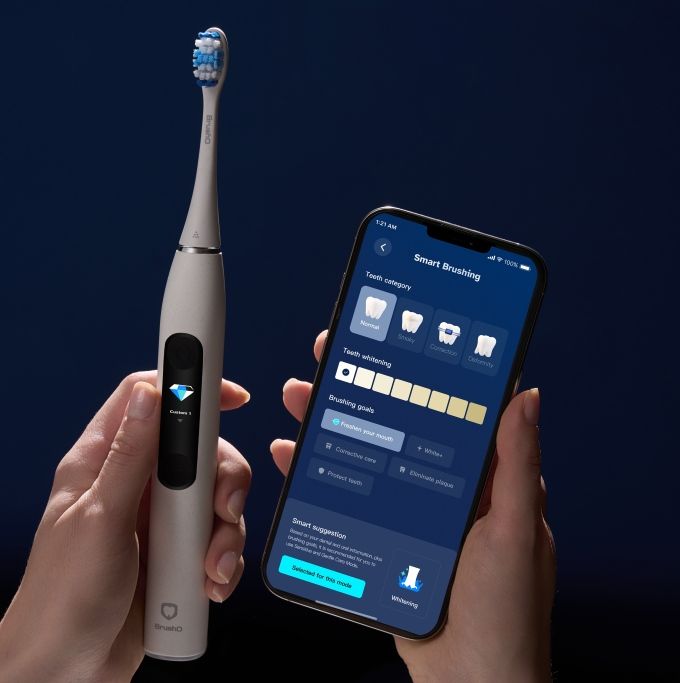
Modern electric toothbrushes do more than vibrate—they collect real-time information about your brushing behavior to provide personalized insights and prevent oral health issues. The goal is not just to make brushing smarter, but also to make it more effective, consistent, and preventative.
• Are you brushing for the full two minutes?
• Do you apply too much pressure to your gums?
• Are certain areas being missed every day?
• Are your brushing habits improving over time?
These insights allow you to go beyond guesswork and build routines that actually improve oral wellness.
Smart toothbrushes log:
• How many times you brush each day
• Whether you reach the recommended 2-minute duration
• If you’re skipping days or brushing less on weekends
Why it matters: Consistency is one of the strongest predictors of oral health. If you’re skipping evening sessions or rushing in the mornings, your smart toothbrush knows—and reminds you.
Thanks to pressure sensors, your smart toothbrush detects when you’re brushing too hard or too softly.
• Too hard = Gum recession, enamel wear, bleeding
• Too soft = Incomplete plaque removal
BrushO uses FSB (Fully Smart Brushing) tech to guide you in real time and protect both enamel and gums.
Many smart toothbrushes divide the mouth into zones (e.g., six zones or 16 surfaces). Your device knows:
• Which zones you frequently miss
• Where you brush too quickly
• Whether you brush all sides—front, back, and chewing surfaces
Coverage tracking helps you correct blind spots, ensuring plaque isn’t building up in neglected areas.
Through built-in accelerometers and gyroscopes, your smart brush tracks:
• Stroke direction
• Brushing motion (linear vs. circular)
• Orientation of the brush head
This ensures you’re angling the brush correctly—especially important for reaching gumlines and back molars.
Smart toothbrush apps like the BrushO App aggregate all data to show:
• Weekly or monthly brushing scores
• Areas improving vs. areas needing more attention
• Habit streaks and reward progress (e.g., earning $BRUSH tokens)
These insights gamify oral care, turning it into a measurable, trackable wellness routine.
While smart toothbrushes collect a lot of data, brands like BrushO prioritize user privacy and data security. Your brushing stats are used to improve your habits—not shared for advertising or third-party profiling.
If you’re using app-based features, always:
• Read the privacy policy
• Adjust permission settings
• Use encrypted devices or trusted platforms
Understanding what your toothbrush knows about you isn’t just cool—it’s clinically useful:
• It helps your dentist get a clearer picture of your routine
• It helps prevent future dental issues
• It promotes long-term behavioral change
• It offers customized care recommendations
With smart brushing, you shift from reactive dental visits to proactive prevention—protecting both your teeth and your wallet.
Your smart toothbrush is more than a gadget—it’s a personal oral health coach. By tracking pressure, time, coverage, and technique, it knows your brushing patterns better than you might realize. And with tools like BrushO, you can turn those insights into real improvements: fewer cavities, healthier gums, and a brighter smile.
Jan 21
Jan 20

The uncontrolled hypertension is the condition that the dental practice meets in the patient who presents with the elevated pressure that the guideline does not permit for the elective treatment, and the management of this patient requires the deferral of the dental procedure and the referral to ...

The closure of the extraction space in the orthodontic treatment is the phase that demands the careful selection of the mechanics and the monitoring of the force that the appliance delivers. The sliding mechanics that rely on the continuous archwire and the power chain that connects the brackets ...

The transverse discrepancy of the maxilla is the problem that the crowding and the posterior crossbite often hide, and the maxillary expansion is the treatment that addresses the width of the arch rather than the position of the individual tooth. The clinician who diagnoses the constriction early...

The local anaesthesia is the daily procedure that the modern dentistry treats as the routine, and the complications that follow it range from the transient and the trivial to the permanent and the serious. The clinician who injects by the habit without the anatomy in the mind is the clinician who...

The hypertension is the condition that the dental practice meets in the every day, and the patient who carries the elevated pressure without the symptoms is the patient who presents the risk that the chair-side measurement reveals. The dental team occupies the position that no other profession ho...

The glass-ceramic crown has become the default restoration for the anterior and the many posterior teeth, and the material selection within the family is the decision that determines the strength, the aesthetics, and the longevity of the result. The lithium disilicate, the leucite, and the zircon...

The dental phobia is the extreme form of the dental fear that prevents the patient from attending the treatment that the oral health requires, and the management of the phobia demands the skill that extends beyond the routine behaviour guidance. The systematic desensitization, the exposure therap...

The dental fear of the child is the condition that shapes the attitude for the lifetime, and the clinician who manages the first visits with the skill builds the patient who attends the recall without the dread. The fear that the child develops follows the many sources, and the practice that reco...

The patient with controlled hypertension is the patient who requires the dental care that the oral health demands and the treatment that the blood pressure permits, and the clinician who manages the controlled case safely follows the guideline that the evidence supports. The controlled hypertensi...

The ceramic veneer is the restoration that the aesthetic dentistry depends on, and the bond that retains the veneer on the enamel is the critical link that determines whether the restoration survives the function or fractures and debonds. The clinical technique from the preparation to the cementa...


Address: RM 1427, 14/F RADIO CITY 505, HENNESSY RD CAUSEWAY BAY, HONG KONG
Code: 000000
Phone: +852-53758652
Email: customerservice@brusho.com
