
Not all mouths are the same—and your brushing routine shouldn’t be either. A one-size-fits-all approach can leave key problem areas untouched, worsen existing gum conditions, or even cause enamel wear. A personalized brushing plan considers your specific oral health profile: sensitive areas, plaque buildup zones, gumline conditions, brushing technique, and more. In this article, we explain the science behind personalized dental care and how AI-powered toothbrushes like BrushO use real-time data to build adaptive, customized brushing guidance that evolves with your needs.
Most people are taught to brush twice a day for two minutes—but this blanket recommendation doesn’t account for individual differences, such as:
• Crowded or misaligned teeth
• Varying gum sensitivity or recession
• Orthodontic appliances or implants
• Left-behind plaque in “missed zones”
• Overbrushing or brushing too fast
Without tailored adjustments, people often under-brush high-risk areas and overbrush healthy ones, leading to avoidable problems like gum damage, cavities, and tooth wear.
A true personalized brushing plan involves more than a schedule. It incorporates:
• Zone-Based Guidance: Divides the mouth into 6 zones and 16 surfaces, prioritizing areas with higher plaque or bleeding risk.
• Technique Optimization: Adjusts brushing pressure, angle, and speed based on how you brush in real-time.
• Time Allocation: Extends time on neglected or problem-prone areas.
• Adaptive Recommendations: Evolves with your brushing data over time.
• User Profile: Considers factors like age, dental history, and gum health.
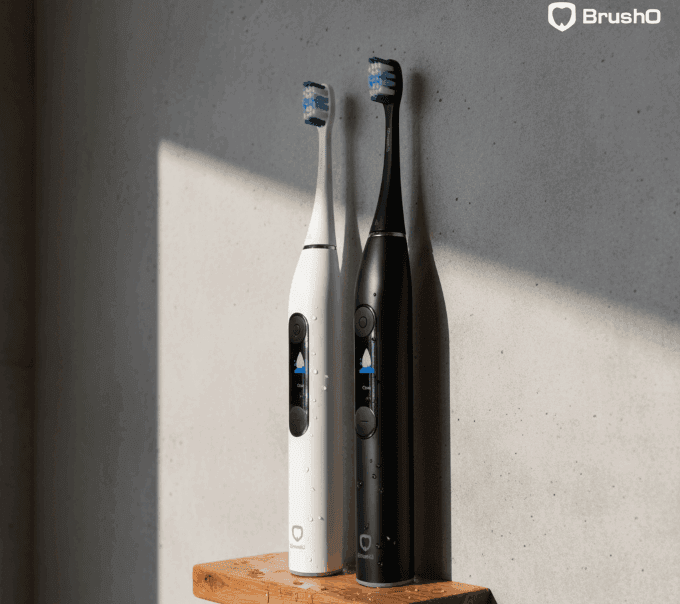
BrushO’s proprietary FSB (Fully Smart Brushing) technology offers intelligent adaptation that no manual brushing or basic electric brush can provide.
BrushO Features That Enable Personalization:
• Detects excessive pressure and alerts you instantly.
• Tracks hand motion, speed, and consistency.
• Ensures no tooth or gumline is skipped.
• Highlights areas missed in the daily brushing report.
• Weekly performance data triggers customized brushing recommendations.
• You receive tips via app based on your brushing “score.”
• The more you brush, the smarter it gets—adjusting feedback based on patterns.
• The more consistently you follow your plan, the more BrushO points you earn—turning good habits into lasting motivation.
With a personalized brushing plan, you’re more likely to:
• Prevent localized plaque buildup
• Reverse early-stage gum disease (gingivitis)
• Avoid enamel erosion from overbrushing
• Reduce dental hypersensitivity
• Achieve more even whitening over time
• Improve tongue and gumline hygiene
Personalization leads to better long-term outcomes than generic routines, as shown in clinical studies involving AI-powered brushing assistance.
Thanks to accessible smart toothbrushes like BrushO, you no longer need to guess if you’re brushing well. You can measure, adapt, and improve—with feedback as personal as your fingerprint. Whether you’re managing braces, sensitive gums, or just trying to prevent dental issues, a personalized brushing plan can save you thousands in dental bills and preserve your oral wellness for life. Oral health is personal—so should be your brushing plan. With BrushO, you’re not just brushing your teeth; you’re brushing smarter, safer, and specifically for you.
Jan 28
Jan 28

Squamous cell carcinoma is not a single, uniform disease, and two of its oral variants illustrate the extremes of its behavior. Verrucous carcinoma is a slow-growing, exophytic tumor that almost never metastasizes, while spindle cell carcinoma is an aggressive, sarcomatoid malignancy that can be ...

Most people expect a toothache to be the first sign of pulp disease, but some forms of pulpitis are surprisingly silent. A pulp polyp is the visible result of chronic hyperplastic pulpitis, a condition in which the dental pulp grows out of a large carious opening as a fleshy mass. Recognizing thi...

Dry mouth is not merely uncomfortable; it is a medical condition with real consequences for teeth, speech, swallowing and quality of life. When the salivary glands cannot produce enough saliva, medications called sialogogues can restore some of the missing fluid. Pilocarpine and cevimeline are th...

A blister in the mouth can be the first warning of a systemic autoimmune disease, and two disorders deserve particular attention in the dental chair: pemphigus vulgaris and mucous membrane pemphigoid. Both produce chronic oral ulceration, yet their immunologic targets, clinical behavior and long-...

When infection drains from a tooth, the body often creates a visible escape route, and the dentist must interpret these fistulous openings correctly. A parulis is the common gum boil that signals chronic periapical infection, while an oroantral fistula is a communication between the mouth and the...

Among the fibro-osseous lesions of the jaws, the ossifying fibroma holds a unique position because it is a true neoplasm, unlike the reactive cemento-osseous dysplasia discussed in an earlier article. It grows continuously, expands bone and requires surgical removal, and its cemental variant adds...

Not all keratocystic lesions of the jaw behave alike, and one of the most important distinctions in oral pathology separates the orthokeratinized odontogenic cyst from its better-known relative, the odontogenic keratocyst. Although the two lesions look similar under the microscope at first glance...

Periodontal disease is usually a slowly progressive infection, but a rare form called necrotizing ulcerative periodontitis destroys tissue with alarming speed. Unlike ordinary periodontitis, this condition produces necrotic, cratered papillae, deep pocketing and rapid bone loss, and it appears al...

Every parent has met the child who refuses to eat because of painful mouth sores, and most of these children have one of two viral illnesses: herpangina or hand, foot and mouth disease. Both are caused by enteroviruses, both produce fever and oral ulcers, and both are overwhelmingly common in you...

Cementoosseous dysplasia is one of the most common fibro-osseous lesions found on dental radiographs, yet it is also one of the most frequently misdiagnosed. The lesion replaces normal bone with cellular fibrous tissue and cementum-like material, and it appears in several forms that range from a ...


Address: RM 1427, 14/F RADIO CITY 505, HENNESSY RD CAUSEWAY BAY, HONG KONG
Code: 000000
Phone: +852-53758652
Email: customerservice@brusho.com
