
In a world overloaded with routines, tools, and self-care steps, many people are embracing minimalism—including in oral hygiene. Instead of multi-step, complicated regimens, today’s users are choosing smarter, simpler, and more intentional oral care routines. This new approach doesn’t mean doing less; it means doing better with less. Powered by smart technology and guided brushing, minimalist oral care is proving to be just as effective—and even more sustainable.
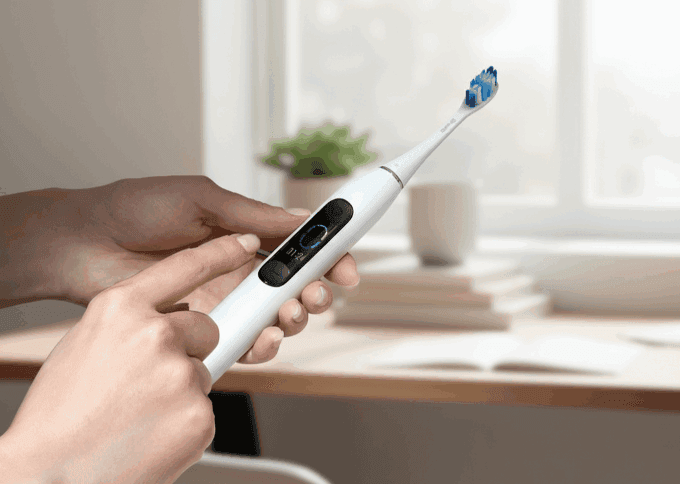
Minimalism is no longer just about decluttering your home. It’s a mindset that’s influencing how people approach wellness routines:
• Fewer steps, more meaning
• Less decision fatigue
• More time and mental space
• Focus on results, not rituals
Oral care is a perfect fit for this movement. For many, brushing, flossing, rinsing, scraping, and whitening feels like too much. The result? Inconsistency. Minimalist routines offer a smarter path forward: one quality tool + consistent use = real results.
Brushing well twice a day with the right technique beats using five products inconsistently.
Busy professionals, students, and parents appreciate routines they can stick to every day—no fluff, just effectiveness.
Minimalism often aligns with sustainability. Fewer disposables (like plastic flossers or whitening strips) means less waste.
Over-brushing, over-whitening, and over-rinsing can actually damage enamel or irritate gums. Simplicity helps avoid this.
The beauty of BrushO lies in its ability to turn a simple tool into a complete oral care system—without needing multiple products or steps.
Get personalized feedback on brushing coverage, pressure, and timing in real time—so you don’t need extra apps or dentist visits to know how you’re doing.
From sensitive care to whitening, you can switch modes without switching products.
No need to download a habit tracker—BrushO’s app automatically logs your streaks and keeps you motivated.
Minimal doesn’t mean careless. BrushO ensures complete coverage with less effort and more accuracy.
No more wondering “Did I brush enough?” or “Should I be using something else?”—BrushO tells you exactly what matters.
Here’s how to simplify your oral hygiene without sacrificing results:
1. Use one high-quality smart toothbrush like BrushO
2. Brush twice a day with real-time guided feedback
3. Focus on full mouth coverage instead of just scrubbing
4. Skip unnecessary products unless advised by your dentist
5. Be consistent—it’s the #1 rule of effective minimalism
Minimalism isn’t about being lazy. It’s about making smarter, intentional choices that work. With tools like BrushO, users report:
• Improved gum health
• Whiter teeth without extra products
• Fresher breath with less effort
• Fewer cavities due to better brushing habits
• Reduced stress from routine overload
Minimalist oral care is not about cutting corners—it’s about cutting noise. Smart, streamlined routines are not only easier to maintain but also more effective. With AI-powered tools like BrushO, users can enjoy the benefits of precision, personalization, and simplicity—all in one brush. Whether you’re a busy professional or someone tired of complicated routines, minimalism may be the smartest oral health trend yet.

The uncontrolled hypertension is the condition that the dental practice meets in the patient who presents with the elevated pressure that the guideline does not permit for the elective treatment, and the management of this patient requires the deferral of the dental procedure and the referral to ...

The closure of the extraction space in the orthodontic treatment is the phase that demands the careful selection of the mechanics and the monitoring of the force that the appliance delivers. The sliding mechanics that rely on the continuous archwire and the power chain that connects the brackets ...

The transverse discrepancy of the maxilla is the problem that the crowding and the posterior crossbite often hide, and the maxillary expansion is the treatment that addresses the width of the arch rather than the position of the individual tooth. The clinician who diagnoses the constriction early...

The local anaesthesia is the daily procedure that the modern dentistry treats as the routine, and the complications that follow it range from the transient and the trivial to the permanent and the serious. The clinician who injects by the habit without the anatomy in the mind is the clinician who...

The hypertension is the condition that the dental practice meets in the every day, and the patient who carries the elevated pressure without the symptoms is the patient who presents the risk that the chair-side measurement reveals. The dental team occupies the position that no other profession ho...

The glass-ceramic crown has become the default restoration for the anterior and the many posterior teeth, and the material selection within the family is the decision that determines the strength, the aesthetics, and the longevity of the result. The lithium disilicate, the leucite, and the zircon...

The dental phobia is the extreme form of the dental fear that prevents the patient from attending the treatment that the oral health requires, and the management of the phobia demands the skill that extends beyond the routine behaviour guidance. The systematic desensitization, the exposure therap...

The dental fear of the child is the condition that shapes the attitude for the lifetime, and the clinician who manages the first visits with the skill builds the patient who attends the recall without the dread. The fear that the child develops follows the many sources, and the practice that reco...

The patient with controlled hypertension is the patient who requires the dental care that the oral health demands and the treatment that the blood pressure permits, and the clinician who manages the controlled case safely follows the guideline that the evidence supports. The controlled hypertensi...

The ceramic veneer is the restoration that the aesthetic dentistry depends on, and the bond that retains the veneer on the enamel is the critical link that determines whether the restoration survives the function or fractures and debonds. The clinical technique from the preparation to the cementa...

모두가 쉽게 구축할 수 있는 방식으로 구강 건강 데이터 네트워크를 저렴한 비용으로 빠르게 구축하세요.


Address: RM 1427, 14/F RADIO CITY 505, HENNESSY RD CAUSEWAY BAY, HONG KONG
Code: 000000
Phone: +852-53758652
Email: customerservice@brusho.com