
Smoothies are widely regarded as a healthy lifestyle staple, packed with fruits, vegetables, and essential nutrients. However, while they may boost your energy and immune system, smoothies can also pose serious threats to your oral health. Their high natural sugar content, acidity, and tendency to stick to teeth make them more damaging than you might expect. In this article, we explore how smoothies impact your teeth, which ingredients are the worst offenders, and how you can enjoy them while protecting your smile. Plus, we show how BrushO’s smart brushing system helps minimize smoothie-related dental damage.
Smoothies often contain high amounts of natural sugars from fruits like bananas, mangos, or berries. While these sugars are better than refined alternatives, they still feed oral bacteria, which release acid and contribute to plaque, cavities, and bad breath. Even “green” smoothies made with spinach or kale usually include acidic fruits to mask the taste.
Though smoothies seem healthier than soda, they can actually be more harmful due to:
• Longer exposure time: People often sip smoothies slowly, keeping sugar on their teeth for longer.
• Sticky texture: Blended fruits cling to teeth and enter crevices easily.
• Acidity: Many smoothies contain citrus or pineapple, which weakens enamel.
When you drink acidic smoothies frequently, the enamel on your teeth—the hard outer layer—begins to erode. This leads to:
• Increased sensitivity to hot or cold
• Higher risk of tooth decay
• Yellowing due to thinner enamel exposing the dentin beneath
The pH level of many fruit-based smoothies falls below 5.5, which is the threshold where enamel begins to demineralize. Even smoothies with added protein or yogurt don’t fully offset this acidity.
Here’s how to keep your teeth healthy while enjoying your favorite blends:
• Add less sugar: Skip honey, flavored yogurt, or juice bases.
• Use a straw: It reduces direct contact with your teeth.
• Balance with vegetables: Cucumber, spinach, and avocado reduce acidity.
• Rinse with water: Helps neutralize acids.
• Wait 30 minutes before brushing: Brushing too soon can damage softened enamel.
• Use a smart toothbrush: Helps remove leftover residue and plaque.
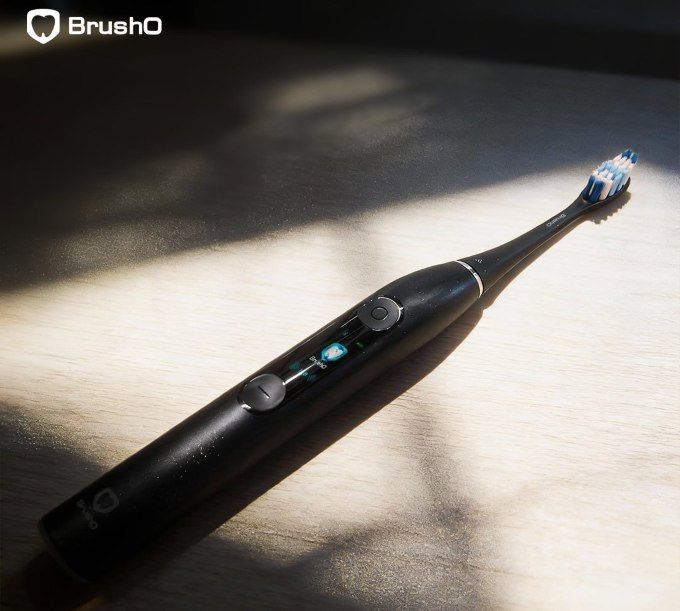
BrushO, the AI-powered smart toothbrush, helps combat the effects of smoothies on your oral health by offering:
• Zone-specific brushing to clean sticky smoothie residue
• Acid-aware pressure sensing to protect softened enamel
• Real-time guidance to prevent missing common trouble spots
BrushO users also earn $BRUSH tokens for consistent habits, encouraging better hygiene even after sugar-heavy meals or drinks.
Smoothies aren’t inherently bad for your health—but their impact on your teeth and gums is real. By understanding their hidden risks and taking simple steps to protect your enamel, you can enjoy smoothies without sacrificing your smile. Combine these habits with smart brushing through BrushO, and you’ll stay one step ahead of dental damage.

Fluoride in drinking water is the most cost-effective caries preventive measure in public health, and it is also the source of most avoidable fluoride exposure in young children. The balance between benefit and risk depends on concentration, on total intake from all sources and on the age of the ...

A mouthguard is the only piece of protective equipment that a dentist can prescribe, and the difference between the cheapest and the best version is often less than the cost of a single repair. This guide explains what each type of mouthguard actually protects, how to judge fit, and what to check...

Distinguishing reversible from irreversible pulpitis is the single most consequential decision in endodontic diagnosis, because one leads to a restoration and the other to root canal treatment or extraction. The distinction rests on symptoms and pulp testing rather than on radiographs alone, and ...

A pregnancy epulis is a benign overgrowth of gum tissue that appears during pregnancy, most often in the second or third trimester. It can alarm patients because it grows quickly and bleeds easily, yet in most cases it needs no surgery and settles after delivery. Understanding what drives the gro...

When several teeth are missing, the choice usually narrows to a removable partial denture or a fixed implant-supported restoration, and cost is the factor patients raise first. Upfront price is only part of the comparison, because the two options differ in maintenance, comfort, effects on neighbo...

Most root canal failures are not caused by inadequate cleaning of canals that were found, but by canals that were never located. Molar anatomy varies widely, and the variation is not random: specific teeth in specific populations have predictable additional canals. Knowing where they hide is the ...

Gum massage is one of the oldest recommendations in oral care and one of the least understood. It has been described as a treatment for bleeding gums, a route to firmer tissue and, more recently, a way to reduce brushing force. This article separates the mechanisms that are supported by physiolog...

Interdental cleaning is the part of oral hygiene most people abandon first, and the choice between a floss pick and a length of string floss is often made on convenience. Convenience matters, because a tool that is used daily outperforms a superior tool that stays in the drawer, but the two devic...

Dementia changes the way a denture is worn, cleaned and tolerated, and the people who notice the change first are usually family carers rather than clinicians. Poor denture hygiene in this group is associated with mucosal infection, reduced food intake and, in frail patients, respiratory complica...

Chewing tobacco keeps nicotine and plant irritants in prolonged contact with a small area of mucosa, and the damage that results is concentrated exactly where the quid is held. The lesions that develop are often painless, which is why they are discovered during routine examination rather than bec...

Build an oral health data network quickly and at low cost in a way that everyone can build.


Address: RM 1427, 14/F RADIO CITY 505, HENNESSY RD CAUSEWAY BAY, HONG KONG
Code: 000000
Phone: +852-53758652
Email: customerservice@brusho.com