
Beverages marketed as nutritious — including smoothies, protein shakes, flavored waters, and vitamin drinks — often contain significant amounts of hidden sugars that contribute to enamel demineralization and bacterial acid production. These sugars, whether naturally derived or added, interact with oral microbiota to generate acids capable of weakening tooth structure. Because such drinks are frequently consumed in prolonged or repeated intervals, they create sustained exposure conditions that amplify dental risk. Understanding sugar labeling, metabolic impact, and protective oral care strategies enables individuals to maintain both nutritional and dental health in modern dietary environments.
Modern consumers increasingly choose beverages labeled as healthy, such as:
• Green smoothies
• Kombucha
• Vitamin-enhanced drinks
• Protein shakes
• Flavored plant-based milks
• Juice blends
While nutritionally beneficial in some contexts, many contain high sugar loads or fermentable carbohydrates that directly affect enamel integrity. Dental impact depends not only on nutrition, but on oral biochemical response.
Even naturally occurring sugars from fruit concentrates or honey:
• Feed oral bacteria
• Trigger acid production
• Lower oral pH
From an enamel perspective, bacterial metabolism responds similarly to both natural and refined sugars.
Common alternative ingredient names include:
• Cane juice
• Agave nectar
• Maltodextrin
• Fruit syrup
• Rice solids
Consumers often underestimate cumulative sugar exposure due to labeling complexity.
Unlike solid foods, sugary liquids:
• Spread across all tooth surfaces
• Penetrate gumline areas
• Extend contact duration
This increases plaque substrate availability and acid generation.
1️⃣ Sugars are metabolized by bacteria
2️⃣ Acid released onto the enamel
3️⃣ Mineral loss begins
4️⃣ Surface softening occurs
Repeated exposure accelerates:
• Microstructural weakening
• Sensitivity development
• Cavity formation
Dental risk correlates more with exposure frequency than volume consumed. Sipping “healthy” drinks throughout the day prevents remineralization cycles from completing.
• Heightened temperature sensitivity
• Rough tooth texture
• Discoloration
• Gumline irritation
• Persistent plaque accumulation
These symptoms often appear before visible decay.
• Consume drinks in one sitting
• Avoid prolonged sipping
• Pair with meals
• Rinse with water afterward
Check for:
• Total sugar grams
• Carbohydrate concentration
• Acidic ingredients
Nutritional positioning does not equal dental safety.
Wait 30–60 minutes before brushing after sugary beverages to prevent abrasion of softened enamel.
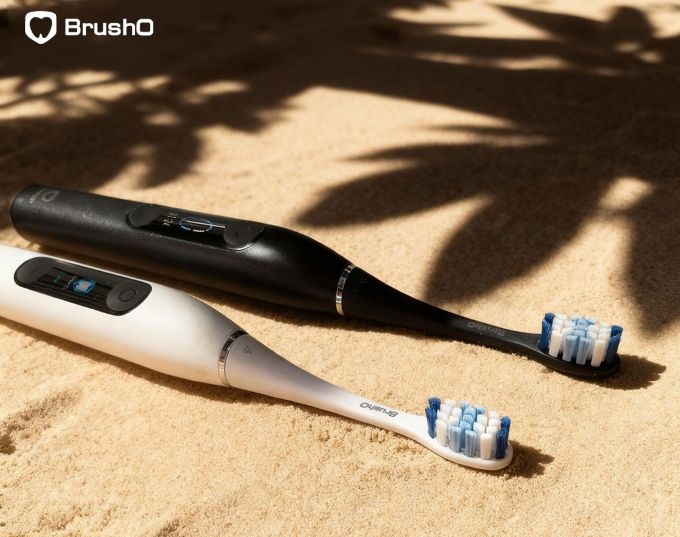
AI-guided brushing systems like BrushO help reduce sugar-related plaque risk by providing:
• Zone coverage tracking
• Pressure optimization
• Technique correction
• Habit consistency analytics
Targeted removal of bacterial buildup enhances enamel defense.
Healthy lifestyle choices should not compromise dental resilience. By aligning dietary awareness with structured oral hygiene:
• Nutritional benefits remain intact
• Enamel damage risk decreases
• Long-term oral health stability improves
Technology-supported routines further reinforce protective outcomes.
Hidden sugars in seemingly healthy drinks present a subtle yet significant risk to enamel health. Both natural and added sugars fuel acid production that weakens tooth structure, especially when exposure is frequent. Informed consumption habits combined with advanced brushing guidance — such as that provided by BrushO — allow individuals to preserve enamel strength while maintaining modern nutrition choices. Protecting your smile requires awareness beyond labels.
Feb 6
Feb 6

The xerostomia is the symptom that the patient describes as the dry mouth, and the Sjogren syndrome is the systemic autoimmune condition that the clinician identifies as one of the causes that the symptom reveals. The dry mouth that the patient reports may follow the medication, the radiation, th...

The sinus lift is the augmentation procedure that the clinician performs to create the bone height that the posterior maxilla requires for the implant, and the choice between the lateral window and the transcrestal approach determines the surgical trauma, the healing, and the implant that the sit...

Post-extraction bleeding is one of the most common and most distressing experiences after a tooth extraction. For most patients, a small amount of oozing from the extraction site for 24 to 48 hours after the procedure is completely normal. However, when bleeding becomes excessive, prolonged, or d...

The skeletal class III malocclusion is the condition that the clinician treats with the orthognathic surgery or the camouflage orthodontic treatment, and the decision between the two paths determines the function, the aesthetics, and the stability that the patient receives. The orthognathic surge...

Interproximal enamel reduction — commonly referred to as IPR, slenderizing, stripping, or contouring — is the controlled removal of small amounts of enamel from the proximal surfaces of teeth. Despite sounding more invasive than it is, IPR is one of the most widely used and clinically safe proced...

The gingival graft is the surgical procedure that the periodontist performs to restore the keratinized tissue and to cover the exposed root, and the choice between the free gingival graft and the connective tissue graft determines the outcome that the patient receives. The free gingival graft har...

Denture adhesives — commonly known as fixatives or denture creams — are among the most widely used adjuncts in prosthodontic care. Millions of complete and partial denture wearers use some form of adhesive daily, often without a clear understanding of what these products do, when they should be u...

When a young patient presents with an immature tooth that has lost its vitality — typically due to trauma or deep caries — the endodontist faces one of the most consequential decisions in paediatric endodontics. The permanent root has not finished forming, the apex remains open, and the tooth is ...

The ankyloglossia is the condition that the lingual frenulum restricts the movement of the tongue, and the release of the frenulum in the infant is the procedure that the clinician performs to restore the function that the feeding and the speech require. The assessment that the clinician performs...

Dental amalgam fillings have been in clinical use since the mid-19th century, making them one of the most historically established restorative materials. In 2026, the conversation around amalgam replacement has shifted from a simple material preference debate to a nuanced clinical assessment of w...

Build an oral health data network quickly and at low cost in a way that everyone can build.


Address: RM 1427, 14/F RADIO CITY 505, HENNESSY RD CAUSEWAY BAY, HONG KONG
Code: 000000
Phone: +852-53758652
Email: customerservice@brusho.com