
In a world filled with overhyped gadgets and disposable products, trust is hard to come by. BrushO isn’t just another electric toothbrush—it’s a brand built on engineering integrity, long-term reliability, and a clear mission: to improve your brushing habits and protect your oral health. From our Stanford-introduced technology to our lifetime brush head program, every decision is made with the user’s best interest at heart. Here’s why more users—and even dentists—are putting their trust in BrushO.
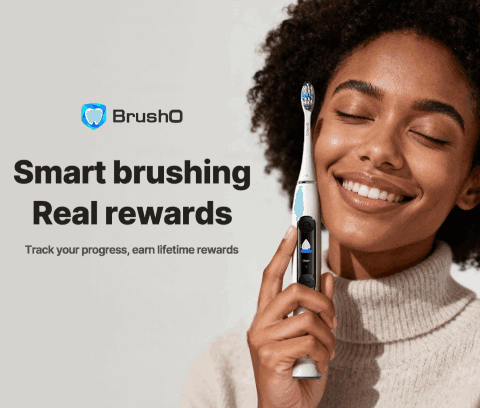
Many toothbrush brands load up features that look impressive on the box but offer little real-world benefit. BrushO takes a different approach:
• Every feature—from AI-powered movement tracking to pressure feedback—is designed to solve actual brushing problems.
• The FSB technology (Fully Smart Brushing) isn’t a gimmick—it’s a full brushing system that guides, scores, and corrects.
• We don’t hide behind marketing. Everything is visible in the app, from brushing angles to missed zones.
BrushO was not rushed to market. It was built through years of R&D, reverse-engineering every part of the brushing experience:
• The motor isn’t just powerful—it’s precisely calibrated for controlled sonic movement.
• The water-resistant design meets real-world durability standards, not just lab tests.
• Each structural element is designed to last for years, not wear out in months.
👉 BrushO’s motto is simple: “Design without compromise.”
Our goal isn’t to impress. It’s to improve your oral health. BrushO actively:
• Prevents overbrushing with instant pressure feedback
• Guides you through 16 zones so no surface is left uncleaned
• Collects data for long-term habit improvement
• Helps reduce plaque, gum bleeding, and enamel wear
It’s a toothbrush that does what your dentist wishes you did daily.
While many brands rely on consumable sales, BrushO rewards users who build healthy brushing routines:
• Brush & Earn system gives users points for every completed session
• Earn free brush heads for life through daily brushing
• We never design to force unnecessary upgrades or refills
🪥 BrushO is the first in the world to offer lifetime brush heads just for brushing correctly.
• Introduced by Stanford
• Endorsed by over 40 UK dental clinics
• Backed by 20+ years of product engineering experience
• Featured across Web3 wellness platforms and digital health media
BrushO isn’t built by marketers. It’s built by engineers, dentists, and real users.
We know your brushing data is personal. That’s why:
• Your brushing history is stored securely
• The app only shares what you choose to view
• No third-party tracking or selling your health habits
Trust isn’t just about performance—it’s about respecting the user behind the data.
BrushO isn’t just about brushing teeth. It’s about:
• Building healthy daily routines
• Making high-quality oral care accessible
• Bridging Web2 and Web3 through reward-driven wellness ecosystems
Whether you’re here for health, innovation, or sustainability, BrushO is a brand aligned with values that matter.
✔️ Engineered to last
✔️ Designed to guide
✔️ Rewarding to use
✔️ Always user-first
If you’re looking for a toothbrush you can rely on—not just for features, but for long-term health and daily motivation—BrushO is the smart choice.
Trust isn’t just something we claim. It’s something we build—with every brush.
Dec 17
Dec 16

Squamous cell carcinoma is not a single, uniform disease, and two of its oral variants illustrate the extremes of its behavior. Verrucous carcinoma is a slow-growing, exophytic tumor that almost never metastasizes, while spindle cell carcinoma is an aggressive, sarcomatoid malignancy that can be ...

Most people expect a toothache to be the first sign of pulp disease, but some forms of pulpitis are surprisingly silent. A pulp polyp is the visible result of chronic hyperplastic pulpitis, a condition in which the dental pulp grows out of a large carious opening as a fleshy mass. Recognizing thi...

Dry mouth is not merely uncomfortable; it is a medical condition with real consequences for teeth, speech, swallowing and quality of life. When the salivary glands cannot produce enough saliva, medications called sialogogues can restore some of the missing fluid. Pilocarpine and cevimeline are th...

A blister in the mouth can be the first warning of a systemic autoimmune disease, and two disorders deserve particular attention in the dental chair: pemphigus vulgaris and mucous membrane pemphigoid. Both produce chronic oral ulceration, yet their immunologic targets, clinical behavior and long-...

When infection drains from a tooth, the body often creates a visible escape route, and the dentist must interpret these fistulous openings correctly. A parulis is the common gum boil that signals chronic periapical infection, while an oroantral fistula is a communication between the mouth and the...

Among the fibro-osseous lesions of the jaws, the ossifying fibroma holds a unique position because it is a true neoplasm, unlike the reactive cemento-osseous dysplasia discussed in an earlier article. It grows continuously, expands bone and requires surgical removal, and its cemental variant adds...

Not all keratocystic lesions of the jaw behave alike, and one of the most important distinctions in oral pathology separates the orthokeratinized odontogenic cyst from its better-known relative, the odontogenic keratocyst. Although the two lesions look similar under the microscope at first glance...

Periodontal disease is usually a slowly progressive infection, but a rare form called necrotizing ulcerative periodontitis destroys tissue with alarming speed. Unlike ordinary periodontitis, this condition produces necrotic, cratered papillae, deep pocketing and rapid bone loss, and it appears al...

Every parent has met the child who refuses to eat because of painful mouth sores, and most of these children have one of two viral illnesses: herpangina or hand, foot and mouth disease. Both are caused by enteroviruses, both produce fever and oral ulcers, and both are overwhelmingly common in you...

Cementoosseous dysplasia is one of the most common fibro-osseous lesions found on dental radiographs, yet it is also one of the most frequently misdiagnosed. The lesion replaces normal bone with cellular fibrous tissue and cementum-like material, and it appears in several forms that range from a ...

Build an oral health data network quickly and at low cost in a way that everyone can build.


Address: RM 1427, 14/F RADIO CITY 505, HENNESSY RD CAUSEWAY BAY, HONG KONG
Code: 000000
Phone: +852-53758652
Email: customerservice@brusho.com