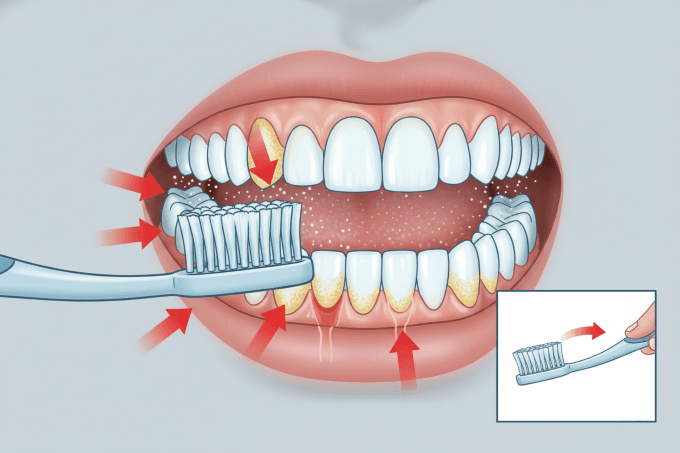
Missing critical brushing zones is a widespread issue that significantly impacts oral health by leaving plaque behind in hard-to-reach areas. Factors such as poor technique, lack of feedback, and toothbrush design contribute to incomplete brushing. Smart toothbrushes with real-time guidance, coverage tracking, and personalized coaching help users achieve complete oral hygiene by ensuring all critical zones are thoroughly cleaned.
The Hidden Challenge in Daily Brushing
Brushing twice daily is one of the most basic dental hygiene recommendations—but even diligent brushers often leave important areas of the mouth untouched. These critical brushing zones include the back molars, gumline crevices, inner tooth surfaces, and areas around dental work like braces or crowns. Missed zones can lead to plaque buildup, gingivitis, cavities, and long-term oral health problems. Despite regular brushing routines, research and clinical observations show that up to 80% of people miss key areas during brushing when relying on manual technique alone. This reveals a crucial gap between brushing frequency and brushing effectiveness — an issue that can silently deteriorate dental health over time.
Why People Miss Critical Brushing Zones
1. Lack of Tactile Feedback and Awareness
Manual brushing provides limited feedback. You can feel the toothbrush on your teeth, but you can’t tell if you’ve truly cleaned every surface. Unlike smart toothbrushes, manual brushes don’t track coverage or alert users to missed areas. Without visual or sensory guidance, it’s easy to over-clean familiar areas (the front teeth) and under-clean hidden or awkward regions like the back molars or the inner surfaces near the tongue. This imbalance leads to plaque accumulation exactly where it’s most likely to cause decay and gum issues.
2. Habitual, Unvaried Brushing Patterns
Many people brush using the same routine day after day without variation or improvement. These habits often develop through repetition and sometimes misinformation (e.g., “Only focus on the front teeth”). Unfortunately, habitual brushing can create blind spots in oral care:
- Rushing through brushing
- Repeating the same stroke patterns
- Ignoring inner surfaces and gumline
These habits don’t address the three-dimensional geometry of the mouth, leaving critical zones untouched even when the total brushing time appears adequate.
3. Insufficient Brushing Duration
Dental professionals consistently recommend brushing for two full minutes, yet many people stop short of that benchmark or spend uneven time across areas of the mouth. Brushing too quickly increases the likelihood of missing critical zones simply due to insufficient time spent reaching the back and inner surfaces. In a study of brushing behaviors, a large percentage of participants failed to reach the recommended duration or spread their brushing time unevenly. This reinforces the idea that duration alone isn’t enough; coverage quality matters even more.
How Smart Toothbrushes Improve Zone Coverage
1. Real-Time Coverage Tracking and Alerts
Smart toothbrushes like BrushO’s smart toothbrush use motion sensors and AI recognition to monitor where you brush in real time. By dividing the mouth into tracking zones, the device can:
✔ Alert you when a zone is under-brushed
✔ Provide feedback on brushing pressure
✔ Ensure you reach inner, outer, and chewing surfaces equally
This type of intelligent guidance transforms brushing from a blind routine into a zone-aware process, significantly reducing missed areas.
2. Guided Brushing With Audio or App Feedback
Many smart toothbrushes offer guided brushing via app or built-in indicators that tell users exactly where to focus next. This is similar to having a dental hygienist coach you in real-time, ensuring full coverage from the gumline to the back teeth. Users who follow guided brushing consistently report measurable improvements in coverage and plaque reduction over those who brush without guidance.
3. Personalized Coaching and Habit Insights
Beyond real-time feedback, smart toothbrushes track brushing trends over time. They offer personalized insights such as:
- Patterns of consistently missed zones
- Pressure imbalances
- Speed inconsistencies
- Long-term improvement suggestions
This feedback loop encourages better habits rather than just stronger strokes. The difference between brushing harder and brushing smarter becomes clear through data-driven insights.
Commonly Missed Brushing Zones Explained
1. Inner Surfaces of Upper and Lower Teeth
The inner surfaces — especially on lower incisors and the back of upper molars — are often neglected. These areas are harder to reach manually and require angling the brush correctly. Without awareness or guidance, users often skip them.
2. Back Molars and Chewing Surfaces
The furthest points back in the mouth are easy to overlook, but they are critical zones for plaque accumulation. These teeth have deep grooves and pits that trap food particles, making thorough cleaning essential.
3. Gumline Crevices
Plaque tends to form first along the gumline. If brushing focuses only on flat tooth surfaces, gumline crevices can harbor bacteria that lead to gingivitis and, over time, more serious periodontal concerns.
4. Around Dental Restorations and Orthodontics
Braces, bridges, crowns, and implants create intricate spaces where plaque and bacteria can accumulate. These areas require careful attention, often beyond what manual brushing alone can provide.
The Link Between Missed Zones and Oral Health Risks
When plaque persists in untouched regions, it becomes a breeding ground for bacteria that contribute to:
- Cavities — especially in molar grooves
- Gum irritation and inflammation
- Bad breath is linked to bacterial buildup.
- Periodontal disease progression
Regular dental checkups are important, but improving daily brushing quality dramatically reduces risk exposure between visits.
Tips for Better Brushing Coverage
While smart tools offer the most advanced solution, there are foundational habits everyone can adopt:
✔ Use a quadrant-focused approach (upper right, upper left, etc.)
✔ Time each quadrant equally with a timer (smart or manual)
✔ Angle the brush toward the gumline
✔ Spend extra care on back teeth and inner surfaces
✔ Rinse thoroughly and consider adjunct tools such as floss or water flossers
Better Brushing Begins With Awareness
Understanding why most people miss critical brushing zones highlights a simple truth: effective oral care requires more than good intentions. It requires awareness, feedback, and conscious effort to clean every surface. Smart toothbrushes like BrushO’s smart toothbrush make it easier than ever to achieve full oral coverage by combining technology with personalized coaching and real-time guidance. By recognizing and addressing commonly missed zones, users can dramatically improve plaque removal efficiency, reduce the risk of gum disease and cavities, and build better long-term oral hygiene habits.