
Unlike skin or hair, your teeth endure daily mechanical stress, acid exposure, and bacterial attacks without the ability to regenerate lost tissue. This makes them more vulnerable to premature aging. From enamel thinning to gum recession, discover how everyday habits contribute to early dental aging—and how smart toothbrushes like BrushO help you protect your smile for years to come.
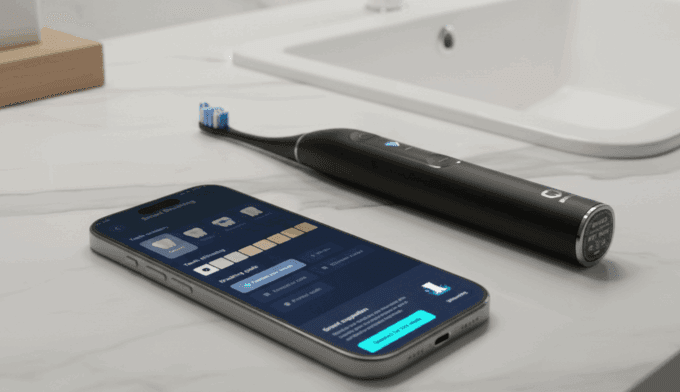
While aging affects every part of the body, your oral environment is particularly harsh:
• Constant chewing pressure
• Acidic foods and drinks
• Plaque bacteria release corrosive acids
• Microtraumas from grinding or overbrushing
Unlike skin cells, tooth enamel doesn’t regenerate. Once it wears down, it’s gone for good—making proactive care essential.
Acidic foods (citrus, soda, wine) and sugar fuel acid-producing bacteria, softening enamel.
Clenching or grinding—often during sleep—slowly wears enamel and flattens tooth surfaces.
Brushing too hard or missing key zones speeds up enamel wear and plaque buildup.
Skipping brushing sessions or avoiding floss leads to tartar buildup and gum recession.
Uncontrolled bacterial growth accelerates decay and causes chronic gum inflammation.
• Translucent or glassy tooth edges
• Yellowing (exposed dentin under thinning enamel)
• Sharp sensitivity to hot or cold
• Receding gums or exposed roots
• Uneven or worn bite surfaces
⚠️ Note: These signs often appear before pain does. Early detection is key.
• Frequent snacking: Keeps acid levels high throughout the day
• Late-night eating: Saliva production drops at night, reducing protection
• Overbrushing: Using stiff bristles or applying too much pressure damages enamel
• DIY whitening: Harsh chemicals weaken enamel over time
Even subtle habits like chewing ice or biting pens contribute to long-term dental wear.
AI-powered brushes like BrushO track pressure, coverage, and timing for every brushing session—minimizing risk of overbrushing or missed areas.
Never brush immediately after acidic foods or drinks. Wait 30–60 minutes for saliva to neutralize pH.
Cut back on sugary or acidic snacks. Hydrate often to support saliva production and natural enamel protection.
Schedule bi-annual cleanings and checkups to detect early enamel erosion or gum issues.
Protect your enamel from nighttime grinding with a custom-fitted dental guard.
Unlike traditional brushes, BrushO combines AI sensors + real-time app feedback to prevent overbrushing and enamel wear.
✅ Apply safe brushing pressure
✅ Follow dentist-approved brushing time
✅ Ensure all 6 zones, 16 surfaces are covered
✅ Track daily brushing consistency
✅ Earn $BRUSH tokens for brushing streaks
It turns your routine into a science-backed oral wellness habit.
Your teeth are under constant attack from food, bacteria, and lifestyle habits—yet they don’t regenerate like skin or hair. To prevent irreversible aging effects, you need more than just toothpaste and luck. With BrushO’s smart technology, you gain the precision, data, and feedback needed to slow down dental aging and maintain a healthy, youthful smile for life.
Jan 22
Jan 22

The uncontrolled hypertension is the condition that the dental practice meets in the patient who presents with the elevated pressure that the guideline does not permit for the elective treatment, and the management of this patient requires the deferral of the dental procedure and the referral to ...

The closure of the extraction space in the orthodontic treatment is the phase that demands the careful selection of the mechanics and the monitoring of the force that the appliance delivers. The sliding mechanics that rely on the continuous archwire and the power chain that connects the brackets ...

The transverse discrepancy of the maxilla is the problem that the crowding and the posterior crossbite often hide, and the maxillary expansion is the treatment that addresses the width of the arch rather than the position of the individual tooth. The clinician who diagnoses the constriction early...

The local anaesthesia is the daily procedure that the modern dentistry treats as the routine, and the complications that follow it range from the transient and the trivial to the permanent and the serious. The clinician who injects by the habit without the anatomy in the mind is the clinician who...

The hypertension is the condition that the dental practice meets in the every day, and the patient who carries the elevated pressure without the symptoms is the patient who presents the risk that the chair-side measurement reveals. The dental team occupies the position that no other profession ho...

The glass-ceramic crown has become the default restoration for the anterior and the many posterior teeth, and the material selection within the family is the decision that determines the strength, the aesthetics, and the longevity of the result. The lithium disilicate, the leucite, and the zircon...

The dental phobia is the extreme form of the dental fear that prevents the patient from attending the treatment that the oral health requires, and the management of the phobia demands the skill that extends beyond the routine behaviour guidance. The systematic desensitization, the exposure therap...

The dental fear of the child is the condition that shapes the attitude for the lifetime, and the clinician who manages the first visits with the skill builds the patient who attends the recall without the dread. The fear that the child develops follows the many sources, and the practice that reco...

The patient with controlled hypertension is the patient who requires the dental care that the oral health demands and the treatment that the blood pressure permits, and the clinician who manages the controlled case safely follows the guideline that the evidence supports. The controlled hypertensi...

The ceramic veneer is the restoration that the aesthetic dentistry depends on, and the bond that retains the veneer on the enamel is the critical link that determines whether the restoration survives the function or fractures and debonds. The clinical technique from the preparation to the cementa...

Build an oral health data network quickly and at low cost in a way that everyone can build.


Address: RM 1427, 14/F RADIO CITY 505, HENNESSY RD CAUSEWAY BAY, HONG KONG
Code: 000000
Phone: +852-53758652
Email: customerservice@brusho.com