
What happens if you don’t floss daily?
Many people skip flossing, thinking brushing alone is enough. The truth is, failing to floss allows food particles and plaque to build up between teeth, leading to gum disease, cavities, and bad breath. In this article, we’ll explain why flossing matters, the risks of ignoring it, and how smart electric toothbrushes like BrushO help reduce plaque buildup—even when you miss flossing.
Brushing cleans the surface of your teeth, but it cannot reach between teeth where plaque and bacteria thrive. Flossing removes hidden debris and prevents:
Dentists recommend flossing once a day for complete oral hygiene.
If flossing is skipped regularly:
Plaque Builds Up Fast 🦠
- Within 24–72 hours, soft plaque hardens into tartar, which brushing cannot remove.
Gums Become Irritated 🩸
- Food trapped between teeth irritates gum tissue, causing swelling and bleeding.
Risk of Gum Disease Increases ⚠️
- Untreated gingivitis can progress to periodontitis, leading to tooth loss.
Bad Breath Becomes Persistent 😬
- Bacteria in food particles release sulfur compounds, causing strong odors.
Skipping flossing occasionally isn’t disastrous, but making it a habit puts your oral health at risk.
Despite its importance, studies show fewer than 30% of adults floss daily. Common reasons include:
This is why finding supportive tools—like a smart toothbrush—can make a huge difference.
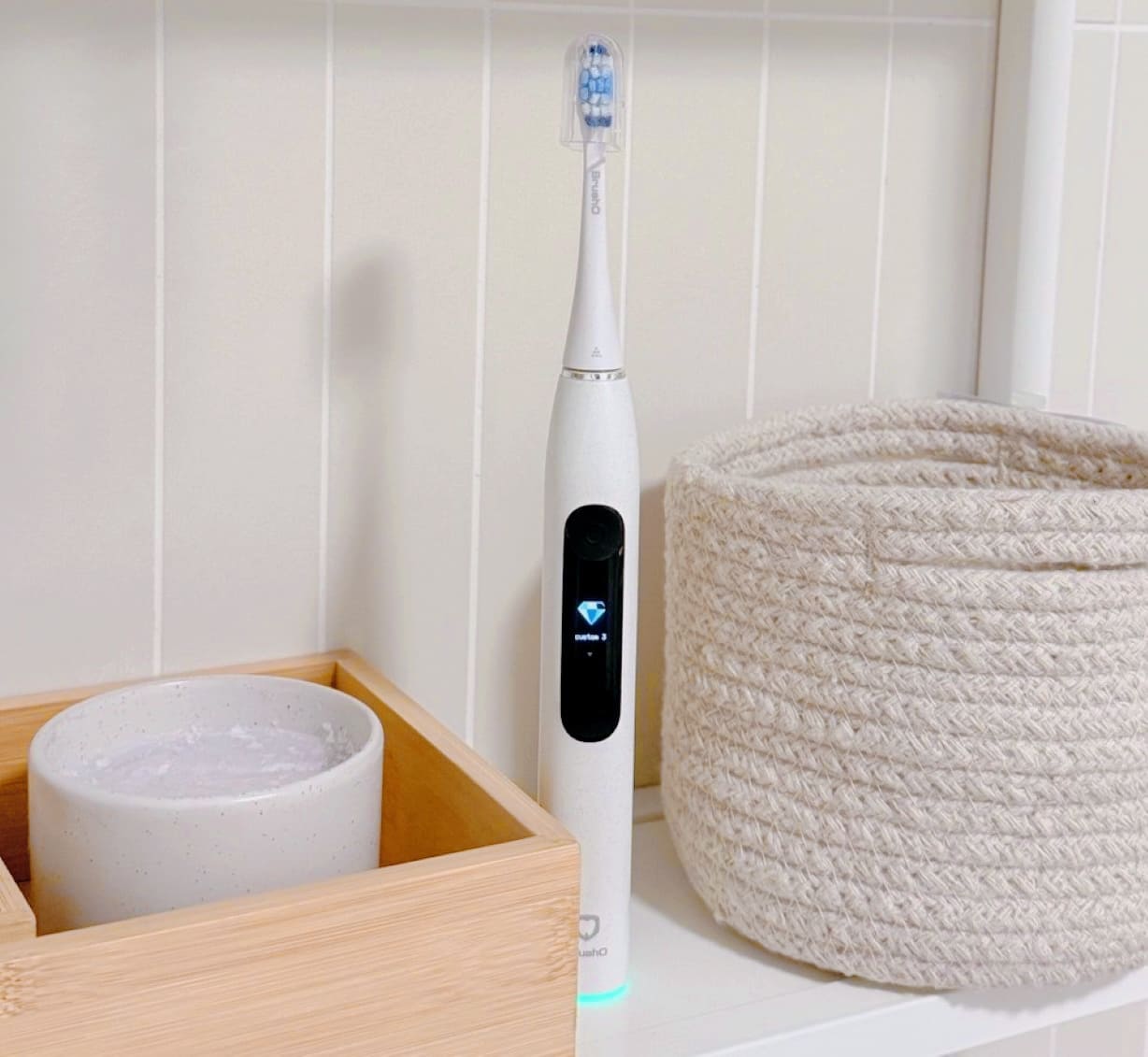
While nothing replaces flossing entirely, the BrushO AI-Powered Toothbrush helps reduce the risks of skipping:
This makes BrushO a practical partner for people who sometimes struggle to floss daily.
So, what happens if you don’t floss daily? Plaque buildup, gum irritation, bad breath, and higher risk of gum disease. While flossing is essential, tools like the BrushO AI-Powered Toothbrush provide advanced support to reduce plaque and protect your gums—helping you stay healthier even on days you skip flossing.
Instead of aiming for perfection, aim for consistency: pair flossing with smart brushing habits, and your smile will thank you. 😁
🫰 BrushO GET YOU
Aug 28
Aug 27

Water that leaves a dental unit is not sterile, and it has not been sterile for decades. The narrow tubing that carries coolant to the handpiece and the air-water syringe provides an ideal surface for a biofilm that sheds organisms into every patient's mouth. Sterilisation of the instruments does...

A young adult presents with soreness of the gums, and the examination shows a striking change that is easily mistaken for severe periodontal disease: the mucosa is thickened, folded and studded with tiny yellow pustules that rupture to leave shallow ulcers resembling snail tracks. This is pyostom...

A patient who becomes cyanosed minutes after an apparently routine infiltration, yet keeps talking and breathing comfortably, presents a diagnostic trap. The saturation monitor reads in the eighties, supplemental oxygen changes nothing, and the chest sounds clear. This is the classic signature of...

Most patients with clicking, locking and jaw pain improve with reassurance, soft diet, splint therapy and physical measures. A minority do not, and their imaging shows a displaced disc with degenerative change, a shortened condyle or a persistent closed lock. For that group, two operations compet...

A slowly growing palatal swelling that the patient has noticed for two years, a minor salivary gland tumor that looks deceptively well demarcated, and a nerve that carries tumor cells far beyond the visible mass: this is the natural history of adenoid cystic carcinoma. It is uncommon, it is rarel...

Saliva is easy to overlook until its volume changes. An excess produces drooling that soils clothing and isolates a patient socially, while a painless enlargement of both parotid glands raises the question of systemic disease. Sialorrhea and sialadenosis sit at opposite ends of the same physiolog...

When caries in a primary molar reaches the pulp but the tooth can still be restored and the supporting bone is intact, pulpectomy offers a way to keep the tooth comfortable and functional until exfoliation. The procedure removes both the coronal and the radicular pulp and replaces it with a resor...

Disorders of the fibroblast growth factor receptor genes produce some of the most distinctive facial appearances in medicine, and the two extremes are instructive. Pfeiffer syndrome allows survival with staged craniofacial surgery, while thanatophoric dysplasia is almost always lethal in the neon...

A panoramic radiograph that shows a uniformly dense mandible or maxilla can indicate an entirely benign finding, such as a dense bone island or a torus, or it can be the first clue to a generalized skeletal disorder. Osteopetrosis and the broader group of osteosclerotic conditions differ greatly ...

A patient who cannot open the mouth more than a finger breadth, yet whose temporomandibular joint still moves on imaging, presents one of the most easily misdiagnosed problems in oral surgery. The restriction in such cases lies outside the joint, and the condition is termed pseudoankylosis. An el...

Construa uma rede de dados de saúde bucal rapidamente e com baixo custo de forma que todos possam construir.
Construa uma rede de dados de saúde bucal rapidamente e com baixo custo de forma que todos possam construir.


Address: RM 1427, 14/F RADIO CITY 505, HENNESSY RD CAUSEWAY BAY, HONG KONG
Code: 000000
Phone: +852-53758652
Email: customerservice@brusho.com