How Smart Toothbrushes Help Reduce Tooth Sensitivity
Jan 22

Jan 22
Tooth sensitivity affects millions worldwide, causing discomfort and pain during everyday activities like eating, drinking, and brushing. Fortunately, smart toothbrushes offer an advanced solution to alleviate these symptoms. By utilizing cutting-edge technology such as pressure sensors, real-time feedback, and customized brushing modes, these devices are designed to provide a more precise, gentle brushing experience. This blog explores the science behind tooth sensitivity and how smart toothbrushes can address this common issue.


Understanding Tooth Sensitivity and Its Causes

Tooth sensitivity, also known as dentin hypersensitivity, occurs when the underlying layer of the teeth, called dentin, becomes exposed due to the erosion of enamel or gum recession. The dentin contains tiny tubes that lead to the nerve, which is why it triggers sharp pain when exposed to hot, cold, sweet, or acidic substances.
Several factors contribute to this condition, including:
  • Enamel Erosion: Over time, the enamel can wear away due to acidic foods, aggressive brushing, or teeth grinding.
  • Gum Recession: The gums may recede due to age or improper brushing, exposing the sensitive areas of the tooth.
  • Brushing Habits: Using a hard-bristled toothbrush or brushing with excessive force can aggravate sensitivity.
With traditional brushing, individuals often fail to maintain the proper pressure and technique, which can worsen the condition. This is where smart toothbrushes shine—by offering features designed to improve brushing effectiveness and protect sensitive teeth.

How Smart Toothbrushes Help Reduce Tooth Sensitivity

Smart toothbrushes, such as the BrushO smart toothbrush, come equipped with advanced technology that can help prevent or reduce tooth sensitivity. Here’s how:
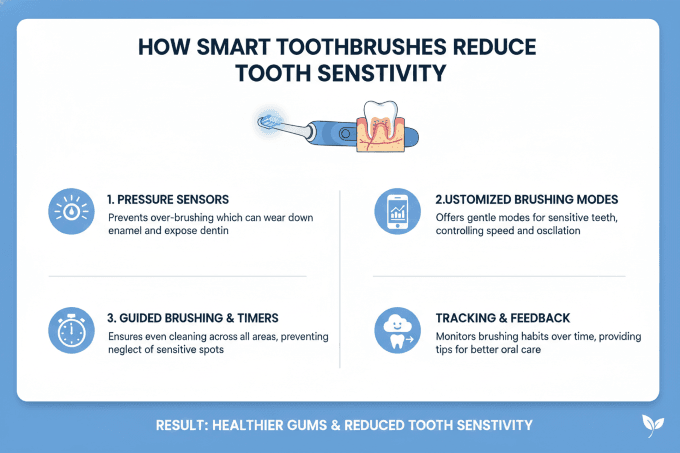
  1. Pressure Sensors

    One of the key features of smart toothbrushes is pressure sensors that alert users when they are brushing too hard. Brushing with excessive force can lead to enamel wear and gum recession, both of which are major causes of tooth sensitivity. By receiving real-time feedback, users can adjust their brushing technique to avoid unnecessary pressure.
  2. Personalized Brushing Modes

    Smart toothbrushes offer various brushing modes, including gentle settings specifically designed for sensitive teeth. These modes adjust the brush's speed and motion to provide a softer, more comfortable cleaning experience, helping to reduce the likelihood of triggering pain or discomfort.
  3. Full-Mouth Coverage Tracking

    Many smart toothbrushes come with tracking capabilities that ensure users brush every part of their mouth equally, preventing areas from being missed or over-brushed. This technology ensures an even and thorough clean, which is important for maintaining optimal oral health and minimizing gum irritation.
  4. Real-Time Feedback

    Using an accompanying app, smart toothbrushes can offer real-time feedback on brushing technique and pressure. This ensures that users are consistently following recommended oral care practices to prevent tooth sensitivity and achieve the best possible results.
  5. Timers and Alerts

    Smart toothbrushes are equipped with timers that ensure users brush for the recommended two minutes. The built-in alerts also notify users when it's time to change the brushing area, which prevents focusing too much pressure on any one spot, helping to protect sensitive teeth.


Conclusion

Smart toothbrushes offer a modern solution to the age-old problem of tooth sensitivity. By incorporating innovative features like pressure sensors, personalized modes, and real-time feedback, these devices provide a more precise and comfortable brushing experience, protecting sensitive teeth from further damage. Whether you're looking to prevent tooth sensitivity or alleviate existing discomfort, a smart toothbrush may be your key to better oral health.

Последние записи

Periodontal Disease: Etiology, Classification, and Non-Surgical Therapy

Periodontal Disease: Etiology, Classification, and Non-Surgical Therapy

An in-depth exploration of periodontal disease pathogenesis, the 2017 World Workshop classification system, and the principles of non-surgical periodontal therapy including scaling, root planing, and adjunctive antimicrobials.

Clear Aligners vs Traditional Braces: Evidence-Based Comparison

Clear Aligners vs Traditional Braces: Evidence-Based Comparison

An evidence-based comparison of clear aligner therapy versus conventional fixed orthodontic appliances, covering treatment efficacy, duration, patient compliance, comfort, and aesthetic outcomes based on systematic reviews and clinical trials.

Wisdom Teeth: Indications, Surgical Techniques, and Complications

Wisdom Teeth: Indications, Surgical Techniques, and Complications

A practical guide to third molar assessment and management, including indications for extraction versus retention, surgical techniques for impacted teeth, and prevention and management of common postoperative complications.

Endodontics: Modern Root Canal Techniques and Success Rates

Endodontics: Modern Root Canal Techniques and Success Rates

A comprehensive review of contemporary root canal treatment protocols, including rotary instrumentation, advanced irrigation systems, and obturation techniques. Examines evidence-based success rates and prognostic factors affecting endodontic outcomes.

Resin Composites: Advances in Aesthetic Restorative Materials

Resin Composites: Advances in Aesthetic Restorative Materials

A review of modern resin composite technologies including nanofilled, bulk-fill, and bioactive composites. Covers polymerization shrinkage management, bonding protocols, and clinical longevity data for anterior and posterior restorations.

Pediatric Dentistry: Behavior Management and Early Intervention

Pediatric Dentistry: Behavior Management and Early Intervention

A comprehensive guide to pediatric dental behavior management techniques, including tell-show-do, positive reinforcement, protective stabilization, and pharmacological approaches, along with early interceptive orthodontic intervention strategies.

Minimally Invasive Dentistry: CAMBRA and Caries Management

Minimally Invasive Dentistry: CAMBRA and Caries Management

A comprehensive guide to caries management by risk assessment (CAMBRA), covering risk factor identification, caries detection methods, non-surgical management with fluoride and sealants, and minimally invasive restorative techniques.

Digital Dentistry: CAD/CAM and Intraoral Scanning Workflows

Digital Dentistry: CAD/CAM and Intraoral Scanning Workflows

A practical overview of contemporary digital dentistry workflows, including intraoral scanning technology, CAD/CAM systems for chairside and laboratory restorations, 3D printing applications, and digital implant planning.

Dental Trauma: Classification and Emergency Management

Dental Trauma: Classification and Emergency Management

An evidence-based review of traumatic dental injuries based on the Andreasen classification, covering crown fractures, luxation injuries, avulsion, and alveolar fractures, with step-by-step emergency management protocols.

Dental Sleep Medicine: Oral Appliances for Obstructive Sleep Apnea

Dental Sleep Medicine: Oral Appliances for Obstructive Sleep Apnea

An in-depth review of the dentist's role in managing obstructive sleep apnea, covering mandibular advancement devices, tongue-retaining devices, patient selection criteria, polysomnography interpretation, and collaborative care with sleep physicians.
