
If you notice blood when flossing, you’re not alone. For many people, a little pink in the sink can feel alarming—but is it actually normal? The answer depends on the context. Occasional bleeding might be harmless, but frequent bleeding could be a red flag for early gum disease. Let’s explore what’s behind this common experience and how your oral care routine (including smart tech like BrushO) plays a key role in prevention.
The most common cause of bleeding while flossing is gingivitis—the earliest stage of gum disease. This happens when plaque (a sticky layer of bacteria) isn’t properly removed from the gumline and between teeth. Inflamed gums become sensitive and bleed easily—even with gentle flossing.
If you rarely floss, your gums aren’t used to the stimulation and may bleed. On the flip side, if you floss too aggressively—snapping the floss into your gums or dragging it harshly—it can also cause trauma and bleeding. Consistency and proper technique are key.
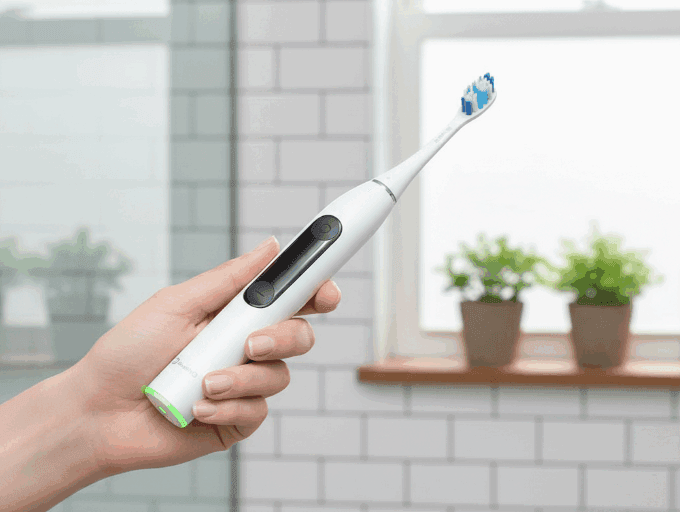
Not brushing along the gumline allows plaque to accumulate, making gums more prone to bleeding. Smart toothbrushes like BrushO, which detect missed zones and coach you to gently clean all surfaces, help prevent this buildup and inflammation.
• Vitamin deficiencies (especially Vitamin C or K)
• Hormonal changes (e.g. during pregnancy)
• Certain medications (like blood thinners)
• Underlying health conditions (such as diabetes)
In these cases, flossing may reveal—not cause—the bleeding.
🔸 Mild and temporary bleeding—especially if you’re just starting to floss regularly—can be normal.
🔸 However, bleeding that persists for more than a week, worsens, or is accompanied by pain or swelling isn’t normal and should be evaluated by a dentist.
1. Be Gentle: Slide the floss between your teeth using a sawing motion. Hug each tooth in a “C” shape and move the floss up and down.
2. Floss Daily: Regular flossing reduces inflammation over time.
3. Don’t Skip the Back Teeth: These are often the first places plaque builds up.
4. Use the Right Tools: If traditional floss is difficult to use, try water flossers or floss picks.
BrushO isn’t just a toothbrush—it’s a smart oral care system that supports your entire routine:
• AI-guided brushing to ensure you clean along the gumline without applying too much pressure.
• Reminders for daily flossing and tongue cleaning through the app.
• Feedback reports that track improvement in bleeding zones.
• Personalized coaching to develop healthier habits based on your brushing data.
Smart brushing leads to less gum bleeding, less inflammation, and better long-term oral health.
If your gums bleed while flossing, don’t stop flossing altogether. Instead, see it as a sign your gums need more consistent and gentle care, not less. Combine smart brushing with regular flossing, and in most cases, the bleeding will subside within days or weeks. If it doesn’t, talk to your dentist—it could be an early warning your body wants you to take seriously. BrushO is a Stanford‑introduced AI-powered toothbrush that empowers users with personalized feedback, pressure guidance, and progress tracking. With BrushO, your gum health isn’t just monitored—it’s improved.

The uncontrolled hypertension is the condition that the dental practice meets in the patient who presents with the elevated pressure that the guideline does not permit for the elective treatment, and the management of this patient requires the deferral of the dental procedure and the referral to ...

The closure of the extraction space in the orthodontic treatment is the phase that demands the careful selection of the mechanics and the monitoring of the force that the appliance delivers. The sliding mechanics that rely on the continuous archwire and the power chain that connects the brackets ...

The transverse discrepancy of the maxilla is the problem that the crowding and the posterior crossbite often hide, and the maxillary expansion is the treatment that addresses the width of the arch rather than the position of the individual tooth. The clinician who diagnoses the constriction early...

The local anaesthesia is the daily procedure that the modern dentistry treats as the routine, and the complications that follow it range from the transient and the trivial to the permanent and the serious. The clinician who injects by the habit without the anatomy in the mind is the clinician who...

The hypertension is the condition that the dental practice meets in the every day, and the patient who carries the elevated pressure without the symptoms is the patient who presents the risk that the chair-side measurement reveals. The dental team occupies the position that no other profession ho...

The glass-ceramic crown has become the default restoration for the anterior and the many posterior teeth, and the material selection within the family is the decision that determines the strength, the aesthetics, and the longevity of the result. The lithium disilicate, the leucite, and the zircon...

The dental phobia is the extreme form of the dental fear that prevents the patient from attending the treatment that the oral health requires, and the management of the phobia demands the skill that extends beyond the routine behaviour guidance. The systematic desensitization, the exposure therap...

The dental fear of the child is the condition that shapes the attitude for the lifetime, and the clinician who manages the first visits with the skill builds the patient who attends the recall without the dread. The fear that the child develops follows the many sources, and the practice that reco...

The patient with controlled hypertension is the patient who requires the dental care that the oral health demands and the treatment that the blood pressure permits, and the clinician who manages the controlled case safely follows the guideline that the evidence supports. The controlled hypertensi...

The ceramic veneer is the restoration that the aesthetic dentistry depends on, and the bond that retains the veneer on the enamel is the critical link that determines whether the restoration survives the function or fractures and debonds. The clinical technique from the preparation to the cementa...

Быстро и недорого построить сеть данных о здоровье зубов, способную создавать каждый.


Address: RM 1427, 14/F RADIO CITY 505, HENNESSY RD CAUSEWAY BAY, HONG KONG
Code: 000000
Phone: +852-53758652
Email: customerservice@brusho.com