
When we think about the “best gift,” it’s often something flashy or expensive — not a toothbrush. But this year, that changed for me. I received BrushO, an AI-powered smart toothbrush, and it turned out to be the most surprising and life-improving gift under the tree. It didn’t just upgrade my brushing routine — it gave me measurable improvements in my oral health, daily confidence, and habits. Here’s how two minutes a day became the highlight of my holiday season.
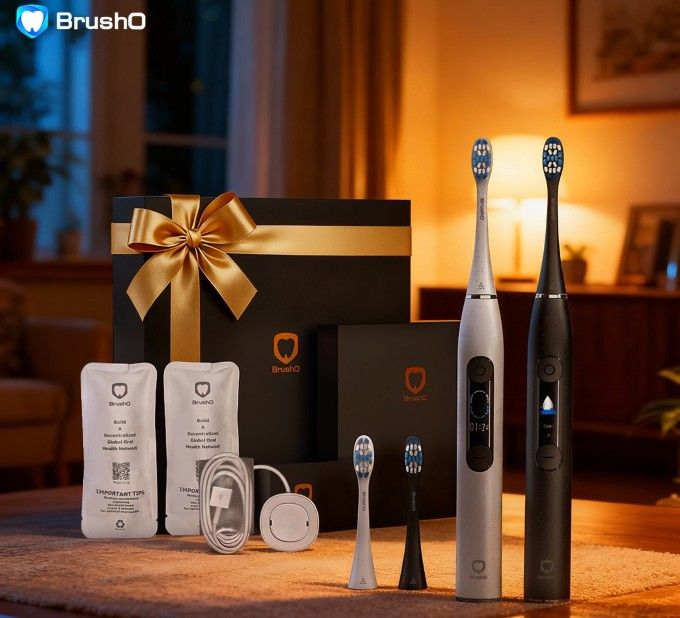
Most people wouldn’t expect a toothbrush to top their holiday wish list. But BrushO isn’t just any toothbrush. It’s equipped with:
• AI-guided zone-based cleaning for 6 zones and 16 surfaces
• Real-time feedback to correct pressure, angle, and duration
• Customized brushing modes like Gum Care, Deep Clean, and Ultra-Gentle
• In-app brushing heatmaps and scores to track daily progress
I didn’t know oral care could be smart, gamified, and genuinely motivating — until I tried it.
This wasn’t just a practical gift. It showed someone cared about my health, my daily habits, and even how I feel when I smile. BrushO offered me:
By January, I noticed less gum sensitivity, fewer missed spots, and more confidence when I talked or smiled. It was like a clean slate — literally.
With BrushO’s brushing score and app reminders, I stopped rushing. Brushing became a mindful ritual, not a half-asleep task.
It wasn’t another gadget I’d forget about. It was something I used every day — and could actually feel the difference.
The holidays are about joy, and BrushO makes brushing engaging:
• Gamification with scores and streaks
• Family challenges — who can improve their score?
• Kids get excited about brushing progress
Suddenly, a daily habit becomes something to look forward to — not something to rush through.
Christmas is a time to show you care — and what better way than gifting good health?
Oral health isn’t isolated from overall wellness. Poor habits are linked to issues like:
• Gum inflammation
• Cardiovascular strain
• Digestive discomfort
• Low confidence from bad breath or staining
BrushO helps reduce these risks by making brushing more effective, precise, and personalized.
Most holiday gifts bring joy for a moment. BrushO brought:
• Cleaner, healthier teeth
• Stronger brushing habits
• Daily rewards and brushing scores
• Free lifetime brush head redemption with BRUSH tokens
Its reward system even made me feel like I was earning something every time I brushed. In a season of indulgence, BrushO was a gift of balance and self-care.
This Christmas, I didn’t just get a toothbrush — I got a lifestyle upgrade. BrushO reminded me that the best gifts don’t just entertain us; they improve us. And sometimes, they even make us look forward to brushing our teeth.
MY BEST CHRISTMAS GIFT EVER: BRUSHO
Dec 25
Dec 24

Hyperdontia is the presence of one or more teeth in excess of the normal dental formula, and the resulting teeth are described as supernumerary. The condition is common enough to appear in routine practice but variable enough in presentation that the decision to intervene is rarely straightforwar...

Few patients complete orthodontic treatment without asking whether their teeth will move back. The honest answer is that they will, to some degree, in the majority of cases. Relapse is not a failure of treatment but a predictable biological response, and understanding why it happens is the basis ...

The mandible is the largest and most frequently fractured bone of the facial skeleton, and its management sits at the interface between trauma surgery and restorative dentistry. Treatment has shifted over four decades from prolonged maxillomandibular fixation towards rigid internal fixation with ...

Chronic liver disease affects hundreds of millions of people worldwide, and its prevalence continues to rise with the epidemic of metabolic liver disease. The liver is central to haemostasis, drug metabolism and immune competence, and its failure therefore alters the risk profile of almost every ...

Excessive gingival display, commonly described as a gummy smile, is one of the most frequent aesthetic concerns presented to dental practitioners. The condition is not a single entity but a clinical presentation that can arise from skeletal, gingival, muscular or dental factors, and the treatment...

Drug-induced gingival overgrowth is a well-recognised adverse effect of several widely prescribed medications, and it remains one of the most common drug-related findings in periodontal practice. The condition produces firm, fibrous enlargement of the gingiva that can interfere with speech, masti...

Denture stomatitis is an inflammatory condition of the denture-bearing mucosa that affects a large proportion of removable prosthesis wearers, yet it is frequently dismissed as a cosmetic annoyance. The condition is driven by a Candida biofilm on the fitting surface of the prosthesis, and it is m...

Chronic kidney disease affects an estimated 850 million people worldwide, and the number of patients surviving on dialysis or with a renal transplant continues to rise. These patients carry an oral disease burden that is substantially higher than that of the general population, and their medical ...

Angular cheilitis is an inflammatory lesion of the labial commissures that presents with erythema, fissuring and crusting at the corners of the mouth. It is one of the most common conditions encountered in general dental practice, yet it is frequently treated as a simple fungal infection and allo...

Adverse reactions to dental materials are uncommon but they are not rare, and they are frequently misdiagnosed because the oral mucosa responds to allergens in a limited number of ways. A burning sensation, a persistent ulcer or an unexplained area of erythema may all represent a hypersensitivity...

สร้างเครือข่ายข้อมูลสุขภาพช่องปากอย่างรวดเร็วและต้นทุนต่ำในวิธีที่ทุกคนสามารถสร้างได้


Address: RM 1427, 14/F RADIO CITY 505, HENNESSY RD CAUSEWAY BAY, HONG KONG
Code: 000000
Phone: +852-53758652
Email: customerservice@brusho.com