
In a world where AI and Web3 are transforming every industry, oral health is finally catching up. Traditional toothbrushes are no longer enough to meet modern health and data needs. From electric brushes to AI-powered oral care, the evolution is real, and at the top stands BrushO, the world’s first AI-powered mining toothbrush built for the Web3 oral health ecosystem.
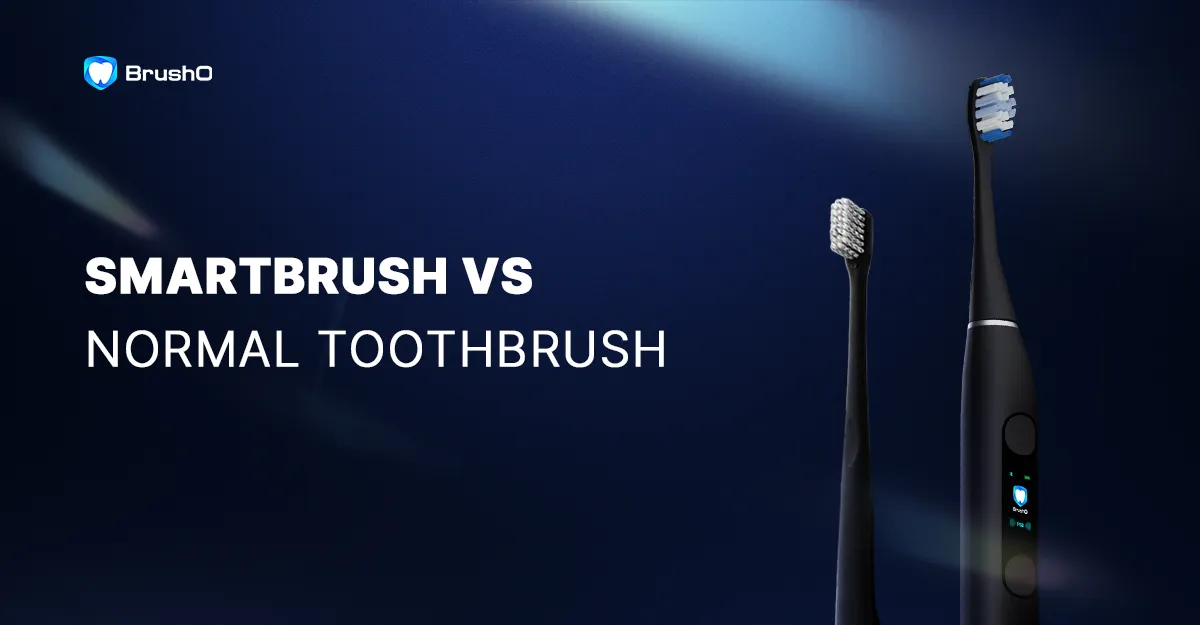
Traditional toothbrushes, though widely used, are limited. They depend entirely on manual effort and guesswork. You don’t know if you’re brushing well, missing areas, or damaging your gums with excess pressure. There’s no tracking, feedback, or personalization, just a basic tool for a crucial health task.
Enter the smart electric toothbrush. With basic sensors and app connectivity, smart brushes began tracking brushing time, pressure, and zones. But even these fell short. While they brought in data, they didn’t empower users with data ownership or the ability to act on insights in a personalized, secure way.
BrushO isn’t just smart, it’s revolutionary. With AI and IoT integration, BrushO offers oral health tracking with AI, giving users real-time brushing feedback, pressure alerts, and brushing reports via the BrushO Toothbrush App. Every session becomes smarter and healthier.
But here’s where BrushO sets itself apart:
It’s the only toothbrush that mines rewards as you brush. Users are rewarded with tokens or NFTs for maintaining healthy brushing habits, thanks to its Web3 infrastructure. Welcome to the DePIN oral health project that merges blockchain technology, NFTs, DAOs, and data monetization — all inside a toothbrush.
Your oral data is valuable. BrushO ensures it stays secure and under your control. All brushing data is stored with encryption and accessed only with your permission, aligning with data privacy, health data control, and secure personal health data standards.
With BrushO, users create their Oral Health Web3 ID, a decentralized identity that puts you in charge of your health data. Whether you want to keep it private, share it with a dentist, or monetise it within the ecosystem, you decide.
BrushO is not just a product, it’s a platform. A blockchain toothbrush that helps build a global oral health data network. It supports collaborative health management where users, dentists, researchers, and communities come together via DAOs to drive innovation in oral care.
This isn’t just the future, it’s now!
From a basic brush to the best electric toothbrush powered by AI and Web3, oral care has come a long way. BrushO doesn’t just clean your teeth it rewards you, protects your privacy, and gives you control.
Welcome to BrushO: An innovative oral care device, a DePIN oral health project, and your gateway to the Web3 oral health ecosystem.
About Brusho:
Brusho is a decentralized global oral health data platform, consisting of the BrushO AI-Powered Mining Toothbrush and the BrushO Network. BrushO’s mission is to empower users worldwide by establishing personal oral health Web3 IDs and accumulating personal oral health data assets, ultimately creating a global oral health Web3 identity network. Through user authorisation, BrushO transforms the oral health industry by restructuring production relationships while safeguarding user privacy, driving industry upgrades, and raising global oral health standards.
May 5
Apr 18

Squamous cell carcinoma is not a single, uniform disease, and two of its oral variants illustrate the extremes of its behavior. Verrucous carcinoma is a slow-growing, exophytic tumor that almost never metastasizes, while spindle cell carcinoma is an aggressive, sarcomatoid malignancy that can be ...

Most people expect a toothache to be the first sign of pulp disease, but some forms of pulpitis are surprisingly silent. A pulp polyp is the visible result of chronic hyperplastic pulpitis, a condition in which the dental pulp grows out of a large carious opening as a fleshy mass. Recognizing thi...

Dry mouth is not merely uncomfortable; it is a medical condition with real consequences for teeth, speech, swallowing and quality of life. When the salivary glands cannot produce enough saliva, medications called sialogogues can restore some of the missing fluid. Pilocarpine and cevimeline are th...

A blister in the mouth can be the first warning of a systemic autoimmune disease, and two disorders deserve particular attention in the dental chair: pemphigus vulgaris and mucous membrane pemphigoid. Both produce chronic oral ulceration, yet their immunologic targets, clinical behavior and long-...

When infection drains from a tooth, the body often creates a visible escape route, and the dentist must interpret these fistulous openings correctly. A parulis is the common gum boil that signals chronic periapical infection, while an oroantral fistula is a communication between the mouth and the...

Among the fibro-osseous lesions of the jaws, the ossifying fibroma holds a unique position because it is a true neoplasm, unlike the reactive cemento-osseous dysplasia discussed in an earlier article. It grows continuously, expands bone and requires surgical removal, and its cemental variant adds...

Not all keratocystic lesions of the jaw behave alike, and one of the most important distinctions in oral pathology separates the orthokeratinized odontogenic cyst from its better-known relative, the odontogenic keratocyst. Although the two lesions look similar under the microscope at first glance...

Periodontal disease is usually a slowly progressive infection, but a rare form called necrotizing ulcerative periodontitis destroys tissue with alarming speed. Unlike ordinary periodontitis, this condition produces necrotic, cratered papillae, deep pocketing and rapid bone loss, and it appears al...

Every parent has met the child who refuses to eat because of painful mouth sores, and most of these children have one of two viral illnesses: herpangina or hand, foot and mouth disease. Both are caused by enteroviruses, both produce fever and oral ulcers, and both are overwhelmingly common in you...

Cementoosseous dysplasia is one of the most common fibro-osseous lesions found on dental radiographs, yet it is also one of the most frequently misdiagnosed. The lesion replaces normal bone with cellular fibrous tissue and cementum-like material, and it appears in several forms that range from a ...

Xây dựng mạng dữ liệu sức khỏe răng miệng nhanh chóng và chi phí thấp theo cách mọi người đều có thể tham gia.
Xây dựng mạng dữ liệu sức khỏe răng miệng nhanh chóng và chi phí thấp theo cách mọi người đều có thể tham gia.


Address: RM 1427, 14/F RADIO CITY 505, HENNESSY RD CAUSEWAY BAY, HONG KONG
Code: 000000
Phone: +852-53758652
Email: customerservice@brusho.com