
Your chewing habits do more than just break down food—they play a pivotal role in shaping your jawline, maintaining balanced oral muscles, and preserving dental alignment. This article explores how uneven or improper chewing can lead to jaw discomfort, facial asymmetry, and even tooth wear, and how consistent oral care with tools like BrushO can help identify and counteract these issues early on.
Most people unconsciously favor one side of the mouth while chewing. Over time, this asymmetry can cause:
• Muscle Imbalance: Leading to one side of the face appearing bulkier or more developed.
• Joint Stress: Extra strain on the temporomandibular joint (TMJ), possibly resulting in pain, clicking, or limited mobility.
• Uneven Tooth Wear: Excessive pressure on certain teeth accelerates enamel loss and gum recession.
• Jaw pain after eating
• Clicking or popping sounds in the jaw
• Crooked smile or facial asymmetry
• More plaque or tartar on one side
• Worn or flattened surfaces on certain teeth
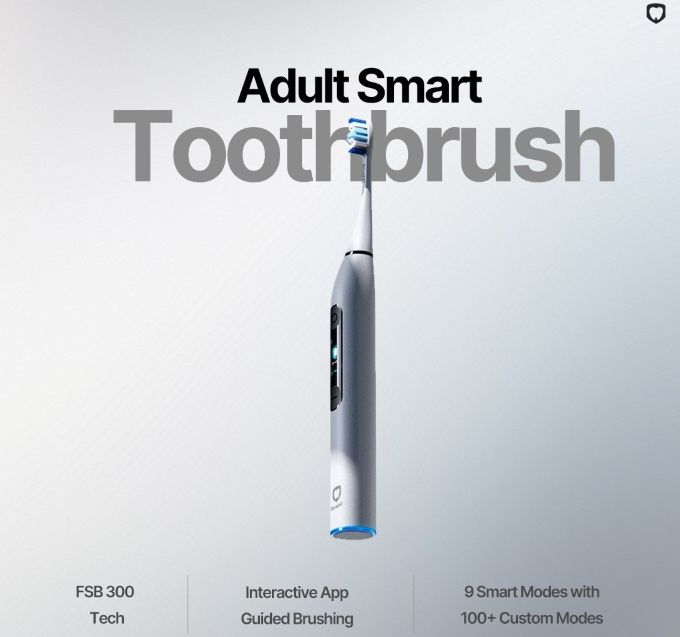
While a toothbrush doesn’t directly affect chewing, BrushO’s AI-powered feedback reveals patterns that may indicate uneven usage:
• Plaque Detection in Specific Zones: A buildup on one side may signal underuse, hinting at an imbalanced chewing pattern.
• Brushing Pressure & Duration Data: If one side receives consistently more brushing pressure or longer duration, it might be compensating for more food breakdown on that side.
Identifying these trends helps users take proactive steps:
• Adjust chewing to both sides for better muscle balance
• Seek professional help if TMJ symptoms arise
• Improve brushing techniques based on real-time feedback
• Alternate Sides: Consciously switch sides during meals to distribute muscle activity evenly.
• Chew Slowly: Rushed eating often reinforces dominant-side chewing.
• Watch Posture: Slouching can affect jaw alignment and chewing efficiency.
• Brush Evenly: Use BrushO’s 6-zone, 16-surface tracking to ensure equal attention across all teeth.
Your chewing style is more than a habit—it’s a determinant of long-term jaw and dental health. Imbalances can quietly lead to facial asymmetry, discomfort, and dental complications. By pairing mindful chewing with smart brushing habits using BrushO, you can identify hidden issues early and maintain a healthier, more symmetrical smile.
BrushO is an AI-powered smart toothbrush system that transforms daily brushing into a guided wellness habit. With real-time feedback, habit tracking, and $BRUSH token rewards, BrushO ensures every brushing session supports long-term oral and jaw health—making it the perfect companion for users seeking a healthier, more balanced smile.

Coffee and red wine are two of the most common causes of teeth staining, and the stains they leave behind are often considered a cosmetic nuisance rather than a dental health issue. However, these extrinsic stains can make teeth look dull, yellow or brown, and they can affect a person's confidenc...

Mouth sores and ulcers are common oral health issues that can cause significant discomfort and pain. These lesions can affect eating, speaking, and overall quality of life, and understanding their healing times and treatment options can help patients manage them effectively. From common canker so...

X-ray imaging has been the gold standard for detecting cavities for decades, but laser-based technologies now offer a different approach to finding tooth decay. Laser cavity detection uses fluorescence and laser light to identify changes in tooth structure before they appear on an x-ray, and unde...

Facial furrows are not just a cosmetic concern, they are visible markers of the way skin ages and how it responds to dehydration. Dry skin is one of the most common contributors to early and deepening facial lines, and understanding the underlying causes helps explain why certain areas of the fac...

Grinding or clenching the teeth at night, known as bruxism, is more than a dental issue. The muscles that close the jaw are among the strongest in the body, and their chronic overactivation can trigger headaches, ear pain, facial discomfort and disrupted sleep. The connection between bruxism and ...

Decortication, the deliberate removal of a cortical plate to expose or to decompress the tissue beneath it, appears in oral surgery under several names and in several contexts, from transalveolar extraction of a deeply impacted third molar to alveoloplasty of an irregular ridge and to decompressi...

Lichenoid lesions of the oral mucosa present a diagnostic problem before they present a therapeutic one, because the same white reticulated pattern can represent idiopathic oral lichen planus, a contact reaction to a restoration, a drug eruption, or an entirely benign variation such as leukoedema...

Bone in the adult jaw is never quiescent. Roughly 10 percent of the human skeleton is replaced every year, and the alveolar process turns over faster than most skeletal sites because it is loaded intermittently by mastication and by the forces transmitted through the periodontal ligament. The ost...

Root canal treatment succeeds or fails at the interface between the filling material and the dentin wall, and no material has changed that interface more in the past two decades than the calcium silicate bioceramic sealer. These materials descend from Portland cement, set in the presence of moist...

Ameloblastoma is the most common clinically significant odontogenic tumor, and its behaviour is defined less by its ability to spread than by its tendency to return after apparently complete removal. Conservative surgery preserves function and facial contour, and decortication is the procedure mo...

Xây dựng mạng dữ liệu sức khỏe răng miệng nhanh chóng và chi phí thấp theo cách mọi người đều có thể tham gia.
Xây dựng mạng dữ liệu sức khỏe răng miệng nhanh chóng và chi phí thấp theo cách mọi người đều có thể tham gia.


Address: RM 1427, 14/F RADIO CITY 505, HENNESSY RD CAUSEWAY BAY, HONG KONG
Code: 000000
Phone: +852-53758652
Email: customerservice@brusho.com