
Drooling during sleep is common, but often misunderstood. While it might seem harmless, chronic drooling could signal underlying oral, nasal, or neurological issues. From poor sleep posture to oral muscle control, there are many reasons why saliva escapes while you sleep. This article explores the science behind sleep drooling, when it becomes a problem, and what you can do—including the importance of good oral hygiene and the role of AI-powered tools like BrushO in promoting nighttime mouth health.
Sleeping with your mouth open causes saliva to escape more easily, especially if you’re congested or have nasal blockages.
Some people have reduced tone in their facial or oral muscles during sleep, making it harder to retain saliva.
Sleeping on your side or stomach increases the chances of saliva pooling in your mouth and leaking out due to gravity.
Nasal congestion forces people to breathe through the mouth, increasing the likelihood of drooling.
In more serious cases, drooling can be a symptom of neurological disorders such as Parkinson’s disease, stroke, or cerebral palsy—especially if it occurs during the day as well.
Occasional drooling is usually not serious. However, excessive or chronic drooling may lead to:
• Skin irritation or rashes around the mouth
• Fungal growth from constant moisture
• Bad breath and bacterial buildup
• Social embarrassment or disrupted sleep
It can also be a sign of sleep disorders, such as sleep apnea or bruxism (teeth grinding), which deserve medical attention.
Use saline sprays, antihistamines, or allergy medication to keep nasal passages clear.
Back-sleeping reduces the gravitational pull that causes drool to escape.
Consult a doctor if drooling is accompanied by snoring, daytime fatigue, or choking during sleep.
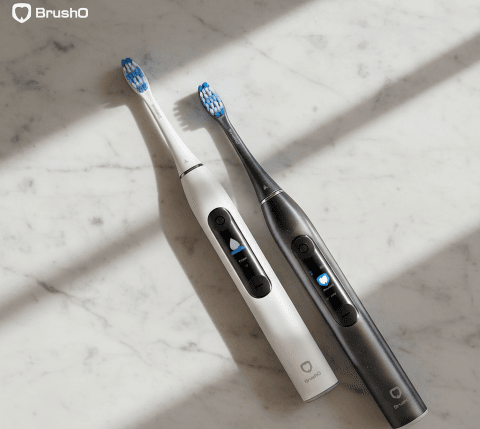
Good oral hygiene reduces bacterial growth caused by saliva pooling. A smart toothbrush like BrushO ensures your mouth stays fresh and clean—even before bedtime.
Before bedtime, BrushO ensures no area is missed—especially the tongue and gumline, where bacteria thrive overnight.
The BrushO app tracks your nighttime brushing habits to help you stay consistent with good oral hygiene.
With soft-bristle settings and customized modes, BrushO prepares your mouth for a healthier sleep environment.
Stay motivated with token rewards just for brushing before bed—building habits that reduce overnight odor and inflammation caused by drooling.
You should talk to a healthcare provider if:
• You drool excessively every night
• Drooling is accompanied by choking, gasping, or poor sleep
• It occurs during the day as well
• You experience facial numbness or slurred speech
Drooling during sleep is common, but persistent cases shouldn’t be ignored. From sleep position to muscle tone and sinus health, many factors can contribute. By pairing smart oral care routines with awareness of the causes, you can reduce drooling and wake up feeling fresher. And with BrushO, you’re not just brushing—you’re building nighttime oral hygiene habits that support better sleep and better health.
Jan 7
Jan 6

Fluoride in drinking water is the most cost-effective caries preventive measure in public health, and it is also the source of most avoidable fluoride exposure in young children. The balance between benefit and risk depends on concentration, on total intake from all sources and on the age of the ...

A mouthguard is the only piece of protective equipment that a dentist can prescribe, and the difference between the cheapest and the best version is often less than the cost of a single repair. This guide explains what each type of mouthguard actually protects, how to judge fit, and what to check...

Distinguishing reversible from irreversible pulpitis is the single most consequential decision in endodontic diagnosis, because one leads to a restoration and the other to root canal treatment or extraction. The distinction rests on symptoms and pulp testing rather than on radiographs alone, and ...

A pregnancy epulis is a benign overgrowth of gum tissue that appears during pregnancy, most often in the second or third trimester. It can alarm patients because it grows quickly and bleeds easily, yet in most cases it needs no surgery and settles after delivery. Understanding what drives the gro...

When several teeth are missing, the choice usually narrows to a removable partial denture or a fixed implant-supported restoration, and cost is the factor patients raise first. Upfront price is only part of the comparison, because the two options differ in maintenance, comfort, effects on neighbo...

Most root canal failures are not caused by inadequate cleaning of canals that were found, but by canals that were never located. Molar anatomy varies widely, and the variation is not random: specific teeth in specific populations have predictable additional canals. Knowing where they hide is the ...

Gum massage is one of the oldest recommendations in oral care and one of the least understood. It has been described as a treatment for bleeding gums, a route to firmer tissue and, more recently, a way to reduce brushing force. This article separates the mechanisms that are supported by physiolog...

Interdental cleaning is the part of oral hygiene most people abandon first, and the choice between a floss pick and a length of string floss is often made on convenience. Convenience matters, because a tool that is used daily outperforms a superior tool that stays in the drawer, but the two devic...

Dementia changes the way a denture is worn, cleaned and tolerated, and the people who notice the change first are usually family carers rather than clinicians. Poor denture hygiene in this group is associated with mucosal infection, reduced food intake and, in frail patients, respiratory complica...

Chewing tobacco keeps nicotine and plant irritants in prolonged contact with a small area of mucosa, and the damage that results is concentrated exactly where the quid is held. The lesions that develop are often painless, which is why they are discovered during routine examination rather than bec...

Xây dựng mạng dữ liệu sức khỏe răng miệng nhanh chóng và chi phí thấp theo cách mọi người đều có thể tham gia.
Xây dựng mạng dữ liệu sức khỏe răng miệng nhanh chóng và chi phí thấp theo cách mọi người đều có thể tham gia.


Address: RM 1427, 14/F RADIO CITY 505, HENNESSY RD CAUSEWAY BAY, HONG KONG
Code: 000000
Phone: +852-53758652
Email: customerservice@brusho.com