
Sugar is widely recognized as a leading contributor to tooth decay, yet environmental dryness may pose an equally significant — and often overlooked — threat. Dry air reduces saliva production, weakening the mouth’s natural defense system responsible for neutralizing acids, repairing enamel, and controlling harmful bacteria. When oral hydration drops, plaque becomes more aggressive and enamel more vulnerable, creating conditions that accelerate cavity formation even without high sugar intake. Understanding this physiological relationship helps individuals adopt preventative strategies and leverage advanced oral-care technologies to protect long-term dental health.
Sugar contributes to tooth decay by feeding acid-producing bacteria. However, cavities develop when protective mechanisms fail, not just when sugar is present.
Key protective mechanisms include:
• Saliva buffering acids
• Mineral replenishment of enamel
• Mechanical cleansing of food particles
• Microbial balance regulation
Dry air disrupts all of these defenses simultaneously, amplifying decay risk regardless of diet.
Saliva functions as the mouth’s primary protective system.
Saliva buffers pH levels, preventing prolonged enamel exposure to acid.
Calcium and phosphate in saliva repair microscopic enamel damage.
Antimicrobial proteins regulate harmful microbial populations.
Prevents plaque adhesion and bacterial concentration.
When saliva production decreases, these protections weaken dramatically.
Dry environments accelerate evaporation from mucosal surfaces, reducing saliva availability.
Common triggers:
• Air conditioning
• Indoor heating
• Airplane travel
• Seasonal climate shifts
• Low-humidity workplaces
Low moisture allows bacteria to concentrate, producing acids more efficiently and remaining in contact with enamel longer.
Without sufficient remineralization support, enamel microdamage accumulates, progressing toward decay.
While sugar initiates bacterial acid production, dry air:
• Prolongs acid exposure
• Reduces neutralization
• Weakens enamel repair
• Enhances bacterial density
This combination creates a compounding effect that may accelerate cavity formation beyond dietary factors alone.
• Persistent dry mouth sensation
• Sticky or thick saliva
• Increased sensitivity
• Frequent plaque accumulation
• Cracked lips or tongue discomfort
• Elevated cavity occurrence
Early awareness enables preventive intervention.
• Drink water regularly
• Use humidifiers in dry seasons
• Avoid excessive caffeine or alcohol
• Sugar-free gum
• Fiber-rich foods
• Proper chewing habits
Removing bacterial biofilm becomes even more critical when natural defenses weaken.
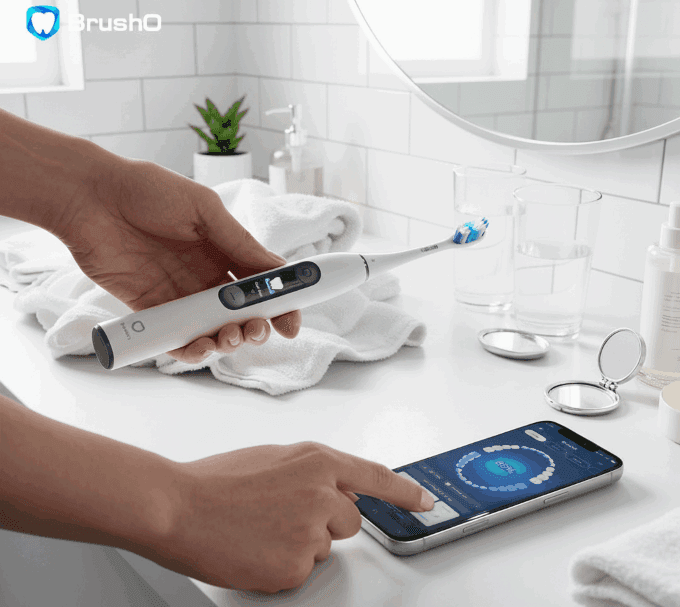
Smart brushing technologies such as BrushO enhance protection through:
• Pressure control protecting enamel
• Zone tracking eliminating bacterial buildup
• Habit analytics identifying risk patterns
• Adaptive brushing modes for sensitive conditions
These features compensate for reduced natural oral defenses.
Environmental factors are increasingly recognized as contributors to dental disease progression. Maintaining hydration, monitoring environmental exposure, and implementing intelligent brushing systems provide a comprehensive defense strategy against cavity development.
Sugar remains a well-known cavity trigger, but dry air undermines the biological systems that protect teeth daily. By reducing saliva effectiveness, altering bacterial dynamics, and weakening enamel repair mechanisms, low humidity environments create conditions that accelerate tooth decay. Adopting hydration awareness, consistent hygiene practices, and data-guided oral care solutions such as BrushO helps restore protective balance and maintain long-term dental resilience. Protecting your teeth isn’t just about limiting sugar — it’s about supporting the environment your mouth depends on to stay healthy.

The uncontrolled hypertension is the condition that the dental practice meets in the patient who presents with the elevated pressure that the guideline does not permit for the elective treatment, and the management of this patient requires the deferral of the dental procedure and the referral to ...

The closure of the extraction space in the orthodontic treatment is the phase that demands the careful selection of the mechanics and the monitoring of the force that the appliance delivers. The sliding mechanics that rely on the continuous archwire and the power chain that connects the brackets ...

The transverse discrepancy of the maxilla is the problem that the crowding and the posterior crossbite often hide, and the maxillary expansion is the treatment that addresses the width of the arch rather than the position of the individual tooth. The clinician who diagnoses the constriction early...

The local anaesthesia is the daily procedure that the modern dentistry treats as the routine, and the complications that follow it range from the transient and the trivial to the permanent and the serious. The clinician who injects by the habit without the anatomy in the mind is the clinician who...

The hypertension is the condition that the dental practice meets in the every day, and the patient who carries the elevated pressure without the symptoms is the patient who presents the risk that the chair-side measurement reveals. The dental team occupies the position that no other profession ho...

The glass-ceramic crown has become the default restoration for the anterior and the many posterior teeth, and the material selection within the family is the decision that determines the strength, the aesthetics, and the longevity of the result. The lithium disilicate, the leucite, and the zircon...

The dental phobia is the extreme form of the dental fear that prevents the patient from attending the treatment that the oral health requires, and the management of the phobia demands the skill that extends beyond the routine behaviour guidance. The systematic desensitization, the exposure therap...

The dental fear of the child is the condition that shapes the attitude for the lifetime, and the clinician who manages the first visits with the skill builds the patient who attends the recall without the dread. The fear that the child develops follows the many sources, and the practice that reco...

The patient with controlled hypertension is the patient who requires the dental care that the oral health demands and the treatment that the blood pressure permits, and the clinician who manages the controlled case safely follows the guideline that the evidence supports. The controlled hypertensi...

The ceramic veneer is the restoration that the aesthetic dentistry depends on, and the bond that retains the veneer on the enamel is the critical link that determines whether the restoration survives the function or fractures and debonds. The clinical technique from the preparation to the cementa...

Xây dựng mạng dữ liệu sức khỏe răng miệng nhanh chóng và chi phí thấp theo cách mọi người đều có thể tham gia.
Xây dựng mạng dữ liệu sức khỏe răng miệng nhanh chóng và chi phí thấp theo cách mọi người đều có thể tham gia.


Address: RM 1427, 14/F RADIO CITY 505, HENNESSY RD CAUSEWAY BAY, HONG KONG
Code: 000000
Phone: +852-53758652
Email: customerservice@brusho.com