
Have you ever noticed your teeth feeling more sensitive when the seasons change? Whether it’s the dry cold of winter or the humid heat of summer, climate shifts can have a surprising effect on your oral health—especially tooth sensitivity. From dry air and sinus pressure to sudden exposure to cold winds or hot drinks, your favorite climate might be quietly triggering your dental discomfort. In this article, we’ll explore how environmental changes affect tooth sensitivity and how smart brushing tools like BrushO can help manage it.
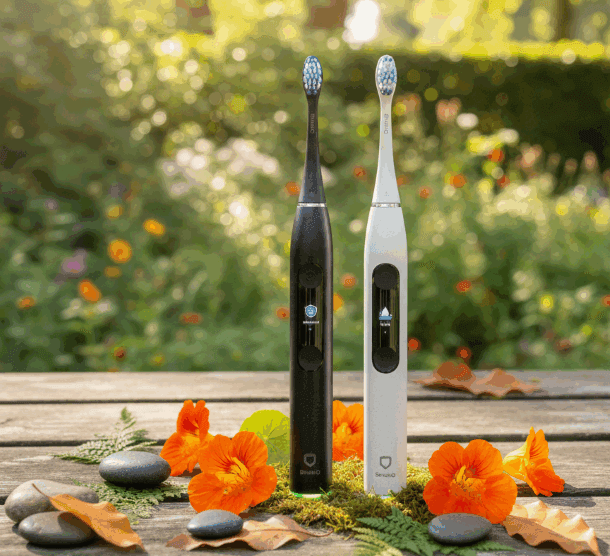
Tooth sensitivity occurs when enamel is worn down or gum recession exposes the inner dentin layer, allowing temperature, acidity, or pressure to reach the tooth’s nerve. Climate conditions can aggravate this, especially in the following ways:
• Cold Weather: Cold air exposure can trigger sharp pain in exposed dentin or weakened enamel.
• Dry Air: Reduces saliva production, which normally helps neutralize acids and protect enamel.
• Humidity & Heat: Increased perspiration and dehydration may lead to dry mouth, increasing cavity and sensitivity risks.
These external conditions often catch people off guard—especially during seasonal transitions.
In colder regions or winter seasons:
• Breathing through your mouth in chilly air can cause sudden nerve reactions in sensitive teeth.
• Hot-to-cold transitions, like drinking warm coffee then stepping into freezing wind, can create tiny fractures in enamel, increasing vulnerability.
• People tend to brush harder in winter to combat plaque, unknowingly aggravating exposed areas.
Use sensitive mode in your BrushO smart toothbrush during colder months to reduce pressure and protect exposed dentin.
In hot or tropical climates:
• Dehydration becomes a major concern, reducing saliva’s ability to wash away acids and bacteria.
• This leads to a more acidic oral environment, making enamel erosion—and therefore sensitivity—more likely.
• Sugary or citrus drinks are consumed more often, further weakening enamel.
Real-time pressure and coverage alerts remind you to brush gently and evenly, regardless of the weather.
Barometric shifts in spring or fall can trigger sinus congestion. Sinus pressure pushes on upper jaw nerves, which often mimic a toothache or amplify tooth sensitivity—especially in molars. If you feel sudden dental pain but no visible decay or inflammation, climate-related sinus pressure may be the culprit.
Different climates lead to different routines, which can affect your oral health:
• Hot seasons: More iced drinks, acidic fruits, and outdoor sports—higher enamel erosion risk.
• Cold seasons: More mouth breathing, hot drinks, indoor heating drying the mouth—higher sensitivity risk.
Being mindful of how your climate influences these choices helps you better manage tooth sensitivity.
AI-powered toothbrushes like BrushO provide adaptive solutions for seasonal oral care:
• Custom brushing modes like “Sensitive” or “Whitening” for different environmental needs.
• Pressure sensors prevent overbrushing in colder seasons.
• Hydration reminders help keep saliva levels up in dry or humid weather.
• Coverage tracking ensures you’re not missing areas, even if you rush after outdoor activities.
With data-driven brushing feedback, you can protect your teeth year-round—rain or shine.
• Use desensitizing toothpaste when sensitivity increases.
• Switch to soft-bristle brush heads in colder seasons.
• Avoid brushing immediately after acidic or sugary drinks.
• Rinse with water after exposure to dry air or temperature extremes.
• Visit your dentist if you notice persistent seasonal sensitivity.
Your oral health is influenced by more than just brushing and flossing—it’s shaped by the environment around you. Whether it’s dry winter air, summer dehydration, or barometric shifts affecting your sinuses, climate change can trigger or worsen tooth sensitivity. The good news? With smart brushing tools like BrushO, you can adapt your oral care routine to weather changes. By customizing your brushing experience and tracking your habits, you can protect your smile no matter what season you’re in.
Jan 16
Jan 16

Thumb sucking and pacifier use are normal self-soothing behaviors in infancy, and most children give them up on their own by school age. The dental problem arises when the habit continues past the eruption of the permanent front teeth, because the persistent pressure reshapes the growing jaw and ...

Most people never think about the shape of their tooth roots, but root morphology determines how a tooth is treated when disease strikes. Taurodontism and dilaceration are two developmental anomalies that change root anatomy in distinctive ways, and both have major implications for endodontics, e...

Dental injuries are among the most common sports-related injuries, and a mouthguard is the simplest piece of equipment an athlete can wear. Yet many players still train without one, often because they have never been told which type to choose or how a well-fitted guard feels. Understanding the pr...

Piezoelectric surgery has changed the way oral surgeons cut bone. Instead of a rotating bur, a piezotome uses ultrasonic vibrations to cut mineralized tissue while leaving soft tissue largely untouched. The technique is now routine for osteotomies, sinus lifts and delicate procedures where precis...

Children's teeth vary naturally in size, but some variations are large enough to affect function, appearance and future orthodontic care. Microdontia means teeth that are smaller than normal, and macrodontia means teeth that are larger than normal, and both can appear as isolated findings or as p...

Two patients can have identical teeth and completely different treatment outcomes, and the reason is often hiding in the gums. Gingival biotype describes the thickness and morphology of the soft tissue around the teeth, and it influences how the gum reacts to surgery, implants, braces and even si...

Guided bone regeneration, or GBR, is the standard method for rebuilding bone before and around dental implants. The concept is simple: a membrane creates a protected space that allows bone-forming cells to grow while excluding competing soft tissue. Choosing a resorbable membrane changes the prot...

Periodontal disease destroys not only the gum but the bone and ligament that anchor teeth, and the goal of regenerative treatment is to rebuild all three. Emdogain, an enamel matrix derivative, has become one of the most studied biological agents for this task, and its results improve further whe...

A chipped tooth is one of the most common dental emergencies, affecting children and adults alike through falls, sports, biting on hard objects and even normal wear. The right repair depends less on the size of the fragment and more on which layer of the tooth is exposed. Bonding, veneers and cro...

A knocked-out tooth is one of the few dental emergencies where minutes decide the outcome. When a permanent tooth is completely displaced from its socket, immediate and correct handling can save it, while delays or mistakes can condemn it to loss. The steps are simple enough for any parent, coach...


Address: RM 1427, 14/F RADIO CITY 505, HENNESSY RD CAUSEWAY BAY, HONG KONG
Code: 000000
Phone: +852-53758652
Email: customerservice@brusho.com
