How Smart Toothbrushes Help Reduce Tooth Sensitivity
Jan 22

Jan 22
Tooth sensitivity affects millions worldwide, causing discomfort and pain during everyday activities like eating, drinking, and brushing. Fortunately, smart toothbrushes offer an advanced solution to alleviate these symptoms. By utilizing cutting-edge technology such as pressure sensors, real-time feedback, and customized brushing modes, these devices are designed to provide a more precise, gentle brushing experience. This blog explores the science behind tooth sensitivity and how smart toothbrushes can address this common issue.


Understanding Tooth Sensitivity and Its Causes

Tooth sensitivity, also known as dentin hypersensitivity, occurs when the underlying layer of the teeth, called dentin, becomes exposed due to the erosion of enamel or gum recession. The dentin contains tiny tubes that lead to the nerve, which is why it triggers sharp pain when exposed to hot, cold, sweet, or acidic substances.
Several factors contribute to this condition, including:
  • Enamel Erosion: Over time, the enamel can wear away due to acidic foods, aggressive brushing, or teeth grinding.
  • Gum Recession: The gums may recede due to age or improper brushing, exposing the sensitive areas of the tooth.
  • Brushing Habits: Using a hard-bristled toothbrush or brushing with excessive force can aggravate sensitivity.
With traditional brushing, individuals often fail to maintain the proper pressure and technique, which can worsen the condition. This is where smart toothbrushes shine—by offering features designed to improve brushing effectiveness and protect sensitive teeth.

How Smart Toothbrushes Help Reduce Tooth Sensitivity

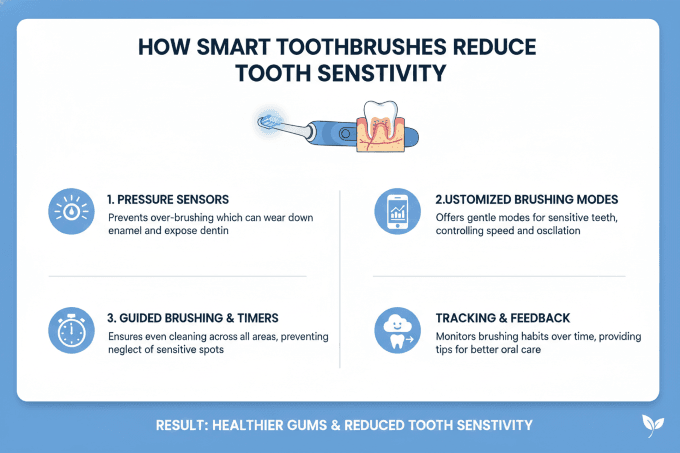
Smart toothbrushes, such as the BrushO smart toothbrush, come equipped with advanced technology that can help prevent or reduce tooth sensitivity. Here’s how:
  1. Pressure Sensors

    One of the key features of smart toothbrushes is pressure sensors that alert users when they are brushing too hard. Brushing with excessive force can lead to enamel wear and gum recession, both of which are major causes of tooth sensitivity. By receiving real-time feedback, users can adjust their brushing technique to avoid unnecessary pressure.
  2. Personalized Brushing Modes

    Smart toothbrushes offer various brushing modes, including gentle settings specifically designed for sensitive teeth. These modes adjust the brush's speed and motion to provide a softer, more comfortable cleaning experience, helping to reduce the likelihood of triggering pain or discomfort.
  3. Full-Mouth Coverage Tracking

    Many smart toothbrushes come with tracking capabilities that ensure users brush every part of their mouth equally, preventing areas from being missed or over-brushed. This technology ensures an even and thorough clean, which is important for maintaining optimal oral health and minimizing gum irritation.
  4. Real-Time Feedback

    Using an accompanying app, smart toothbrushes can offer real-time feedback on brushing technique and pressure. This ensures that users are consistently following recommended oral care practices to prevent tooth sensitivity and achieve the best possible results.
  5. Timers and Alerts

    Smart toothbrushes are equipped with timers that ensure users brush for the recommended two minutes. The built-in alerts also notify users when it's time to change the brushing area, which prevents focusing too much pressure on any one spot, helping to protect sensitive teeth.


Conclusion

Smart toothbrushes offer a modern solution to the age-old problem of tooth sensitivity. By incorporating innovative features like pressure sensors, personalized modes, and real-time feedback, these devices provide a more precise and comfortable brushing experience, protecting sensitive teeth from further damage. Whether you're looking to prevent tooth sensitivity or alleviate existing discomfort, a smart toothbrush may be your key to better oral health.

最近發文

Workday logs can expose missed lunch brushing

Workday logs can expose missed lunch brushing

Missed lunch brushing often hides inside normal work routines instead of feeling like a conscious choice. Time logs, calendar gaps, and daily patterns can reveal where the habit breaks down and why simple awareness often fixes more than extra motivation does.

Tea sips can keep canker sores tender longer

Tea sips can keep canker sores tender longer

Warm tea can feel soothing at first, but repeated sipping can keep a small canker sore active by extending heat, dryness, acidity, and friction across already irritated tissue. The problem is often the sipping pattern, not the tea alone.

Retainer cases can reseed plaque after cleaning

Retainer cases can reseed plaque after cleaning

A retainer can look freshly cleaned and still pick up old residue from its case. When moisture, biofilm, and handling build up inside the container, the case can quietly place plaque back onto the appliance each time it is stored.

Pulp horns sit closer to the surface than people think

Pulp horns sit closer to the surface than people think

Pulp horns extend higher inside the crown than many people realize, which helps explain why small wear, chips, or cavities can become sensitive faster than expected. Surface damage and inner anatomy are often closer neighbors than they appear from outside.

Protein bars can cling behind crowded lower teeth

Protein bars can cling behind crowded lower teeth

Protein bars often feel convenient and tidy, but their sticky texture can lodge behind crowded lower teeth where saliva and the tongue do not clear residue quickly. That lingering film can feed plaque long after the snack feels finished.

Perikymata show where enamel has been slowly worn

Perikymata show where enamel has been slowly worn

Perikymata are tiny natural enamel surface lines, and when they fade unevenly they can reveal where daily wear has slowly polished the tooth. Their pattern offers a subtle clue about abrasion, erosion, and long-term enamel change.

Handle nudges can steady sink to mirror switching

Handle nudges can steady sink to mirror switching

Many people brush while shifting attention between the sink, the mirror, and other small distractions. Subtle handle nudges can stabilize that switching by bringing focus back during the exact moments when route control and coverage usually start to drift.

Fizzy mixers can keep dentin twinges active at night

Fizzy mixers can keep dentin twinges active at night

Fizzy mixers can seem harmless in the evening, but repeated acidic, carbonated sipping may keep exposed dentin reactive long after dinner. The issue is often not one drink alone, but the long pattern of bubbles, acid, and slow nighttime contact.

Contact points decide where food packs first

Contact points decide where food packs first

Food packing is not random. The tiny shape and tightness of tooth contact points strongly influence where fibers, seeds, and soft fragments get trapped first, especially when bite guidance and tooth form direct chewing into the same narrow spaces again and again.

Allergy mornings can make tongue coating cling longer

Allergy mornings can make tongue coating cling longer

Allergy heavy mornings can make tongue coating seem thicker because mouth breathing, postnasal drip, dryness, and slower oral clearing all build on each other before the day fully starts. The coating is often about the whole morning pattern, not the tongue alone.
