
Brushing twice daily is widely recommended, yet consistency alone does not guarantee protection against dental problems. Small brushing gaps — missed zones, uneven coverage, or inadequate technique — allow plaque biofilm to persist and mature. Over time, these seemingly minor omissions can escalate into cavities, gum disease, restorative procedures, and significant financial costs. This article examines the clinical and behavioral mechanisms linking brushing gaps to dental expenses, and provides evidence-based strategies to reduce long-term risk through improved brushing precision and technology-supported monitoring.
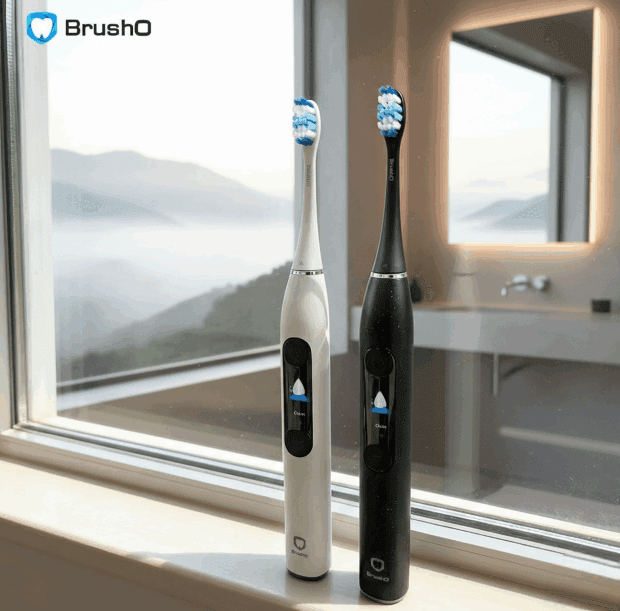
Brushing gaps refers to areas of the mouth that receive insufficient mechanical cleaning during routine brushing. These commonly include:
• Back molars
• Inner tooth surfaces
• Gumline margins
• Crowded interdental zones
• Rotated or recessed teeth
Because plaque accumulates unevenly, these missed regions become primary sites for disease development even when brushing duration appears adequate.
Plaque biofilm begins forming within hours. If undisturbed:
1. Bacterial colonies multiply
2. Acid production increases
3. Enamel demineralization begins
Repeated neglect accelerates cavity formation.
Within 24–72 hours, plaque can mineralize into calculus (tartar), which:
• Cannot be removed by brushing
• Requires professional scaling
• Promotes gum inflammation
This step marks the transition from preventable buildup to clinical intervention.
Localized brushing gaps often produce:
• Gingivitis
• Bleeding gums
• Tissue swelling
If persistent, progression toward periodontal disease becomes possible, significantly raising treatment complexity and cost.
Small hygiene lapses frequently escalate into expensive procedures.
• Routine cleaning
• Fluoride application
Low cost and minimal intervention.
• Fillings
• Sealants
• Deep cleanings
Moderate cost and time commitment.
• Root canals
• Crowns
• Gum therapy
Significantly higher financial burden.
• Implants
• Bridges
• Orthodontic correction
These treatments represent a major long-term investment and discomfort.
Dental economics consistently demonstrate:
Preventive hygiene
⬇️
Localized decay
⬇️
Restorative treatment
⬇️
Structural replacement
Small brushing gaps often initiate this chain.
Even motivated individuals commonly experience:
• Multitasking during brushing
• Inaccurate coverage perception
• Excessive brushing pressure in visible zones
• Rushed routines
• Lack of technique feedback
Human self-assessment of brushing completeness is typically unreliable.
Smart brushing technologies address behavioral limitations by introducing objective guidance.
AI-powered tools such as BrushO assist through:
• Zone mapping across the full mouth
• Detection of missed surfaces
• Pressure monitoring
• Coverage analytics
• Habit tracking over time
This feedback transforms brushing from estimation into measurable performance, helping reduce cumulative risk exposure.
Enhancing brushing accuracy yields measurable benefits:
• Lower cavity incidence
• Reduced periodontal treatment needs
• Less restorative intervention
• Extended tooth longevity
• Fewer emergency dental visits
From a health economics perspective, precision hygiene produces strong preventative value.
• Angle brush toward the gumline
• Use systematic zone rotation
• Maintain full duration coverage
• Avoid distractions
• Establish routine consistency
• Utilize guided brushing tools
• Review brushing performance trends
• Routine dental assessments
• Personalized hygiene instruction
Small brushing gaps may appear insignificant in daily routines, but their cumulative biological impact can lead to major dental health and financial consequences. Plaque persistence, inflammation progression, and restorative treatment escalation demonstrate how minor technique limitations translate into measurable cost burdens. Preventive precision — through structured brushing, awareness of coverage gaps, and smart monitoring technologies — represents one of the most effective strategies for preserving both oral health and long-term financial well-being. Consistency is essential, but accuracy ultimately determines outcomes.
Feb 13
Feb 13

Hyperdontia is the presence of one or more teeth in excess of the normal dental formula, and the resulting teeth are described as supernumerary. The condition is common enough to appear in routine practice but variable enough in presentation that the decision to intervene is rarely straightforwar...

Few patients complete orthodontic treatment without asking whether their teeth will move back. The honest answer is that they will, to some degree, in the majority of cases. Relapse is not a failure of treatment but a predictable biological response, and understanding why it happens is the basis ...

The mandible is the largest and most frequently fractured bone of the facial skeleton, and its management sits at the interface between trauma surgery and restorative dentistry. Treatment has shifted over four decades from prolonged maxillomandibular fixation towards rigid internal fixation with ...

Chronic liver disease affects hundreds of millions of people worldwide, and its prevalence continues to rise with the epidemic of metabolic liver disease. The liver is central to haemostasis, drug metabolism and immune competence, and its failure therefore alters the risk profile of almost every ...

Excessive gingival display, commonly described as a gummy smile, is one of the most frequent aesthetic concerns presented to dental practitioners. The condition is not a single entity but a clinical presentation that can arise from skeletal, gingival, muscular or dental factors, and the treatment...

Drug-induced gingival overgrowth is a well-recognised adverse effect of several widely prescribed medications, and it remains one of the most common drug-related findings in periodontal practice. The condition produces firm, fibrous enlargement of the gingiva that can interfere with speech, masti...

Denture stomatitis is an inflammatory condition of the denture-bearing mucosa that affects a large proportion of removable prosthesis wearers, yet it is frequently dismissed as a cosmetic annoyance. The condition is driven by a Candida biofilm on the fitting surface of the prosthesis, and it is m...

Chronic kidney disease affects an estimated 850 million people worldwide, and the number of patients surviving on dialysis or with a renal transplant continues to rise. These patients carry an oral disease burden that is substantially higher than that of the general population, and their medical ...

Angular cheilitis is an inflammatory lesion of the labial commissures that presents with erythema, fissuring and crusting at the corners of the mouth. It is one of the most common conditions encountered in general dental practice, yet it is frequently treated as a simple fungal infection and allo...

Adverse reactions to dental materials are uncommon but they are not rare, and they are frequently misdiagnosed because the oral mucosa responds to allergens in a limited number of ways. A burning sensation, a persistent ulcer or an unexplained area of erythema may all represent a hypersensitivity...

সবাই যেন নিজের মতো করে গড়তে পারে – এমনভাবে দ্রুত ও কম খরচে ওরাল হেলথ ডেটা নেটওয়ার্ক তৈরি করুন।
সবাই যেন নিজের মতো করে গড়তে পারে – এমনভাবে দ্রুত ও কম খরচে ওরাল হেলথ ডেটা নেটওয়ার্ক তৈরি করুন।


Address: RM 1427, 14/F RADIO CITY 505, HENNESSY RD CAUSEWAY BAY, HONG KONG
Code: 000000
Phone: +852-53758652
Email: customerservice@brusho.com