
Your mouth hosts billions of microorganisms forming the oral microbiome — a dynamic ecosystem where beneficial and harmful bacteria constantly compete. While some microbes protect enamel, regulate pH, and support immune defense, others drive cavities, gum disease, and systemic inflammation. Understanding this balance is critical for maintaining long-term oral and overall health. This article explores the roles of good versus harmful oral bacteria, how daily habits influence microbial equilibrium, and how AI-guided brushing tools can help preserve beneficial microbial function while reducing pathogenic buildup.
The oral microbiome refers to the diverse population of bacteria living on teeth, gums, tongue, and saliva surfaces. Scientists have identified more than 700 microbial species inhabiting the mouth.
This ecosystem exists in a delicate balance:
• Beneficial bacteria regulate harmful populations
• Harmful bacteria exploit imbalances
• Hygiene habits influence microbial composition
Oral health is not about eliminating bacteria — it is about maintaining equilibrium.
Not all bacteria are harmful. Certain microbes perform essential protective functions.
Functions of Good Oral Bacteria
• Neutralize harmful acids
• Support enamel remineralization
• Aid digestion through early food breakdown
• Help regulate immune response
• Compete against pathogenic microbes
Healthy bacterial presence contributes to stability rather than disease.
What Supports Beneficial Bacteria
• Consistent gentle brushing
• Balanced nutrition
• Hydration and saliva production
• Avoiding excessive antibacterial overuse
Maintaining microbial diversity is key.
When an imbalance occurs, pathogenic bacteria dominate and trigger disease processes.
Common Effects
• Plaque formation
• Enamel demineralization
• Gum inflammation
• Persistent bad breath
• Periodontal tissue destruction
These bacteria thrive when hygiene is inconsistent or incomplete.
Several lifestyle factors shift bacterial composition:
• High sugar diets
• Poor brushing coverage
• Excessive pressure is damaging gums
• Dry mouth or dehydration
• Irregular oral hygiene routines
Over time, an imbalance leads to chronic oral health deterioration.
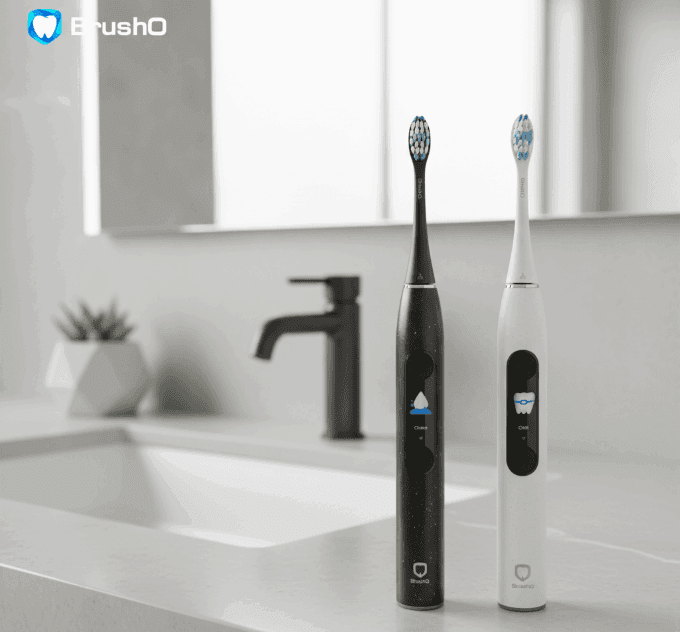
Modern oral care technology helps manage bacterial load without disrupting beneficial function.
BrushO Supports Microbiome Stability Through
6-zone × 16-surface tracking ensures plaque removal before harmful colonies expand.
Prevents aggressive brushing that damages protective gum barriers.
Habit reports reinforce daily microbial control.
Tailored cleaning intensity supports gum health and microbial equilibrium.
By improving brushing quality rather than simply increasing intensity, AI-guided care promotes healthy microbiome balance.
Evidence-supported practices include:
• Brushing twice daily with correct technique
• Cleaning along the gumline
• Flossing regularly
• Maintaining hydration
• Limiting sugar frequency
• Using smart feedback tools
Consistency shapes microbial composition over time.
The distinction between good and bad mouth bacteria underscores a fundamental truth: oral health depends on balance rather than elimination. Beneficial microbes protect the mouth, while harmful populations exploit neglect and imbalance. Through targeted plaque control, technique guidance, and habit tracking, tools like BrushO enable users to manage bacterial ecosystems intelligently. Supporting beneficial bacteria while limiting pathogenic growth ensures healthier teeth, stronger gums, and improved systemic resilience. Oral care is not just cleaning — it is ecological management.

The uncontrolled hypertension is the condition that the dental practice meets in the patient who presents with the elevated pressure that the guideline does not permit for the elective treatment, and the management of this patient requires the deferral of the dental procedure and the referral to ...

The closure of the extraction space in the orthodontic treatment is the phase that demands the careful selection of the mechanics and the monitoring of the force that the appliance delivers. The sliding mechanics that rely on the continuous archwire and the power chain that connects the brackets ...

The transverse discrepancy of the maxilla is the problem that the crowding and the posterior crossbite often hide, and the maxillary expansion is the treatment that addresses the width of the arch rather than the position of the individual tooth. The clinician who diagnoses the constriction early...

The local anaesthesia is the daily procedure that the modern dentistry treats as the routine, and the complications that follow it range from the transient and the trivial to the permanent and the serious. The clinician who injects by the habit without the anatomy in the mind is the clinician who...

The hypertension is the condition that the dental practice meets in the every day, and the patient who carries the elevated pressure without the symptoms is the patient who presents the risk that the chair-side measurement reveals. The dental team occupies the position that no other profession ho...

The glass-ceramic crown has become the default restoration for the anterior and the many posterior teeth, and the material selection within the family is the decision that determines the strength, the aesthetics, and the longevity of the result. The lithium disilicate, the leucite, and the zircon...

The dental phobia is the extreme form of the dental fear that prevents the patient from attending the treatment that the oral health requires, and the management of the phobia demands the skill that extends beyond the routine behaviour guidance. The systematic desensitization, the exposure therap...

The dental fear of the child is the condition that shapes the attitude for the lifetime, and the clinician who manages the first visits with the skill builds the patient who attends the recall without the dread. The fear that the child develops follows the many sources, and the practice that reco...

The patient with controlled hypertension is the patient who requires the dental care that the oral health demands and the treatment that the blood pressure permits, and the clinician who manages the controlled case safely follows the guideline that the evidence supports. The controlled hypertensi...

The ceramic veneer is the restoration that the aesthetic dentistry depends on, and the bond that retains the veneer on the enamel is the critical link that determines whether the restoration survives the function or fractures and debonds. The clinical technique from the preparation to the cementa...

সবাই যেন নিজের মতো করে গড়তে পারে – এমনভাবে দ্রুত ও কম খরচে ওরাল হেলথ ডেটা নেটওয়ার্ক তৈরি করুন।
সবাই যেন নিজের মতো করে গড়তে পারে – এমনভাবে দ্রুত ও কম খরচে ওরাল হেলথ ডেটা নেটওয়ার্ক তৈরি করুন।


Address: RM 1427, 14/F RADIO CITY 505, HENNESSY RD CAUSEWAY BAY, HONG KONG
Code: 000000
Phone: +852-53758652
Email: customerservice@brusho.com