
Your weekday and weekend brushing routines may not be as consistent as you think they are. On weekends, changes in schedule, mood, and lifestyle can lead to skipped brushing, rushed routines, or missed areas. These small shifts may seem harmless, but can have long-term effects on oral health. Learn how AI-powered tools like BrushO detect and correct these habits to help you stay consistent—even when life gets flexible.
Weekdays tend to follow a structure: wake up, brush teeth, go to work, brush again before bed. But on weekends, many of us:
• Sleep in
• Eat and snack more frequently
• Travel or spend nights out
• Break from regular routines
These subtle shifts in behavior can negatively affect your oral hygiene without you even realizing it.
Late starts often mean delayed or forgotten brushing. Bacteria have had all night to multiply—skipping your morning brush lets it stay longer.
Weekends bring movie nights, brunches, and comfort food. But with more sugar and carbs comes more plaque—and fewer people remember to brush after meals.
Whether you’re out late or too relaxed, nighttime brushing is often skipped or rushed on weekends, increasing the risk of bacterial buildup overnight.
Weekend brushing may be more casual, with less focus on pressure, angle, or zone coverage—especially without reminders or guidance.
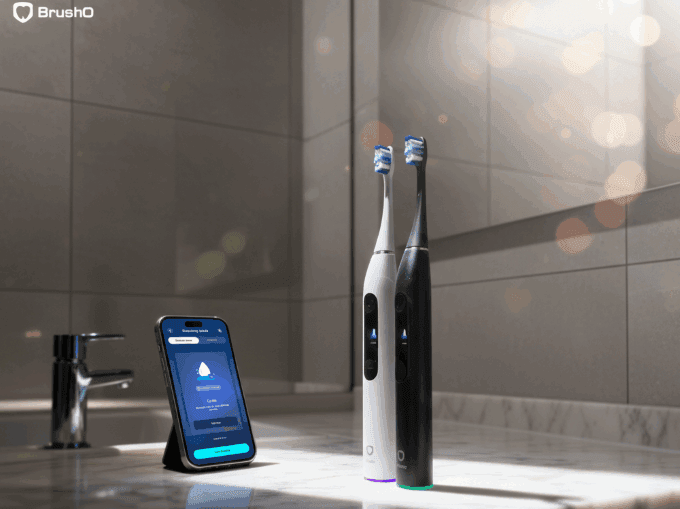
BrushO bridges the weekend gap by keeping you accountable even when life isn’t structured.
Get app notifications to brush, even if your schedule changes.
BrushO tracks performance trends by day, so you can see where your weekend routine differs—and how to fix it.
Make sure you’re not missing zones, even when brushing on-the-go or half-asleep.
Earn token rewards for maintaining consistency—yes, even on Saturdays and Sundays!
• Set reminders in your app or phone for brushing—even when you sleep in
• Keep a travel-size brush and paste in your bag for spontaneous outings
• Avoid brushing immediately after acidic weekend drinks (like mimosas)—wait 30 minutes
• Use gentle brushing mode after late nights or sugary snacks
• Log into the app each evening to track your daily coverage and earn streaks
Your oral bacteria don’t know it’s the weekend. But your habits might change—and your teeth pay the price. The key to preventing weekend-related dental risks is awareness and consistency. With the help of AI-powered tools like BrushO, you can enjoy your weekends while staying on top of your oral health—no dentist visit surprises required.
Jan 22
Jan 22

Saliva has moved from the byproduct of the examination to the fluid that the modern practice can read, and the diagnostics that the salivary sample supports now reach from the caries risk to the periodontal inflammation and beyond. The fluid is easy to collect, safe to handle, and rich in the pro...

The narrow alveolar ridge is the common obstacle that the implant plan meets in the healed posterior site, and the ridge split technique is the approach that widens the crest without the block graft and the second surgical site. The technique uses the viscoelastic property of the bone, and the co...

The resin-bonded bridge is the conservative alternative to the conventional fixed prosthesis, and its place in the modern practice has widened as the adhesive dentistry matured. The prosthesis replaces the missing tooth with the minimal removal of the enamel from the abutment, and the retention i...

The systemic antibiotic has a defined and a narrow place in the periodontal therapy, and the clinician who respects its limits uses it well while the clinician who reaches for it routinely erodes both the result and the antibiotic stewardship. The mechanical debridement remains the foundation of ...

The bond failure of the bracket is the interruption that the fixed orthodontic treatment can tolerate in the small number but not in the pattern, and the clinician who understands the cause reduces the frequency that the repeated rebonding records. The failure that recurs on the single tooth poin...

The prescription pad is one of the most common sources of the oral complaint that the patient brings to the dental office, and the clinician who does not think of the medication may spend the appointment treating the symptom that the drug created. The list of the agents that affect the mouth grow...

The intraoral scanner has moved from the novelty of the early adopters to the standard equipment of the modern prosthodontic practice, and the comparison with the conventional impression has become a daily question rather than an academic one. The scanner captures the surface of the teeth and the...

The endodontic retreatment is the second chance that the tooth receives when the initial treatment fails to resolve the infection or the symptoms, and the procedure is both more demanding and more rewarding than the primary treatment. The clinician who retreats the tooth encounters the filling ma...

The access preparation is the gateway of every root canal treatment, and it is the step at which the outcome of the case is most often decided, for good or for ill. A well-designed access straightens the canal system, removes the coronal obstruction, and allows the instruments and the irrigants t...

The restoration that the laboratory returns is only as good as the information that the clinician sends, and the communication between the dentist and the technician is the step that determines whether the crown, the veneer, or the bridge meets the expectation of the patient. The shade, the form,...

সবাই যেন নিজের মতো করে গড়তে পারে – এমনভাবে দ্রুত ও কম খরচে ওরাল হেলথ ডেটা নেটওয়ার্ক তৈরি করুন।
সবাই যেন নিজের মতো করে গড়তে পারে – এমনভাবে দ্রুত ও কম খরচে ওরাল হেলথ ডেটা নেটওয়ার্ক তৈরি করুন।


Address: RM 1427, 14/F RADIO CITY 505, HENNESSY RD CAUSEWAY BAY, HONG KONG
Code: 000000
Phone: +852-53758652
Email: customerservice@brusho.com