
Most people assume that as long as they brush their teeth twice a day, they’re doing everything right. But what if your toothbrush—manual or electric—is actually doing more harm than good? Improper brushing habits, worn-out tools, and a lack of real-time feedback can lead to enamel erosion, gum recession, and long-term oral damage. This article explores how your toothbrush could be negatively impacting your oral health and how to make smart, safe improvements—especially with the help of AI-powered tools like BrushO.
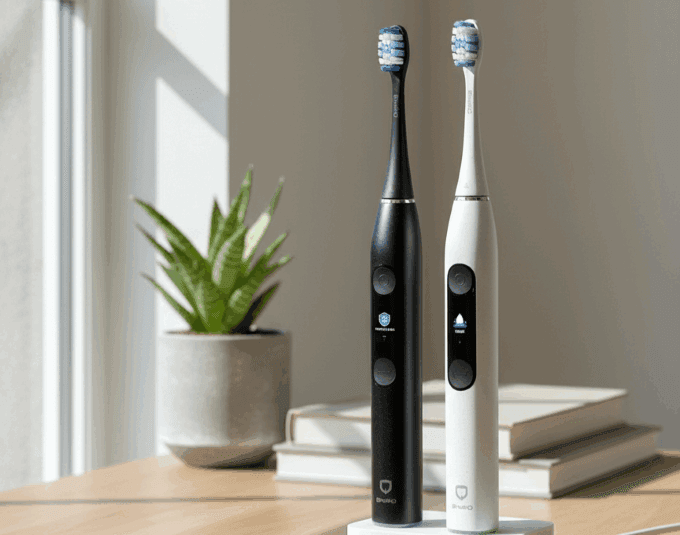
Many believe that brushing harder leads to cleaner teeth. In reality, aggressive brushing can strip away the protective enamel layer, exposing dentin and increasing sensitivity. Once enamel is worn down, it doesn’t regenerate—meaning permanent damage has been done.
Common signs of overbrushing include:
• Teeth appearing more yellow (exposed dentin)
• Increased sensitivity to hot/cold
• Gum recession and longer-looking teeth
A toothbrush with hard bristles or an oversized head can be too abrasive for daily use. Dentists recommend soft-bristled brushes that gently remove plaque without harming soft tissues. Also, choosing the wrong brush size can lead to missed spots and uneven cleaning.
Frayed or flattened bristles don’t clean well and can irritate gums. Toothbrushes should be replaced every 3 months, or sooner if bristles lose shape. Failing to replace your brush regularly can result in:
• Reduced plaque removal
• Gum irritation
• Accumulated bacteria on the bristles
Smart toothbrushes like BrushO monitor your brushing force in real time. When you press too hard, the app alerts you instantly—preventing enamel erosion before it starts.
With 6-zone, 16-surface coverage mapping, BrushO ensures you don’t over-focus on certain areas while ignoring others. The AI system helps maintain consistency and balance across your whole mouth.
BrushO notifies users when it’s time to change the brush head—preventing bacterial buildup and maintaining cleaning efficiency. Unlike manual brushing, you’re never guessing.
Daily brushing reports reveal trends like rushed brushing, excessive pressure, or skipped surfaces—making it easy to improve over time.
If you notice any of the following, your brushing technique or toothbrush might be the problem:
• Bleeding gums (without flossing or known sensitivity)
• Tooth sensitivity that’s worsening
• Receding gums
• Sore jaw or teeth after brushing
• Bad breath, even after brushing
If these symptoms persist, consult your dentist and reassess your brushing habits and tools.
• Use a soft-bristled toothbrush
• Replace your brush or head every 3 months
• Brush with gentle circular motions, not force
• Brush for at least 2 minutes, twice a day
• Consider a smart toothbrush for feedback and pressure guidance
• Never brush immediately after acidic foods—wait 30 minutes
• Don’t multitask—focus on brushing with intention
Brushing your teeth is essential—but how you do it matters just as much as doing it at all. The wrong toothbrush or poor technique can lead to more harm than good, causing irreversible enamel wear and gum recession. Smart toothbrushes like BrushO offer real-time insights, gentle guidance, and personalized feedback to ensure every brush protects your smile, not damages it. BrushO is an AI-powered smart toothbrush designed to upgrade your oral care routine. With features like real-time feedback, brushing zone analysis, pressure sensors, and personalized reports, it helps users of all ages brush smarter—not harder. Say goodbye to guessing and hello to a scientifically supported brushing routine.

The uncontrolled hypertension is the condition that the dental practice meets in the patient who presents with the elevated pressure that the guideline does not permit for the elective treatment, and the management of this patient requires the deferral of the dental procedure and the referral to ...

The closure of the extraction space in the orthodontic treatment is the phase that demands the careful selection of the mechanics and the monitoring of the force that the appliance delivers. The sliding mechanics that rely on the continuous archwire and the power chain that connects the brackets ...

The transverse discrepancy of the maxilla is the problem that the crowding and the posterior crossbite often hide, and the maxillary expansion is the treatment that addresses the width of the arch rather than the position of the individual tooth. The clinician who diagnoses the constriction early...

The local anaesthesia is the daily procedure that the modern dentistry treats as the routine, and the complications that follow it range from the transient and the trivial to the permanent and the serious. The clinician who injects by the habit without the anatomy in the mind is the clinician who...

The hypertension is the condition that the dental practice meets in the every day, and the patient who carries the elevated pressure without the symptoms is the patient who presents the risk that the chair-side measurement reveals. The dental team occupies the position that no other profession ho...

The glass-ceramic crown has become the default restoration for the anterior and the many posterior teeth, and the material selection within the family is the decision that determines the strength, the aesthetics, and the longevity of the result. The lithium disilicate, the leucite, and the zircon...

The dental phobia is the extreme form of the dental fear that prevents the patient from attending the treatment that the oral health requires, and the management of the phobia demands the skill that extends beyond the routine behaviour guidance. The systematic desensitization, the exposure therap...

The dental fear of the child is the condition that shapes the attitude for the lifetime, and the clinician who manages the first visits with the skill builds the patient who attends the recall without the dread. The fear that the child develops follows the many sources, and the practice that reco...

The patient with controlled hypertension is the patient who requires the dental care that the oral health demands and the treatment that the blood pressure permits, and the clinician who manages the controlled case safely follows the guideline that the evidence supports. The controlled hypertensi...

The ceramic veneer is the restoration that the aesthetic dentistry depends on, and the bond that retains the veneer on the enamel is the critical link that determines whether the restoration survives the function or fractures and debonds. The clinical technique from the preparation to the cementa...

সবাই যেন নিজের মতো করে গড়তে পারে – এমনভাবে দ্রুত ও কম খরচে ওরাল হেলথ ডেটা নেটওয়ার্ক তৈরি করুন।
সবাই যেন নিজের মতো করে গড়তে পারে – এমনভাবে দ্রুত ও কম খরচে ওরাল হেলথ ডেটা নেটওয়ার্ক তৈরি করুন।


Address: RM 1427, 14/F RADIO CITY 505, HENNESSY RD CAUSEWAY BAY, HONG KONG
Code: 000000
Phone: +852-53758652
Email: customerservice@brusho.com