ফিরে যান

Top Benefits of Using a Smart Toothbrush for Sensitive Teeth
Jan 23

Jan 23
Sensitive teeth can make everyday activities like eating and brushing uncomfortable. A smart toothbrush—with features like pressure sensors, personalized brushing modes, and real‑time feedback—can help improve brushing habits, protect enamel and gums, and reduce sensitivity over time. This article explores the key benefits of using a smart toothbrush specifically for sensitive teeth.


Introduction: Why Sensitive Teeth Need Special Care

Tooth sensitivity, often caused by enamel erosion, gum recession, or aggressive brushing, affects millions of people globally. When dentin—the layer beneath enamel—becomes exposed, it can trigger sharp discomfort from hot, cold, sweet, or acidic foods. Traditional toothbrushes may not provide sufficient protection or guidance to address these issues properly.
This is where smart toothbrush technology becomes especially valuable. Smart toothbrushes are electric toothbrushes equipped with advanced sensors, connectivity, and app integration that help users brush more effectively. They offer science‑backed advantages that go beyond what manual or basic electric brushes can provide.

1. Gentle Cleaning That Protects Sensitive Teeth

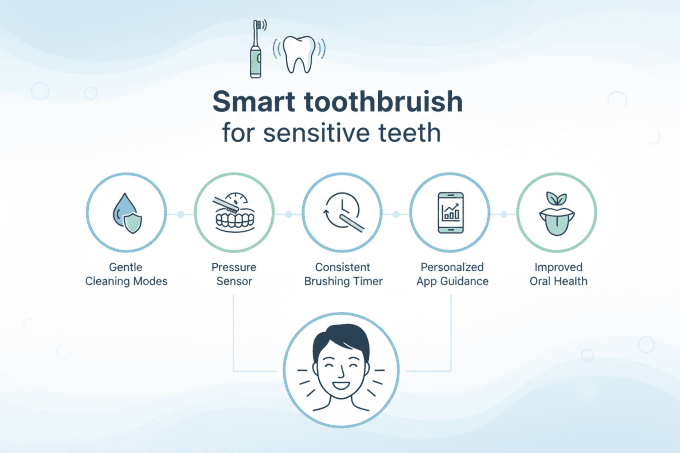
One of the most important benefits of using a smart toothbrush for sensitive teeth is its gentle yet effective cleaning action. Unlike hard manual brushing—which can worsen sensitivity by stripping enamel and irritating gums—smart toothbrushes use advanced motion technology to remove plaque without excessive force. Many models also include dedicated “sensitive” or “gentle” brushing modes tailored for users who need milder brushing power and reduced vibration intensity.
This gentle approach helps maintain enamel integrity while still achieving a thorough clean, reducing the risk of irritation and discomfort common among those with sensitive teeth.

2. Pressure Sensors Prevent Over‑Brushing

Excessive brushing pressure is a common cause of gum recession and enamel wear—two major contributors to sensitivity. Smart toothbrushes typically include built‑in pressure sensors that alert you when you are brushing too hard. These real‑time alerts, often communicated through gentle vibration or app notifications, help you maintain the ideal brushing force, protecting your gums and enamel over time.
By preventing over‑brushing, these sensors help reduce the progression of sensitivity and promote healthier brushing habits.

3. Personalized Brushing Modes for Tailored Oral Care

Unlike traditional brushes with one uniform setting, smart toothbrushes offer multiple brushing modes such as sensitive, gum care, deep clean, or daily clean. For individuals with sensitive teeth, switching to a sensitive mode ensures that strokes are softer and less abrasive, focusing on comfort without compromising hygiene.
This personalized capability means smarter brushing that adapts to your needs, rather than a one‑size‑fits‑all approach.

4. Real‑Time Feedback Encourages Better Brushing Technique

Smart toothbrushes provide real‑time feedback through companion apps that guide you on your brushing technique. These apps use data from built‑in motion trackers, timers, and pressure sensors to show whether you are brushing too hard, missing areas, or not brushing long enough. With this guidance, users can make immediate adjustments, leading to healthier and more effective brushing habits.
Over time, this feedback loop improves brushing consistency and helps prevent issues that lead to tooth sensitivity, such as uneven plaque removal or missed regions prone to decay.

5. Coverage Tracking Ensures Even Cleaning

Missing certain areas of your mouth while brushing can leave plaque behind, contributing to gum irritation and sensitivity. Smart toothbrushes often track which areas have been brushed and for how long, ensuring full mouth coverage. This advanced tracking helps you brush thoroughly and evenly, which is essential for maintaining healthy teeth and minimizing the risk of sensitivity‑related conditions.

6. Long‑Term Habit Tracking and Motivation

Many smart toothbrushes sync with mobile apps to track brushing behavior over weeks and months. This habit tracking not only shows progress but also motivates users to stay consistent. Some apps even provide rewards, streaks, or gamified elements that make sticking to a good brushing routine easier—and more engaging.
This long‑term focus encourages healthier daily habits, further reducing the risk and discomfort associated with sensitive teeth.

7. Enhanced Gum Health and Reduced Inflammation

For many people, tooth sensitivity is closely linked with gum health. Smart toothbrushes help by gently stimulating gums and reminding users to brush along the gum line without applying too much force. With improved gum care and reduced inflammation, the overall oral environment becomes healthier, which can decrease sensitivity triggers.
 

Conclusion: Smart Toothbrushes Make Sensitive Teeth Easier to Manage

A smart toothbrush is more than just a high‑tech gadget—it’s a scientifically supported tool that can make a real difference for people with sensitive teeth. From gentle brushing modes and pressure sensors to real‑time feedback and long‑term habit tracking, these devices empower users with precise, adaptive oral care.
By combining expert‑guided brush technology with personalized insights and data‑driven coaching, smart toothbrushes help you protect enamel, minimize discomfort, and build better habits for a lifetime of healthier smiles.

সাম্প্রতিক পোস্ট

Dentistry in Uncontrolled Hypertension: Risks and Precautions

Dentistry in Uncontrolled Hypertension: Risks and Precautions

The uncontrolled hypertension is the condition that the dental practice meets in the patient who presents with the elevated pressure that the guideline does not permit for the elective treatment, and the management of this patient requires the deferral of the dental procedure and the referral to ...

Orthodontic Space Closure Mechanics: Sliding vs Power Chain

Orthodontic Space Closure Mechanics: Sliding vs Power Chain

The closure of the extraction space in the orthodontic treatment is the phase that demands the careful selection of the mechanics and the monitoring of the force that the appliance delivers. The sliding mechanics that rely on the continuous archwire and the power chain that connects the brackets ...

Maxillary Expansion in Orthodontics

Maxillary Expansion in Orthodontics

The transverse discrepancy of the maxilla is the problem that the crowding and the posterior crossbite often hide, and the maxillary expansion is the treatment that addresses the width of the arch rather than the position of the individual tooth. The clinician who diagnoses the constriction early...

Complications of Local Anaesthesia in Dentistry

Complications of Local Anaesthesia in Dentistry

The local anaesthesia is the daily procedure that the modern dentistry treats as the routine, and the complications that follow it range from the transient and the trivial to the permanent and the serious. The clinician who injects by the habit without the anatomy in the mind is the clinician who...

Managing the Hypertensive Patient in Dentistry

Managing the Hypertensive Patient in Dentistry

The hypertension is the condition that the dental practice meets in the every day, and the patient who carries the elevated pressure without the symptoms is the patient who presents the risk that the chair-side measurement reveals. The dental team occupies the position that no other profession ho...

Glass-Ceramic Crowns: Material Selection

Glass-Ceramic Crowns: Material Selection

The glass-ceramic crown has become the default restoration for the anterior and the many posterior teeth, and the material selection within the family is the decision that determines the strength, the aesthetics, and the longevity of the result. The lithium disilicate, the leucite, and the zircon...

Treatment of Dental Phobia: Exposure and Desensitization

Treatment of Dental Phobia: Exposure and Desensitization

The dental phobia is the extreme form of the dental fear that prevents the patient from attending the treatment that the oral health requires, and the management of the phobia demands the skill that extends beyond the routine behaviour guidance. The systematic desensitization, the exposure therap...

Managing Dental Fear in Children

Managing Dental Fear in Children

The dental fear of the child is the condition that shapes the attitude for the lifetime, and the clinician who manages the first visits with the skill builds the patient who attends the recall without the dread. The fear that the child develops follows the many sources, and the practice that reco...

Dentistry with Controlled Hypertension: Safe Treatment Guidelines

Dentistry with Controlled Hypertension: Safe Treatment Guidelines

The patient with controlled hypertension is the patient who requires the dental care that the oral health demands and the treatment that the blood pressure permits, and the clinician who manages the controlled case safely follows the guideline that the evidence supports. The controlled hypertensi...

Ceramic Veneers: Bonding Protocol and Clinical Technique

Ceramic Veneers: Bonding Protocol and Clinical Technique

The ceramic veneer is the restoration that the aesthetic dentistry depends on, and the bond that retains the veneer on the enamel is the critical link that determines whether the restoration survives the function or fractures and debonds. The clinical technique from the preparation to the cementa...
