
Decentralized Science DeSci, changes the approach and style of how traditional scientific research could be conducted. With the application of web3 technologies, like blockchain and decentralized networks, transparency, accessibility, and collaboration in science are improved. DeSci can address some of the major challenges in traditional scientific frameworks by connecting researchers, contributors, and institutions to share data and resources equitably.
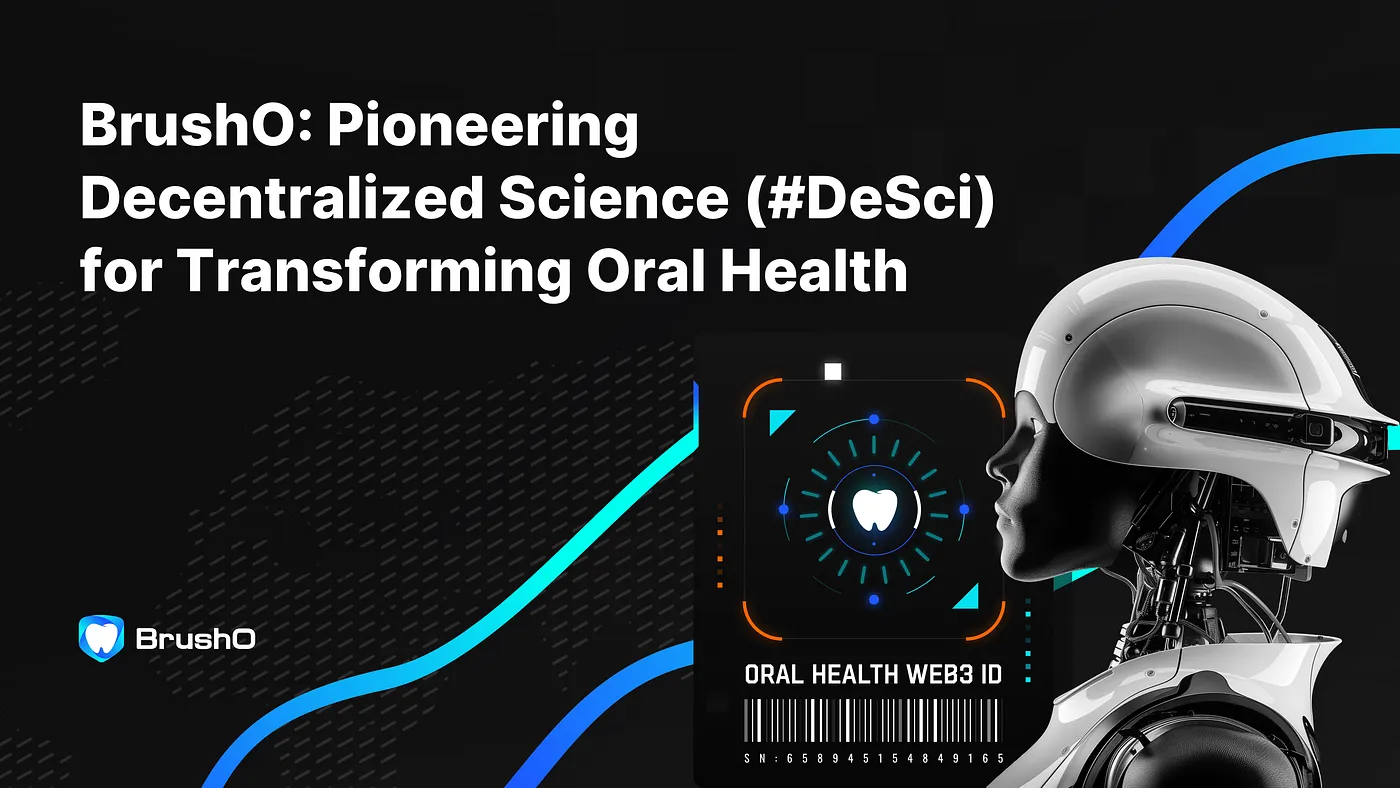
The potential of DeSci is not limited to drug discovery and genomics but extends to climate research and oral health. By leveraging blockchain and Web3 technologies, DeSci enables open, transparent, and collaborative approaches to scientific exploration, breaking traditional silos. For instance, with platforms such as Molecule, pharmaceutical research can be revolutionized through open collaboration between biotech companies, investors, and academics.
BrushO is one of the early companies that applied DeSci principles in oral care with blockchain, AI, and the latest dental research initiation into a decentralized system to solve dentistry’s core problems and management of oral health.
BrushO is a manifestation of the principles of DeSci, solving specific problems within the dental field. Where technology meets healthcare, BrushO stands out as the go-to solution for researching, managing, and improving oral health. The new model brings better patient outcomes and shows the full potential diversity that DeSci might bring to specialized fields.
This new model facilitates more personalized care and support, providing access and availability of data to researchers and healthcare professionals in ways unimaginable; it bridges the gap between research and practice through DeSci principles that encourage innovation and a new relationship with diverse stakeholders.
The decentralized, inclusive approach of BrushO shows the full potential of DeSci in specialized fields and proves how technology can push for better healthcare outcomes, meaningful solutions, and interesting developments in oral health geared towards a global audience.
Mar 13
Nov 29

Squamous cell carcinoma is not a single, uniform disease, and two of its oral variants illustrate the extremes of its behavior. Verrucous carcinoma is a slow-growing, exophytic tumor that almost never metastasizes, while spindle cell carcinoma is an aggressive, sarcomatoid malignancy that can be ...

Most people expect a toothache to be the first sign of pulp disease, but some forms of pulpitis are surprisingly silent. A pulp polyp is the visible result of chronic hyperplastic pulpitis, a condition in which the dental pulp grows out of a large carious opening as a fleshy mass. Recognizing thi...

Dry mouth is not merely uncomfortable; it is a medical condition with real consequences for teeth, speech, swallowing and quality of life. When the salivary glands cannot produce enough saliva, medications called sialogogues can restore some of the missing fluid. Pilocarpine and cevimeline are th...

A blister in the mouth can be the first warning of a systemic autoimmune disease, and two disorders deserve particular attention in the dental chair: pemphigus vulgaris and mucous membrane pemphigoid. Both produce chronic oral ulceration, yet their immunologic targets, clinical behavior and long-...

When infection drains from a tooth, the body often creates a visible escape route, and the dentist must interpret these fistulous openings correctly. A parulis is the common gum boil that signals chronic periapical infection, while an oroantral fistula is a communication between the mouth and the...

Among the fibro-osseous lesions of the jaws, the ossifying fibroma holds a unique position because it is a true neoplasm, unlike the reactive cemento-osseous dysplasia discussed in an earlier article. It grows continuously, expands bone and requires surgical removal, and its cemental variant adds...

Not all keratocystic lesions of the jaw behave alike, and one of the most important distinctions in oral pathology separates the orthokeratinized odontogenic cyst from its better-known relative, the odontogenic keratocyst. Although the two lesions look similar under the microscope at first glance...

Periodontal disease is usually a slowly progressive infection, but a rare form called necrotizing ulcerative periodontitis destroys tissue with alarming speed. Unlike ordinary periodontitis, this condition produces necrotic, cratered papillae, deep pocketing and rapid bone loss, and it appears al...

Every parent has met the child who refuses to eat because of painful mouth sores, and most of these children have one of two viral illnesses: herpangina or hand, foot and mouth disease. Both are caused by enteroviruses, both produce fever and oral ulcers, and both are overwhelmingly common in you...

Cementoosseous dysplasia is one of the most common fibro-osseous lesions found on dental radiographs, yet it is also one of the most frequently misdiagnosed. The lesion replaces normal bone with cellular fibrous tissue and cementum-like material, and it appears in several forms that range from a ...

Bauen Sie schnell und kostengünstig ein Netzwerk für Zahngesundheitsdaten auf, das jeder nutzen kann.
Bauen Sie schnell und kostengünstig ein Netzwerk für Zahngesundheitsdaten auf, das jeder nutzen kann.


Address: RM 1427, 14/F RADIO CITY 505, HENNESSY RD CAUSEWAY BAY, HONG KONG
Code: 000000
Phone: +852-53758652
Email: customerservice@brusho.com