
Everyone experiences bad breath from time to time — especially in the morning. But for many, halitosis (chronic bad breath) is a daily struggle. It’s not just about garlic or coffee; the root causes often lie deeper in your oral care routine. Understanding what causes bad breath is the first step toward a fresher, healthier mouth — and BrushO is here to help you tackle it with technology.
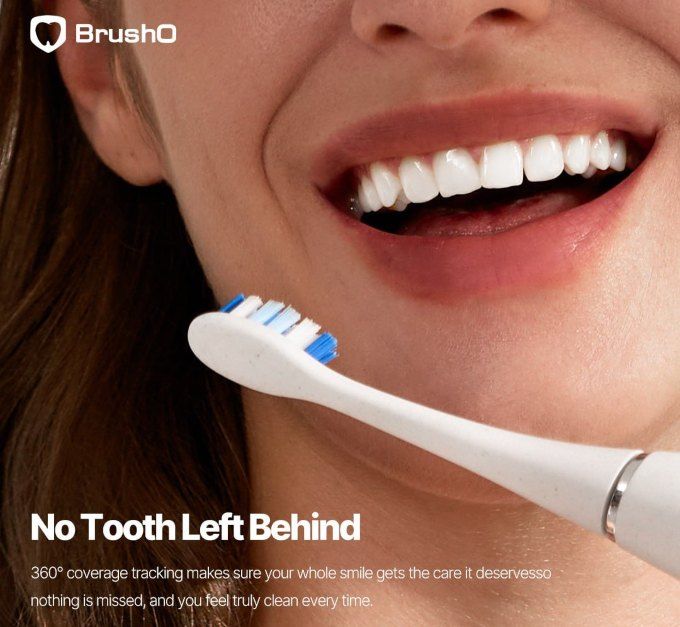
When food particles and plaque aren’t properly removed, they break down and release foul-smelling sulfur compounds. Missed brushing zones = lingering bacteria.
Common Signs:
• White or yellow coating on the tongue
• Persistent odor despite brushing
• Bleeding gums or sensitivity
Over 50% of mouth bacteria live on the tongue’s surface, especially toward the back. If not cleaned regularly, they produce volatile sulfur compounds (VSCs) that smell like rotten eggs.
🪥 Tip: Use BrushO’s built-in tongue-cleaning guidance to target these bacteria zones effectively.
Inflamed gums harbor bacteria deep in pockets between teeth and gums. As gum disease progresses, bad breath becomes more persistent.
Saliva helps wash away food and neutralize acids. If your mouth is dry, bacteria thrive. This can happen due to:
• Medications
• Mouth breathing
• Dehydration
Certain foods (garlic, onions, spicy foods), smoking, and high-sugar diets feed bacteria or dry out the mouth, contributing to odor.
BrushO is more than a toothbrush — it’s a smart oral care assistant. Here’s how it keeps bad breath in check:
With 6 zones and 16 surfaces, BrushO ensures no area is skipped — even those that are typically neglected, like the back molars or inner lower jaw.
Most people forget the tongue — BrushO reminds you with gentle vibrations and custom tongue-cleaning modes.
Overbrushing can cause gum recession, leading to pockets where odor-causing bacteria hide. BrushO keeps your pressure in check.
By tracking your brushing habits and giving daily brushing scores, BrushO helps you build habits that reduce bacterial buildup long-term.
• Brush twice a day with fluoride toothpaste
• Clean your tongue every time you brush
• Replace your toothbrush head every 3 months
• Drink plenty of water throughout the day
• Avoid smoking and sugary snacks
• Visit your dentist regularly for checkups
Mints and gum may mask bad breath, but only effective brushing and proper oral care can solve it. With BrushO, you get real-time feedback, complete coverage, and tongue-cleaning support — all designed to fight the root causes of bad breath. It’s time to ditch the mints and trust science-backed brushing to keep your breath fresh and your mouth healthy.

The shift from metal-ceramic (PFM) to all-ceramic restorations represents one of the most significant material transitions in restorative dentistry over the past two decades. In the United States, all-ceramic crowns now account for over 65% of single-unit posterior restorations according to the 2023

For over a century, the dominant paradigm in caries management has been surgical: identify cavitated lesions, remove carious tissue with rotary instruments, and restore the tooth with a synthetic material. Silver diamine fluoride (SDF) — a colorless alkaline solution containing silver (25% w/v), flu

Regenerative endodontic procedures (REPs) represent a paradigm shift in the management of immature permanent teeth with necrotic pulps. For decades, the standard of care for these teeth — typically resulting from trauma or dens evaginatus in children and adolescents aged 7–16 years — was apexificati

The use of autologous blood-derived products to enhance wound healing and tissue regeneration has been a focus of surgical research for over four decades. The first-generation product, platelet-rich plasma (PRP), was introduced in the 1970s and gained popularity in the 1990s for its ability to deliv

These prevalence figures have significant clinical implications. A general dental practice with 500 implant patients can expect approximately 95 patients to develop peri-implantitis requiring intervention. Unlike periodontitis around natural teeth, peri-implantitis presents unique challenges: the ab

Dental implantology has undergone a fundamental shift in treatment philosophy over the past two decades. The original Branemark protocol, established in the 1970s, mandated extraction socket healing for 6 to 12 months before implant placement, followed by an additional 3 to 6 months of submerged hea

Esthetic dentistry has historically relied on analog diagnostic tools: mounted study casts on semi-adjustable articulators, two-dimensional facial photographs, manual wax-ups, and diagnostic mock-ups fabricated by the dentist or laboratory technician. While these methods have produced excellent resu

This article provides a comprehensive review of dental sleep medicine and OAT, covering diagnostic pathways, MAD appliance design categories, clinical efficacy benchmarks, side effect management, the critical role of physician-dentist collaboration, and the emerging role of digital workflows and rem

Dental radiography generates an enormous volume of diagnostic images annually: bitewings, periapicals, panoramic radiographs, and cone-beam computed tomography (CBCT) scans. In the United States alone, an estimated 500 million dental radiographs are taken each year, according to a 2023 analysis by t

Additive manufacturing has moved from the margins to the core of modern dentistry, reshaping how crowns, surgical guides, dentures, aligners, and models are produced. According to a 2023 market analysis by Grand View Research, the global dental 3D printing market was valued at $3.1 billion and is pr

Bauen Sie schnell und kostengünstig ein Netzwerk für Zahngesundheitsdaten auf, das jeder nutzen kann.
Bauen Sie schnell und kostengünstig ein Netzwerk für Zahngesundheitsdaten auf, das jeder nutzen kann.


Address: RM 1427, 14/F RADIO CITY 505, HENNESSY RD CAUSEWAY BAY, HONG KONG
Code: 000000
Phone: +852-53758652
Email: customerservice@brusho.com