
Oral hygiene isn’t just about keeping your teeth clean — it may also affect your skin’s health. Recent studies suggest that poor brushing habits and gum disease can cause systemic inflammation that impacts the skin, leading to breakouts, dullness, or even premature aging. In this article, we’ll explore the mouth-skin connection, how brushing affects skin, and how smart tools like BrushO can help protect both your smile and complexion.
Your mouth is the entry point to your entire body, and its health has a direct influence on systemic inflammation and immunity. Here’s how poor oral hygiene can affect your skin:
• Gum Disease (Gingivitis/Periodontitis): Chronic gum inflammation can elevate cytokine levels in your bloodstream, which may aggravate inflammatory skin conditions like acne and rosacea.
• Bacterial Imbalance: Harmful oral bacteria can enter your system or migrate to facial skin, triggering flare-ups or disrupting your skin microbiome.
• Systemic Inflammation: Oral infections can increase oxidative stress, weakening your body’s natural ability to regenerate healthy skin and fight signs of aging.
📚 According to the Journal of Clinical & Aesthetic Dermatology, chronic oral inflammation is linked to various skin disorders.
Insufficient brushing causes plaque to accumulate, leading to gum irritation. This low-grade inflammation can affect your overall immune response, resulting in:
• Dull or tired-looking skin
• Frequent acne breakouts
• Slower skin healing
Bacteria from gum infections may leak into the bloodstream, raising inflammation markers that worsen acne or trigger eczema.
Neglecting oral care reduces saliva production, which disturbs the mouth’s pH and microbial balance. This may:
• Contribute to dehydrated skin
• Disrupt healthy oil production
• Cause imbalanced skin texture
Oral neglect often goes hand-in-hand with:
• Unhealthy diets (high sugar, low nutrients)
• Smoking (damages skin and gums)
• Sleep deprivation, which weakens both oral and skin recovery processes
All of these worsen skin tone, elasticity, and acne.
To protect both your oral and skin health, establish a holistic hygiene routine:
• Brush teeth twice daily with an AI-powered smart toothbrush like BrushO
• Floss once a day to remove bacteria between teeth
• Use a tongue scraper to reduce odor-causing and inflammatory bacteria
• Drink enough water to support saliva production and hydration
• Avoid sugary snacks and acidic drinks
AI toothbrushes such as BrushO go beyond basic cleaning:
• Real-time feedback on brushing pressure, angle, and missed zones
• 6-zone and 16-surface tracking for full-mouth cleaning
• Customizable modes for sensitivity, whitening, and gum health
• Brushing heatmaps & scores via app reports
• Reward system and lifetime free brush heads for consistent use
💡 Tip: Consistent brushing with proper coverage can lower inflammation and help skin stay clearer and brighter.
Dermatologists and holistic wellness experts now recognize the mouth-skin link as part of total body wellness.
Just like gut health, oral health affects the skin through inflammation and microbiome balance.
If you’ve tried every skincare product but still suffer from breakouts or dullness, your toothbrush might be to blame.
Neglecting your oral health can lead to systemic inflammation, breakouts, and faster skin aging. On the flip side, establishing a smart oral care routine can improve your complexion and your confidence.
🦷 Better brushing means better skin — start with the right tools.
BrushO is an AI-powered smart toothbrush that transforms brushing into a data-driven, habit-forming experience. Key features include:
• Real-time brushing feedback
• Custom modes: Sensitive, Whitening, Gum Care, Deep Clean
• App-integrated heatmaps and brushing scores
• Gamified family features
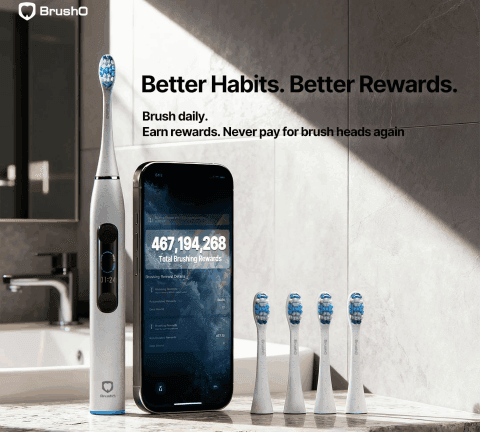
• Earn lifetime free brush heads with brushing points
✨ Whether you’re focused on healthier gums, clearer skin, or daily wellness, BrushO gives you the smart start you need.
Dec 11
Dec 10

Squamous cell carcinoma is not a single, uniform disease, and two of its oral variants illustrate the extremes of its behavior. Verrucous carcinoma is a slow-growing, exophytic tumor that almost never metastasizes, while spindle cell carcinoma is an aggressive, sarcomatoid malignancy that can be ...

Most people expect a toothache to be the first sign of pulp disease, but some forms of pulpitis are surprisingly silent. A pulp polyp is the visible result of chronic hyperplastic pulpitis, a condition in which the dental pulp grows out of a large carious opening as a fleshy mass. Recognizing thi...

Dry mouth is not merely uncomfortable; it is a medical condition with real consequences for teeth, speech, swallowing and quality of life. When the salivary glands cannot produce enough saliva, medications called sialogogues can restore some of the missing fluid. Pilocarpine and cevimeline are th...

A blister in the mouth can be the first warning of a systemic autoimmune disease, and two disorders deserve particular attention in the dental chair: pemphigus vulgaris and mucous membrane pemphigoid. Both produce chronic oral ulceration, yet their immunologic targets, clinical behavior and long-...

When infection drains from a tooth, the body often creates a visible escape route, and the dentist must interpret these fistulous openings correctly. A parulis is the common gum boil that signals chronic periapical infection, while an oroantral fistula is a communication between the mouth and the...

Among the fibro-osseous lesions of the jaws, the ossifying fibroma holds a unique position because it is a true neoplasm, unlike the reactive cemento-osseous dysplasia discussed in an earlier article. It grows continuously, expands bone and requires surgical removal, and its cemental variant adds...

Not all keratocystic lesions of the jaw behave alike, and one of the most important distinctions in oral pathology separates the orthokeratinized odontogenic cyst from its better-known relative, the odontogenic keratocyst. Although the two lesions look similar under the microscope at first glance...

Periodontal disease is usually a slowly progressive infection, but a rare form called necrotizing ulcerative periodontitis destroys tissue with alarming speed. Unlike ordinary periodontitis, this condition produces necrotic, cratered papillae, deep pocketing and rapid bone loss, and it appears al...

Every parent has met the child who refuses to eat because of painful mouth sores, and most of these children have one of two viral illnesses: herpangina or hand, foot and mouth disease. Both are caused by enteroviruses, both produce fever and oral ulcers, and both are overwhelmingly common in you...

Cementoosseous dysplasia is one of the most common fibro-osseous lesions found on dental radiographs, yet it is also one of the most frequently misdiagnosed. The lesion replaces normal bone with cellular fibrous tissue and cementum-like material, and it appears in several forms that range from a ...

Construire rapidement et à faible coût un réseau de données sur la santé bucco-dentaire de manière que tout le monde puisse y contribuer.
Construire rapidement et à faible coût un réseau de données sur la santé bucco-dentaire de manière que tout le monde puisse y contribuer.


Address: RM 1427, 14/F RADIO CITY 505, HENNESSY RD CAUSEWAY BAY, HONG KONG
Code: 000000
Phone: +852-53758652
Email: customerservice@brusho.com