
Dehydration doesn’t just leave you feeling tired or dizzy—it quietly damages your oral health. A dry mouth lacks the saliva needed to protect teeth and gums, making it easier for bacteria to grow and cause disease. In this article, we’ll explore how hydration supports oral health, the warning signs of dehydration-related dental problems, and how smart brushing with tools like BrushO can offer added protection when your mouth is most vulnerable.
Saliva is your mouth’s natural defense system. It:
• Washes away food particles and bacteria
• Neutralizes harmful acids
• Helps remineralize tooth enamel
When you’re dehydrated, saliva production drops—leaving your teeth and gums exposed to decay and inflammation.
A dry mouth creates an ideal environment for harmful bacteria to multiply. This can lead to:
• Increased plaque buildup
• Cavities and tooth decay
• Gingivitis and gum sensitivity
• Persistent bad breath (halitosis)
Dehydration essentially removes your first line of defense against oral pathogens.
Without saliva to buffer acids, your enamel becomes more vulnerable to:
• Acid attacks from food and drink
• Bacterial byproducts
• Friction during brushing
This results in heightened tooth sensitivity and faster erosion.
You might not even realize your mouth is struggling. Watch for:
• Dry, sticky feeling in your mouth
• Cracked lips or tongue
• Difficulty swallowing
• Sore throat without illness
• Increased cavities or gum irritation
• Morning breath that persists all day
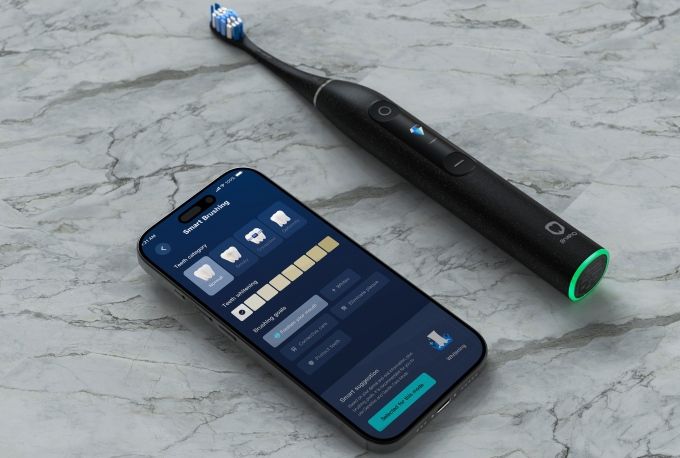
While staying hydrated is key, smart brushing with BrushO offers additional protection—especially when saliva is low.
• Sensitive Brushing Modes – Gentle yet effective cleaning to avoid enamel wear
• Real-Time Pressure Guidance – Prevents damage from brushing too hard on dry gums
• Coverage Tracking – Ensures no area is missed, even when your mouth feels less lubricated
• Brushing Reminders – Prompts consistent brushing, critical when saliva is low
• $BRUSH Token Rewards – Keeps motivation high for regular, mindful brushing
Smart guidance becomes even more important when natural defenses are compromised.
To protect your mouth and overall health, follow these hydration-friendly oral care tips:
• Drink water throughout the day, especially after meals or exercise
• Limit caffeine, alcohol, and salty snacks—they increase water loss
• Use a humidifier at night if your mouth feels dry upon waking
• Avoid mouthwashes with alcohol, which can dry out tissues
• Brush with fluoride toothpaste to strengthen enamel
• Track your brushing habits with an AI-powered app to stay consistent
Your mouth is a frontline defense against disease—and saliva is its shield. Dehydration weakens that shield, leaving you vulnerable to decay, bad breath, and gum problems. Whether you’re in a hot climate, working long hours, or simply forgetting to hydrate, your oral health can take a silent hit. Smart tools like BrushO provide the extra layer of protection your mouth needs when hydration drops—guiding you through effective, gentle, and complete brushing routines even in the driest moments.
Jan 19
Jan 19

Squamous cell carcinoma is not a single, uniform disease, and two of its oral variants illustrate the extremes of its behavior. Verrucous carcinoma is a slow-growing, exophytic tumor that almost never metastasizes, while spindle cell carcinoma is an aggressive, sarcomatoid malignancy that can be ...

Most people expect a toothache to be the first sign of pulp disease, but some forms of pulpitis are surprisingly silent. A pulp polyp is the visible result of chronic hyperplastic pulpitis, a condition in which the dental pulp grows out of a large carious opening as a fleshy mass. Recognizing thi...

Dry mouth is not merely uncomfortable; it is a medical condition with real consequences for teeth, speech, swallowing and quality of life. When the salivary glands cannot produce enough saliva, medications called sialogogues can restore some of the missing fluid. Pilocarpine and cevimeline are th...

A blister in the mouth can be the first warning of a systemic autoimmune disease, and two disorders deserve particular attention in the dental chair: pemphigus vulgaris and mucous membrane pemphigoid. Both produce chronic oral ulceration, yet their immunologic targets, clinical behavior and long-...

When infection drains from a tooth, the body often creates a visible escape route, and the dentist must interpret these fistulous openings correctly. A parulis is the common gum boil that signals chronic periapical infection, while an oroantral fistula is a communication between the mouth and the...

Among the fibro-osseous lesions of the jaws, the ossifying fibroma holds a unique position because it is a true neoplasm, unlike the reactive cemento-osseous dysplasia discussed in an earlier article. It grows continuously, expands bone and requires surgical removal, and its cemental variant adds...

Not all keratocystic lesions of the jaw behave alike, and one of the most important distinctions in oral pathology separates the orthokeratinized odontogenic cyst from its better-known relative, the odontogenic keratocyst. Although the two lesions look similar under the microscope at first glance...

Periodontal disease is usually a slowly progressive infection, but a rare form called necrotizing ulcerative periodontitis destroys tissue with alarming speed. Unlike ordinary periodontitis, this condition produces necrotic, cratered papillae, deep pocketing and rapid bone loss, and it appears al...

Every parent has met the child who refuses to eat because of painful mouth sores, and most of these children have one of two viral illnesses: herpangina or hand, foot and mouth disease. Both are caused by enteroviruses, both produce fever and oral ulcers, and both are overwhelmingly common in you...

Cementoosseous dysplasia is one of the most common fibro-osseous lesions found on dental radiographs, yet it is also one of the most frequently misdiagnosed. The lesion replaces normal bone with cellular fibrous tissue and cementum-like material, and it appears in several forms that range from a ...

एक मौखिक स्वास्थ्य डेटा नेटवर्क जल्दी और कम लागत पर इस तरह से बनाएं जिसमें हर कोई भाग ले सके।


Address: RM 1427, 14/F RADIO CITY 505, HENNESSY RD CAUSEWAY BAY, HONG KONG
Code: 000000
Phone: +852-53758652
Email: customerservice@brusho.com