
Bacterial retention in the oral cavity is not random — it is strongly influenced by the microscopic texture of tooth surfaces. Even minor variations in enamel smoothness, wear patterns, restorations, or hygiene habits can significantly alter how plaque biofilms adhere and mature. Rough or irregular surfaces create niches that shelter microorganisms from mechanical removal and saliva flow, accelerating plaque accumulation and disease risk. This article explores the scientific relationship between tooth surface texture and bacterial colonization, the clinical implications for oral health, and evidence-based strategies to minimize retention through optimized brushing and precision-guided oral care.
Tooth surfaces appear smooth to the naked eye, yet at a microscopic level, they contain ridges, grooves, and pores shaped by:
• Enamel mineral structure
• Wear and abrasion
• Acid erosion
• Dental restorations
• Orthodontic alignment
• Natural anatomy of pits and fissures
These microtopographical variations influence bacterial adhesion patterns and plaque retention behavior.
Oral bacteria adhere through a multistage process:
1. Salivary proteins form a pellicle coating
2. Microorganisms bind to the pellicle
3. Colonies multiply and produce extracellular matrix
4. Mature plaque biofilm develops
Surface irregularities enhance attachment stability during early colonization.
Research in dental materials science shows rougher textures:
• Increase bacterial anchoring points
• Reduce shear removal during brushing
• Protect microbes from saliva cleansing
• Accelerate biofilm maturation
Even micrometer-level roughness differences can significantly influence plaque retention rates.
• Deep occlusal grooves
• Developmental pits
• Molar fissures
These areas inherently trap bacteria.
• Aggressive brushing
• Bruxism
• Dietary abrasion
These can create uneven enamel patterns.
• Acidic foods and drinks
• Gastric reflux
• Low oral pH
Erosion alters enamel morphology, increasing microbial adherence.
Fillings, crowns, and bonding materials may present microtexture variations depending on finishing quality.
Persistent microbial colonization elevates risk for:
• Cavities
• Gingival inflammation
• Periodontal disease
• Halitosis
• Enamel demineralization
Localized plaque retention frequently correlates with anatomical surface irregularities.
Manual brushing limitations include:
• Uneven pressure application
• Incomplete zone coverage
• Difficulty accessing fissures
• Lack of surface feedback
Users cannot visually detect microtopographical plaque accumulation.
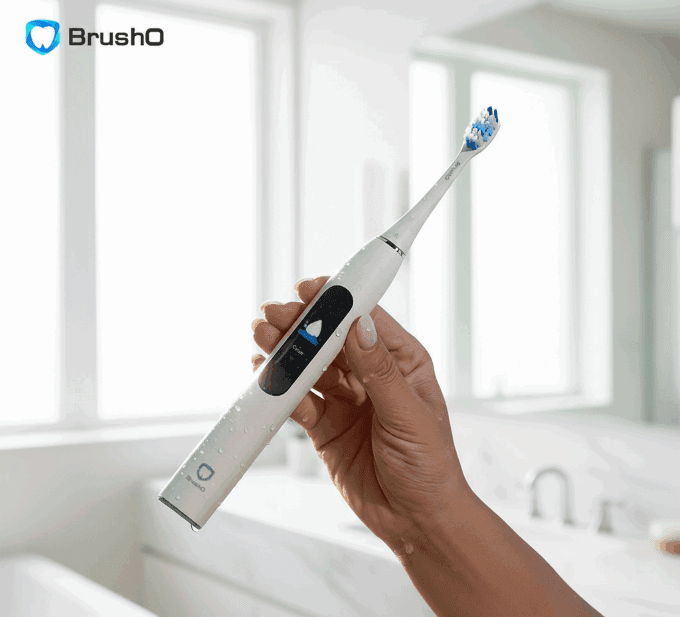
AI-guided toothbrush systems like BrushO support the mitigation of texture-related bacterial retention by:
• Monitoring coverage across complex surfaces
• Tracking zone consistency
• Detecting insufficient cleaning pressure
• Encouraging systematic brushing patterns
• Providing behavioral feedback via reports
Such precision guidance enhances removal effectiveness in high-retention regions.
• Angled brushing toward fissures
• Full-zone rotation patterns
• Adequate brushing duration
• Fluoride strengthening
• Remineralizing agents
• Antimicrobial rinses
• Regular polishing
• Sealants for deep grooves
• Surface smoothing procedures
• Coverage analytics
• Pressure regulation
• Habit tracking
Managing bacterial retention on textured surfaces contributes to:
• Lower plaque accumulation
• Reduced cavity risk
• Improved gum stability
• Balanced microbiome ecology
• Extended tooth longevity
Understanding surface science enhances preventive care precision.
Tooth surface texture plays a fundamental role in bacterial retention and plaque ecology. Microscopic irregularities act as anchoring sites that influence biofilm formation, disease progression, and hygiene effectiveness. Because these features are invisible to the user, improving cleaning accuracy through a structured technique and intelligent feedback becomes essential. By combining surface-aware brushing strategies with precision-guided technologies such as AI-assisted monitoring, individuals can reduce microbial persistence and strengthen long-term oral health outcomes.
Feb 16
Feb 13

Hyperdontia is the presence of one or more teeth in excess of the normal dental formula, and the resulting teeth are described as supernumerary. The condition is common enough to appear in routine practice but variable enough in presentation that the decision to intervene is rarely straightforwar...

Few patients complete orthodontic treatment without asking whether their teeth will move back. The honest answer is that they will, to some degree, in the majority of cases. Relapse is not a failure of treatment but a predictable biological response, and understanding why it happens is the basis ...

The mandible is the largest and most frequently fractured bone of the facial skeleton, and its management sits at the interface between trauma surgery and restorative dentistry. Treatment has shifted over four decades from prolonged maxillomandibular fixation towards rigid internal fixation with ...

Chronic liver disease affects hundreds of millions of people worldwide, and its prevalence continues to rise with the epidemic of metabolic liver disease. The liver is central to haemostasis, drug metabolism and immune competence, and its failure therefore alters the risk profile of almost every ...

Excessive gingival display, commonly described as a gummy smile, is one of the most frequent aesthetic concerns presented to dental practitioners. The condition is not a single entity but a clinical presentation that can arise from skeletal, gingival, muscular or dental factors, and the treatment...

Drug-induced gingival overgrowth is a well-recognised adverse effect of several widely prescribed medications, and it remains one of the most common drug-related findings in periodontal practice. The condition produces firm, fibrous enlargement of the gingiva that can interfere with speech, masti...

Denture stomatitis is an inflammatory condition of the denture-bearing mucosa that affects a large proportion of removable prosthesis wearers, yet it is frequently dismissed as a cosmetic annoyance. The condition is driven by a Candida biofilm on the fitting surface of the prosthesis, and it is m...

Chronic kidney disease affects an estimated 850 million people worldwide, and the number of patients surviving on dialysis or with a renal transplant continues to rise. These patients carry an oral disease burden that is substantially higher than that of the general population, and their medical ...

Angular cheilitis is an inflammatory lesion of the labial commissures that presents with erythema, fissuring and crusting at the corners of the mouth. It is one of the most common conditions encountered in general dental practice, yet it is frequently treated as a simple fungal infection and allo...

Adverse reactions to dental materials are uncommon but they are not rare, and they are frequently misdiagnosed because the oral mucosa responds to allergens in a limited number of ways. A burning sensation, a persistent ulcer or an unexplained area of erythema may all represent a hypersensitivity...

एक मौखिक स्वास्थ्य डेटा नेटवर्क जल्दी और कम लागत पर इस तरह से बनाएं जिसमें हर कोई भाग ले सके।


Address: RM 1427, 14/F RADIO CITY 505, HENNESSY RD CAUSEWAY BAY, HONG KONG
Code: 000000
Phone: +852-53758652
Email: customerservice@brusho.com