
We often notice the signs of aging on our skin—wrinkles, dryness, and loss of elasticity—but the mouth is where aging often happens first and goes unnoticed. Your teeth and gums endure constant stress from eating, drinking, and speaking. Unlike skin, which can regenerate to some extent, damage to teeth and gums is permanent. This article explores why your mouth ages faster than your skin and how you can protect it through better oral care habits and smart technology like BrushO.
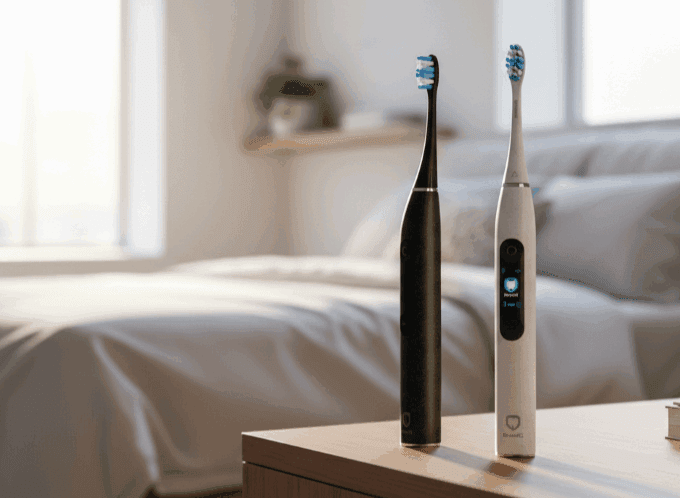
Your mouth is one of the most active parts of your body. Every day it’s exposed to:
• Acids from food and drinks
• Bacteria that produce toxins
• Friction from chewing
• Mechanical pressure from brushing
• Dehydration and temperature shifts
Unlike skin, tooth enamel doesn’t regenerate. Once it wears down, it’s gone forever. Gum tissue, too, can recede over time and rarely returns to its original state.
Even if your smile looks white and bright, signs of internal aging may include:
• Enamel thinning – edges of teeth look translucent
• Tooth sensitivity – hot or cold foods cause discomfort
• Yellowing – dentin shows through thinning enamel
• Gum recession – teeth appear longer; roots exposed
• Dry mouth – especially common as you age or take medications
• Frequent plaque buildup – slower saliva flow reduces self-cleaning
These changes often begin subtly but worsen without proactive care.
Brushing too hard, too quickly, or inconsistently can erode enamel and irritate gums.
Neglecting these steps allows bacteria to thrive in hidden places.
Frequent snacking, soda, or citrus weakens enamel and feeds harmful bacteria.
Dry mouth is common with aging and certain medications, leading to faster decay and gum issues.
Clenching and grinding—especially at night—accelerates wear and shortens the lifespan of your teeth.
While aging can’t be stopped, you can slow down oral aging dramatically with mindful care:
BrushO helps users:
• Apply the right brushing pressure
• Cover all 6 zones and 16 surfaces evenly
• Avoid overbrushing and enamel damage
• Receive habit feedback reports to build consistency
• Get real-time alerts if you’re brushing too hard or missing areas
Wait at least 30 minutes to prevent brushing softened enamel.
Water helps flush acids and promotes saliva production, which naturally protects your teeth.
Professional cleanings and early detection of issues are key to long-term oral youthfulness.
Protect teeth from grinding-related wear during sleep.
Traditional brushing offers no feedback or guidance. BrushO changes that.
• Real-time zone tracking helps you stop missing the same spots
• Pressure sensors protect enamel and gums
• Streak rewards encourage habit formation
• Custom modes target sensitivity, whitening, or gum care
BrushO transforms daily brushing into a data-driven defense system against the effects of aging.
Your skin may show the signs of aging, but your mouth often feels them first. From enamel wear to gum recession and dry mouth, your smile is under attack daily. The good news? With smart habits, regular hydration, and the help of AI-powered tools like BrushO, you can maintain a healthy, youthful mouth that lasts a lifetime.
Jan 23
Jan 22

The uncontrolled hypertension is the condition that the dental practice meets in the patient who presents with the elevated pressure that the guideline does not permit for the elective treatment, and the management of this patient requires the deferral of the dental procedure and the referral to ...

The closure of the extraction space in the orthodontic treatment is the phase that demands the careful selection of the mechanics and the monitoring of the force that the appliance delivers. The sliding mechanics that rely on the continuous archwire and the power chain that connects the brackets ...

The transverse discrepancy of the maxilla is the problem that the crowding and the posterior crossbite often hide, and the maxillary expansion is the treatment that addresses the width of the arch rather than the position of the individual tooth. The clinician who diagnoses the constriction early...

The local anaesthesia is the daily procedure that the modern dentistry treats as the routine, and the complications that follow it range from the transient and the trivial to the permanent and the serious. The clinician who injects by the habit without the anatomy in the mind is the clinician who...

The hypertension is the condition that the dental practice meets in the every day, and the patient who carries the elevated pressure without the symptoms is the patient who presents the risk that the chair-side measurement reveals. The dental team occupies the position that no other profession ho...

The glass-ceramic crown has become the default restoration for the anterior and the many posterior teeth, and the material selection within the family is the decision that determines the strength, the aesthetics, and the longevity of the result. The lithium disilicate, the leucite, and the zircon...

The dental phobia is the extreme form of the dental fear that prevents the patient from attending the treatment that the oral health requires, and the management of the phobia demands the skill that extends beyond the routine behaviour guidance. The systematic desensitization, the exposure therap...

The dental fear of the child is the condition that shapes the attitude for the lifetime, and the clinician who manages the first visits with the skill builds the patient who attends the recall without the dread. The fear that the child develops follows the many sources, and the practice that reco...

The patient with controlled hypertension is the patient who requires the dental care that the oral health demands and the treatment that the blood pressure permits, and the clinician who manages the controlled case safely follows the guideline that the evidence supports. The controlled hypertensi...

The ceramic veneer is the restoration that the aesthetic dentistry depends on, and the bond that retains the veneer on the enamel is the critical link that determines whether the restoration survives the function or fractures and debonds. The clinical technique from the preparation to the cementa...

एक मौखिक स्वास्थ्य डेटा नेटवर्क जल्दी और कम लागत पर इस तरह से बनाएं जिसमें हर कोई भाग ले सके।


Address: RM 1427, 14/F RADIO CITY 505, HENNESSY RD CAUSEWAY BAY, HONG KONG
Code: 000000
Phone: +852-53758652
Email: customerservice@brusho.com