
Dry mouth — or xerostomia — might seem like a minor annoyance, but it can seriously impact your oral health if left untreated. Saliva plays a crucial role in protecting teeth, neutralizing acids, and aiding digestion. When your mouth doesn’t produce enough, it creates the perfect environment for plaque buildup, bad breath, and cavities. Let’s explore the common causes of dry mouth, what they mean for your health, and how daily habits like brushing with BrushO can help maintain moisture and comfort.
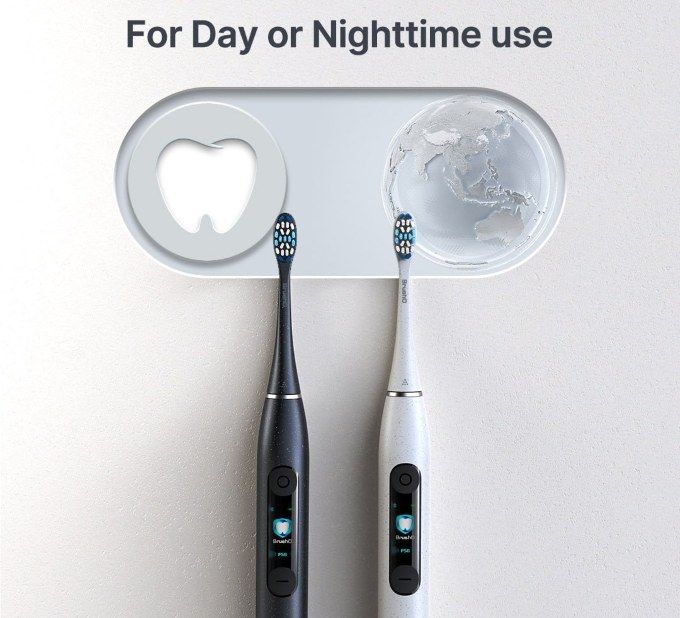
One of the most common reasons for dry mouth is medication. Over 500 types of medications — including antihistamines, antidepressants, and blood pressure drugs — list dry mouth as a side effect. These drugs can interfere with salivary gland function, reducing saliva production throughout the day.
• Speak with your doctor about alternatives.
• Stay hydrated.
• Use a gentle toothbrush like BrushO, which protects sensitive gums when saliva is low.
If you wake up with a dry mouth, mouth breathing during sleep might be to blame. Conditions like sleep apnea, snoring, or nasal congestion force you to breathe through your mouth, drying out saliva quickly.
• Try sleeping on your side.
• Use a humidifier in your bedroom.
• Brush with BrushO’s Gum Care mode at night to prevent irritation from dryness.
Sometimes, dry mouth is as simple as not drinking enough water. High caffeine or alcohol consumption and hot weather can also dehydrate you.
• Drink water throughout the day.
• Avoid sugary or carbonated beverages.
• Use BrushO after meals to refresh your mouth gently without drying agents.
Health conditions like diabetes, Sjögren’s syndrome, stroke, or nerve injuries can affect your ability to produce saliva. In these cases, dry mouth might be chronic and require ongoing care.
• Regular checkups with your dentist.
• Use fluoride toothpaste.
• Choose soft-bristle toothbrushes like BrushO, which support sensitive mouths.
Believe it or not, stress and anxiety can contribute to dry mouth. When your body enters “fight or flight” mode, it reduces saliva flow.
• Practice stress management (deep breathing, stretching).
• Stay hydrated during the day.
• Make brushing enjoyable with BrushO’s personalized modes to encourage daily mindfulness.
While BrushO doesn’t treat dry mouth directly, it plays a vital role in protecting your oral health when saliva levels are low. Here’s how:
• Gentle pressure sensors prevent irritation on dry gums.
• AI-powered brushing guidance ensures no missed spots.
• Hydration-friendly design encourages brushing without over-drying.
• Scoring system helps build habits even when discomfort makes brushing feel like a chore.
Dry mouth isn’t just a small inconvenience — it’s a red flag that your body needs support. Whether it’s caused by medications, sleep habits, or dehydration, understanding the root cause is the first step toward relief. By combining smart daily brushing with BrushO and proper hydration, you can keep your mouth comfortable, your teeth protected, and your smile strong — even when saliva is in short supply.

The shift from metal-ceramic (PFM) to all-ceramic restorations represents one of the most significant material transitions in restorative dentistry over the past two decades. In the United States, all-ceramic crowns now account for over 65% of single-unit posterior restorations according to the 2023

For over a century, the dominant paradigm in caries management has been surgical: identify cavitated lesions, remove carious tissue with rotary instruments, and restore the tooth with a synthetic material. Silver diamine fluoride (SDF) — a colorless alkaline solution containing silver (25% w/v), flu

Regenerative endodontic procedures (REPs) represent a paradigm shift in the management of immature permanent teeth with necrotic pulps. For decades, the standard of care for these teeth — typically resulting from trauma or dens evaginatus in children and adolescents aged 7–16 years — was apexificati

The use of autologous blood-derived products to enhance wound healing and tissue regeneration has been a focus of surgical research for over four decades. The first-generation product, platelet-rich plasma (PRP), was introduced in the 1970s and gained popularity in the 1990s for its ability to deliv

These prevalence figures have significant clinical implications. A general dental practice with 500 implant patients can expect approximately 95 patients to develop peri-implantitis requiring intervention. Unlike periodontitis around natural teeth, peri-implantitis presents unique challenges: the ab

Dental implantology has undergone a fundamental shift in treatment philosophy over the past two decades. The original Branemark protocol, established in the 1970s, mandated extraction socket healing for 6 to 12 months before implant placement, followed by an additional 3 to 6 months of submerged hea

Esthetic dentistry has historically relied on analog diagnostic tools: mounted study casts on semi-adjustable articulators, two-dimensional facial photographs, manual wax-ups, and diagnostic mock-ups fabricated by the dentist or laboratory technician. While these methods have produced excellent resu

This article provides a comprehensive review of dental sleep medicine and OAT, covering diagnostic pathways, MAD appliance design categories, clinical efficacy benchmarks, side effect management, the critical role of physician-dentist collaboration, and the emerging role of digital workflows and rem

Dental radiography generates an enormous volume of diagnostic images annually: bitewings, periapicals, panoramic radiographs, and cone-beam computed tomography (CBCT) scans. In the United States alone, an estimated 500 million dental radiographs are taken each year, according to a 2023 analysis by t

Additive manufacturing has moved from the margins to the core of modern dentistry, reshaping how crowns, surgical guides, dentures, aligners, and models are produced. According to a 2023 market analysis by Grand View Research, the global dental 3D printing market was valued at $3.1 billion and is pr

Costruire rapidamente e a basso costo una rete di dati sulla salute orale in modo che tutti possano creare.
Costruire rapidamente e a basso costo una rete di dati sulla salute orale in modo che tutti possano creare.


Address: RM 1427, 14/F RADIO CITY 505, HENNESSY RD CAUSEWAY BAY, HONG KONG
Code: 000000
Phone: +852-53758652
Email: customerservice@brusho.com