
Electric toothbrushes have been around for years, yet many users still struggle with missed areas, excessive pressure, and inconsistent habits. As people become more aware of the connection between oral health and overall wellness, expectations for daily brushing have changed. Users no longer want a toothbrush that vibrates — they want guidance, insight, and results. That shift in expectations is why more users are switching to BrushO, a smart toothbrush designed to actively improve how people brush, not just how often.
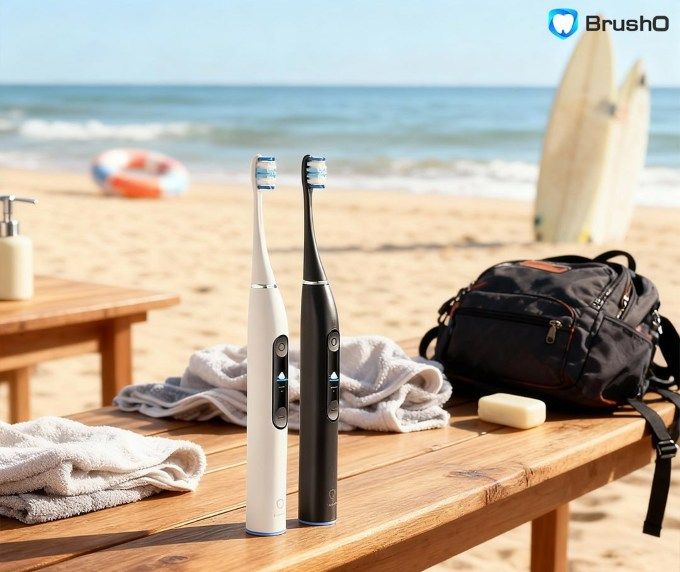
Most electric toothbrushes focus on speed and vibration, but leave technique entirely up to the user. Common problems include:
• Brushing too hard without realizing it
• Missing molars, inner surfaces, or the gumline
• Relying only on timers instead of actual coverage
• No way to measure or improve brushing quality
Over time, these issues can lead to gum irritation, plaque buildup, enamel wear, and frustration — even for users who brush twice a day.
BrushO was built around one core idea: better brushing comes from better feedback. Instead of guessing, BrushO uses AI-powered sensing and analysis to guide users in real time.
BrushO tracks pressure, movement, coverage, and brushing duration as you brush. If you press too hard or miss a zone, the toothbrush alerts you immediately — before bad habits cause damage.
Rather than relying on outdated 30-second quadrant timers, BrushO analyzes brushing paths across 6 zones and 16 tooth surfaces, ensuring true full-mouth cleaning.
After each session, users receive a brushing score and a visual report in the app. This helps identify patterns, track progress, and improve technique over time — something traditional brushes simply cannot offer.
Many users switch to BrushO after experiencing gum sensitivity or enamel wear. Pressure detection and adaptive feedback help prevent overbrushing while still ensuring effective plaque removal.
BrushO turns brushing into a habit you can actually improve. Streaks, scores, and progress tracking motivate consistency without guilt or reminders from others.
Households with multiple users often struggle with shared routines. BrushO solves this with:
• Personalized user profiles
• Visual brushing reports for parents and kids
• Gamified motivation that encourages children to brush properly
• Clear differentiation between users, even with the same model
This makes BrushO especially appealing for families looking to build healthier habits together.
People don’t switch to BrushO just for technology — they stay because they feel the difference:
• Cleaner teeth with fewer missed spots
• Healthier gums with less irritation
• More confidence in daily oral care
• A routine that feels guided, not mechanical
Once users experience brushing with real feedback, it’s hard to go back to guessing.
More users are switching to BrushO because it addresses what traditional toothbrushes ignore: how people actually brush. By combining AI guidance, real-time feedback, and habit-building insights, BrushO transforms brushing from a routine task into a smarter, healthier daily practice.
For users who want results — not just vibrations — BrushO represents a clear upgrade.

The uncontrolled hypertension is the condition that the dental practice meets in the patient who presents with the elevated pressure that the guideline does not permit for the elective treatment, and the management of this patient requires the deferral of the dental procedure and the referral to ...

The closure of the extraction space in the orthodontic treatment is the phase that demands the careful selection of the mechanics and the monitoring of the force that the appliance delivers. The sliding mechanics that rely on the continuous archwire and the power chain that connects the brackets ...

The transverse discrepancy of the maxilla is the problem that the crowding and the posterior crossbite often hide, and the maxillary expansion is the treatment that addresses the width of the arch rather than the position of the individual tooth. The clinician who diagnoses the constriction early...

The local anaesthesia is the daily procedure that the modern dentistry treats as the routine, and the complications that follow it range from the transient and the trivial to the permanent and the serious. The clinician who injects by the habit without the anatomy in the mind is the clinician who...

The hypertension is the condition that the dental practice meets in the every day, and the patient who carries the elevated pressure without the symptoms is the patient who presents the risk that the chair-side measurement reveals. The dental team occupies the position that no other profession ho...

The glass-ceramic crown has become the default restoration for the anterior and the many posterior teeth, and the material selection within the family is the decision that determines the strength, the aesthetics, and the longevity of the result. The lithium disilicate, the leucite, and the zircon...

The dental phobia is the extreme form of the dental fear that prevents the patient from attending the treatment that the oral health requires, and the management of the phobia demands the skill that extends beyond the routine behaviour guidance. The systematic desensitization, the exposure therap...

The dental fear of the child is the condition that shapes the attitude for the lifetime, and the clinician who manages the first visits with the skill builds the patient who attends the recall without the dread. The fear that the child develops follows the many sources, and the practice that reco...

The patient with controlled hypertension is the patient who requires the dental care that the oral health demands and the treatment that the blood pressure permits, and the clinician who manages the controlled case safely follows the guideline that the evidence supports. The controlled hypertensi...

The ceramic veneer is the restoration that the aesthetic dentistry depends on, and the bond that retains the veneer on the enamel is the critical link that determines whether the restoration survives the function or fractures and debonds. The clinical technique from the preparation to the cementa...


Address: RM 1427, 14/F RADIO CITY 505, HENNESSY RD CAUSEWAY BAY, HONG KONG
Code: 000000
Phone: +852-53758652
Email: customerservice@brusho.com
