
Are electric toothbrushes better for orthodontic patients? Braces create unique oral care challenges—food and plaque build up around brackets, gums get irritated, and cleaning takes more time. Many patients and parents wonder: Should I switch to an electric toothbrush? Research shows that electric toothbrushes remove more plaque and reduce gum inflammation compared to manual brushing. In this article, we’ll explore the science, common mistakes orthodontic patients make, and how the BrushO Smart Toothbrush supports braces wearers with gentle bristles, smart pressure sensors, and real-time brushing feedback.
Wearing braces makes oral hygiene much harder:
Plaque Traps → Brackets and wires collect food particles.
Sensitive Gums → Tightening braces often leaves gums sore.
Hard-to-Reach Areas → Manual brushes often miss spots behind wires.
Time Burden → Bracing patients often spend double the time brushing.
Without proper cleaning, patients risk cavities, gum disease, and even white spot lesions (early signs of enamel decay).
Studies confirm:
Manual toothbrushes depend entirely on user technique, which is hard to perfect around brackets.
Electric toothbrushes deliver consistent, rapid movements that break up plaque more effectively.
One orthodontic study found that patients using electric toothbrushes had 22% less plaque and 18% lower gingivitis scores compared to manual users after 12 weeks.
👉 The conclusion: electric toothbrushes don’t just save time—they actually help braces patients maintain healthier teeth and gums.
Even with an electric toothbrush, orthodontic patients sometimes make errors:
Brushing too hard → This can irritate gums already stressed by braces.
Using the wrong brush head → Hard bristles may scratch enamel and brackets.
Stopping too soon → Less than 2 minutes means plaque remains around wires.
Skipping the gumline → Most plaque hides where gums meet teeth.
Sophie, 15, wearing braces for 8 months:
“At first, brushing was a nightmare. Food got stuck everywhere, and I kept rushing. After switching to BrushO, the app showed me the spots I missed. My orthodontist even noticed my gums looked healthier at the next appointment.”
Daniel, 28, adult braces patient:
“I was worried about gum soreness. BrushO’s gentle mode and pressure alerts made a big difference—I no longer press too hard, and brushing feels safer.”
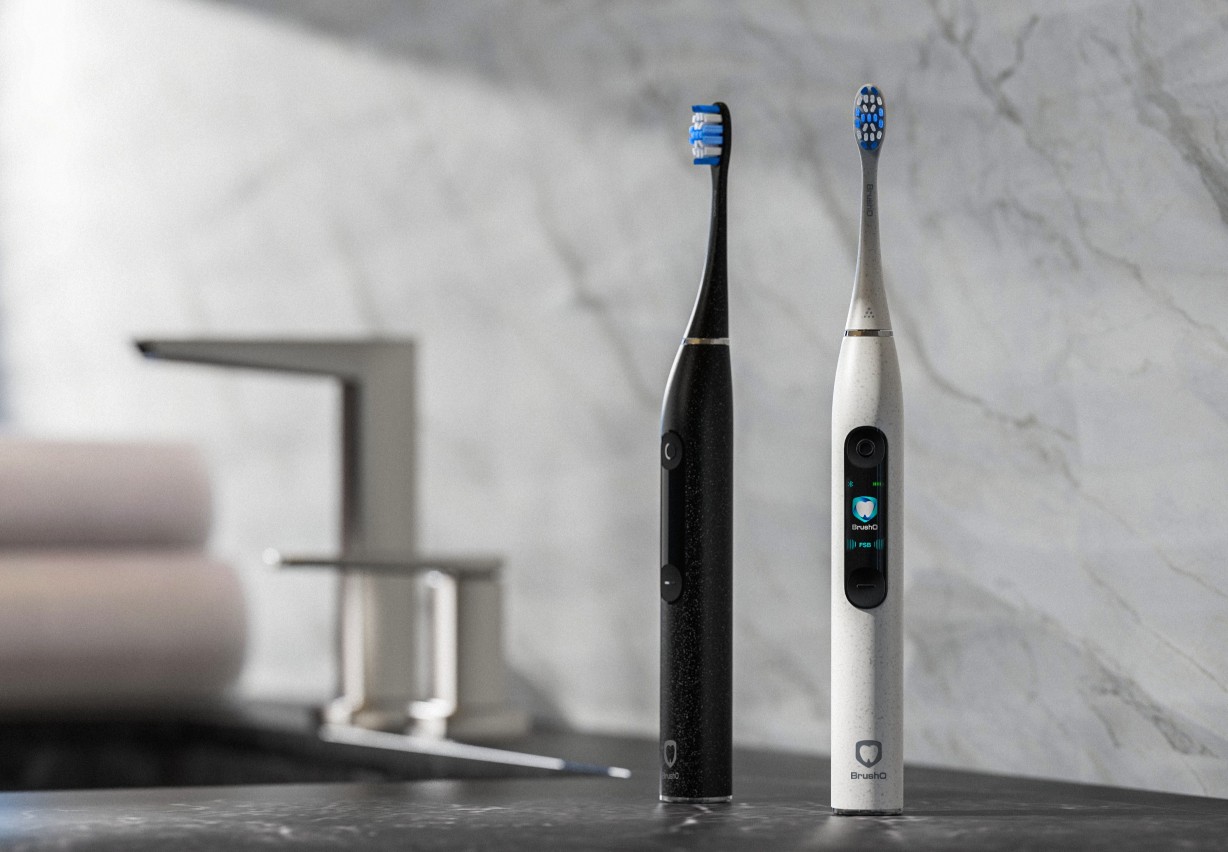
The BrushO AI-Powered Electric Toothbrush is tailored for braces wearers:
Smart Pressure Sensor → Prevents over-brushing that can harm gums around brackets.
Sensitive & Gum Care Modes → Gentle vibration options for orthodontic discomfort.
Real-Time Brushing Feedback → Ensures no spots are missed behind wires or at the gumline.
DuPont Soft Bristles → Gentle on brackets yet tough on plaque.
45-Day Battery + Qi Wireless Charging → Convenient for busy students and travelers.
Most orthodontists agree:
Electric toothbrushes improve plaque control for braces wearers.
Pressure sensors protect against gum irritation.
Brace patients should brush 3 times daily, especially after meals.
Q1: Can electric toothbrushes damage braces?
No, when used with soft bristles and pressure control, they are safe.
Q2: How often should orthodontic patients replace brush heads?
Every 3 months, or sooner if bristles fray.
Q3: Is a smart toothbrush better than a basic electric one?
Yes. Features like BrushO’s AI tracking and real-time feedback ensure braces patients are cleaned thoroughly.
So, are electric toothbrushes better for orthodontic patients? Absolutely. They clean more effectively, protect sensitive gums, and make braces care easier. But not all brushes are equal. The BrushO Smart Toothbrush combines gentle bristles, smart pressure sensors, and AI-powered tracking to give orthodontic patients a healthier, more confident smile.

Squamous cell carcinoma is not a single, uniform disease, and two of its oral variants illustrate the extremes of its behavior. Verrucous carcinoma is a slow-growing, exophytic tumor that almost never metastasizes, while spindle cell carcinoma is an aggressive, sarcomatoid malignancy that can be ...

Most people expect a toothache to be the first sign of pulp disease, but some forms of pulpitis are surprisingly silent. A pulp polyp is the visible result of chronic hyperplastic pulpitis, a condition in which the dental pulp grows out of a large carious opening as a fleshy mass. Recognizing thi...

Dry mouth is not merely uncomfortable; it is a medical condition with real consequences for teeth, speech, swallowing and quality of life. When the salivary glands cannot produce enough saliva, medications called sialogogues can restore some of the missing fluid. Pilocarpine and cevimeline are th...

A blister in the mouth can be the first warning of a systemic autoimmune disease, and two disorders deserve particular attention in the dental chair: pemphigus vulgaris and mucous membrane pemphigoid. Both produce chronic oral ulceration, yet their immunologic targets, clinical behavior and long-...

When infection drains from a tooth, the body often creates a visible escape route, and the dentist must interpret these fistulous openings correctly. A parulis is the common gum boil that signals chronic periapical infection, while an oroantral fistula is a communication between the mouth and the...

Among the fibro-osseous lesions of the jaws, the ossifying fibroma holds a unique position because it is a true neoplasm, unlike the reactive cemento-osseous dysplasia discussed in an earlier article. It grows continuously, expands bone and requires surgical removal, and its cemental variant adds...

Not all keratocystic lesions of the jaw behave alike, and one of the most important distinctions in oral pathology separates the orthokeratinized odontogenic cyst from its better-known relative, the odontogenic keratocyst. Although the two lesions look similar under the microscope at first glance...

Periodontal disease is usually a slowly progressive infection, but a rare form called necrotizing ulcerative periodontitis destroys tissue with alarming speed. Unlike ordinary periodontitis, this condition produces necrotic, cratered papillae, deep pocketing and rapid bone loss, and it appears al...

Every parent has met the child who refuses to eat because of painful mouth sores, and most of these children have one of two viral illnesses: herpangina or hand, foot and mouth disease. Both are caused by enteroviruses, both produce fever and oral ulcers, and both are overwhelmingly common in you...

Cementoosseous dysplasia is one of the most common fibro-osseous lesions found on dental radiographs, yet it is also one of the most frequently misdiagnosed. The lesion replaces normal bone with cellular fibrous tissue and cementum-like material, and it appears in several forms that range from a ...

모두가 쉽게 구축할 수 있는 방식으로 구강 건강 데이터 네트워크를 저렴한 비용으로 빠르게 구축하세요.


Address: RM 1427, 14/F RADIO CITY 505, HENNESSY RD CAUSEWAY BAY, HONG KONG
Code: 000000
Phone: +852-53758652
Email: customerservice@brusho.com