
Brushing twice a day doesn’t always mean brushing well. Many people unknowingly fall into poor brushing habits—rushing through the process, skipping zones, or applying too much pressure. Fortunately, technology is stepping in. Smart toothbrushes like BrushO are designed not just to clean your teeth, but to coach better habits and make oral hygiene smarter, more consistent, and more effective.
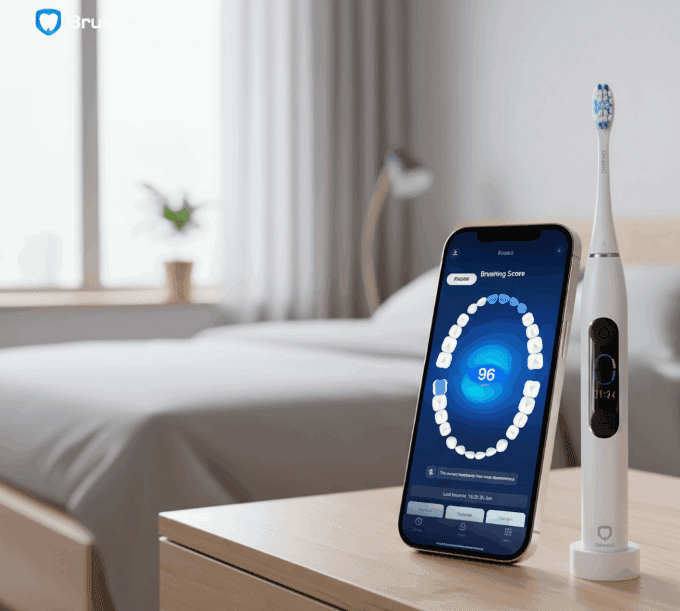
Brushing your teeth is often a mindless routine, especially when you’ve been doing it the same way for years. Common bad habits include:
• Brushing too quickly (under 2 minutes)
• Missing areas like molars or the gumline
• Applying too much pressure, damaging enamel
• Brushing irregularly, especially at night
• Neglecting brushing angles or technique
These behaviors often go unnoticed because there’s no feedback loop—until a dentist finds a cavity or gum inflammation.
Unlike traditional brushes, smart toothbrushes like BrushO use AI-powered sensors and app integration to track your brushing in real time and provide data-driven insights.
Smart brushes alert you when you’re brushing too hard, moving too fast, or missing areas—breaking the cycle of unconscious habits.
With 6-zone, 16-surface tracking, BrushO ensures you don’t overlook important zones like the inner molars or gumline—often where decay begins.
Brushing becomes measurable. Daily habit reports show you how often you’re brushing, how well you’re covering all surfaces, and whether you’re improving.
From sensitive mode to whitening or deep clean, these customizable settings help users adjust based on their current needs—empowering better daily decisions.
Smart brushing isn’t just about fancy tech—it’s about habit psychology. Features like:
• Instant rewards (e.g., BrushO’s $BRUSH token system)
• Goal-setting and progress tracking
• Consistent reminders and nudges
…turn brushing into a gamified, accountable routine, similar to how fitness apps motivate users to stay active.
When combined with positive reinforcement, users are more likely to break poor habits and build lasting behaviors.
Many people intend to brush better, but intentions often lose to distractions, fatigue, or routine. A smart toothbrush acts like a coach in your hand, holding you accountable and guiding you through proper technique, every time. By creating immediate, visual feedback and long-term habit analytics, smart toothbrushes help you stay on track, even when life gets busy.
• Increased brushing time (avg. from 45s → 2+ min)
• More consistent morning/night routines
• Improved plaque scores at dental visits
• Greater awareness of brushing technique
Smart brushing isn’t just a trend—it’s a proven method to help people take control of their oral health in a measurable, motivating way.
Bad brushing habits often fly under the radar—but over time, they lead to real problems like cavities, gum disease, and enamel erosion. A smart toothbrush like BrushO helps bring those habits into focus, replace them with healthier ones, and make oral care a consistent, rewarding practice.
BrushO is an AI-powered smart toothbrush designed to transform the way people brush. With advanced pressure sensors, zone-tracking technology, personalized feedback, and a unique “Brush & Earn” rewards system, BrushO empowers users to brush smarter, not harder—and break old habits for good.
Jan 22
Jan 22

The uncontrolled hypertension is the condition that the dental practice meets in the patient who presents with the elevated pressure that the guideline does not permit for the elective treatment, and the management of this patient requires the deferral of the dental procedure and the referral to ...

The closure of the extraction space in the orthodontic treatment is the phase that demands the careful selection of the mechanics and the monitoring of the force that the appliance delivers. The sliding mechanics that rely on the continuous archwire and the power chain that connects the brackets ...

The transverse discrepancy of the maxilla is the problem that the crowding and the posterior crossbite often hide, and the maxillary expansion is the treatment that addresses the width of the arch rather than the position of the individual tooth. The clinician who diagnoses the constriction early...

The local anaesthesia is the daily procedure that the modern dentistry treats as the routine, and the complications that follow it range from the transient and the trivial to the permanent and the serious. The clinician who injects by the habit without the anatomy in the mind is the clinician who...

The hypertension is the condition that the dental practice meets in the every day, and the patient who carries the elevated pressure without the symptoms is the patient who presents the risk that the chair-side measurement reveals. The dental team occupies the position that no other profession ho...

The glass-ceramic crown has become the default restoration for the anterior and the many posterior teeth, and the material selection within the family is the decision that determines the strength, the aesthetics, and the longevity of the result. The lithium disilicate, the leucite, and the zircon...

The dental phobia is the extreme form of the dental fear that prevents the patient from attending the treatment that the oral health requires, and the management of the phobia demands the skill that extends beyond the routine behaviour guidance. The systematic desensitization, the exposure therap...

The dental fear of the child is the condition that shapes the attitude for the lifetime, and the clinician who manages the first visits with the skill builds the patient who attends the recall without the dread. The fear that the child develops follows the many sources, and the practice that reco...

The patient with controlled hypertension is the patient who requires the dental care that the oral health demands and the treatment that the blood pressure permits, and the clinician who manages the controlled case safely follows the guideline that the evidence supports. The controlled hypertensi...

The ceramic veneer is the restoration that the aesthetic dentistry depends on, and the bond that retains the veneer on the enamel is the critical link that determines whether the restoration survives the function or fractures and debonds. The clinical technique from the preparation to the cementa...

Build an oral health data network quickly and at low cost in a way that everyone can build.


Address: RM 1427, 14/F RADIO CITY 505, HENNESSY RD CAUSEWAY BAY, HONG KONG
Code: 000000
Phone: +852-53758652
Email: customerservice@brusho.com