
Flavored water is widely marketed as a healthier alternative to soda, often perceived as harmless to oral health. However, wide varieties contain acids, sweeteners, and flavoring compounds that significantly lower oral pH and promote enamel erosion. Because flavored water is consumed frequently throughout the day, exposure duration may exceed that of traditional soft drinks. This prolonged acidic contact accelerates mineral loss, increases sensitivity risk, and weakens tooth surfaces over time. Understanding the chemistry behind beverage acidity and adopting strategic oral care practices allows consumers to make informed hydration choices while preserving enamel integrity.
Flavored water is commonly associated with wellness and hydration. However, many formulations contain:
• Citric acid
• Malic acid
• Phosphoric acid
• Artificial flavor stabilizers
• Sweeteners
These ingredients create a low-pH environment similar to or more persistent than soda, particularly when consumed frequently. Unlike soda, which is often consumed in single servings, flavored water is sipped continuously — extending enamel exposure time.
Tooth enamel begins to weaken when oral pH drops below critical thresholds. Acidic beverages dissolve protective minerals, making teeth vulnerable to:
• Sensitivity
• Surface roughness
• Structural thinning
Frequent sipping throughout the day:
• Prevents saliva from neutralizing acids
• Extends erosion windows
• Reduces remineralization opportunities
This behavioral pattern often makes flavored water more damaging over time than occasional soda consumption.
Some flavored waters include added sugars or fermentable sweeteners that:
• Feed acid-producing bacteria
• Increase plaque formation
• Elevate cavity risk
Even sugar-free versions remain erosive due to acidity.
• Increased temperature sensitivity
• Teeth appearing translucent
• Rough enamel texture
• Yellowing due to dentin exposure
• Gumline vulnerability
Detection at early stages enables preventive intervention.
• Limit continuous sipping
• Drink through a straw
• Consume alongside meals
• Choose plain water when possible
• Rinse with water afterward
• Stimulate saliva production
• Maintain hydration balance
Wait 30–60 minutes after acidic beverage consumption to avoid brushing softened enamel.
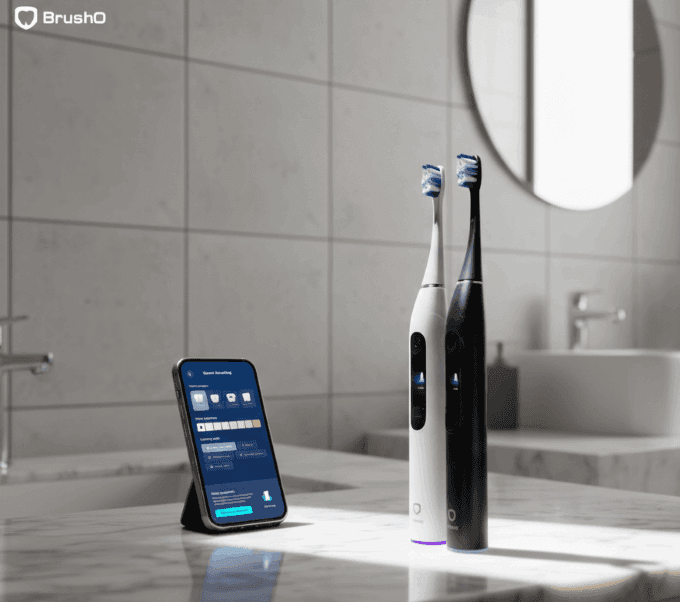
Advanced tools such as BrushO AI smart brushing enhance protection through:
• Pressure regulation reducing abrasion
• Zone mapping ensuring plaque removal
• Adaptive modes for enamel sensitivity
• Habit tracking improves routine consistency
Technology-driven brushing helps counteract lifestyle-based acid exposure.
Modern beverage trends emphasize flavor and convenience, often overlooking oral chemistry impacts.
Protecting enamel today requires:
• Awareness of acidity sources
• Behavioral adjustments
• Guided oral hygiene support
This integrated approach preserves long-term dental resilience.
Flavored water’s health halo can obscure its dental risks. Hidden acids combined with frequent consumption may contribute to enamel erosion more significantly than occasional soda intake. By moderating exposure patterns, rinsing appropriately, delaying brushing, and using precision brushing technologies like BrushO, individuals can maintain hydration habits without compromising oral health. Informed choices ensure wellness extends beyond marketing perception to measurable dental protection.
Feb 6
Feb 6

The uncontrolled hypertension is the condition that the dental practice meets in the patient who presents with the elevated pressure that the guideline does not permit for the elective treatment, and the management of this patient requires the deferral of the dental procedure and the referral to ...

The closure of the extraction space in the orthodontic treatment is the phase that demands the careful selection of the mechanics and the monitoring of the force that the appliance delivers. The sliding mechanics that rely on the continuous archwire and the power chain that connects the brackets ...

The transverse discrepancy of the maxilla is the problem that the crowding and the posterior crossbite often hide, and the maxillary expansion is the treatment that addresses the width of the arch rather than the position of the individual tooth. The clinician who diagnoses the constriction early...

The local anaesthesia is the daily procedure that the modern dentistry treats as the routine, and the complications that follow it range from the transient and the trivial to the permanent and the serious. The clinician who injects by the habit without the anatomy in the mind is the clinician who...

The hypertension is the condition that the dental practice meets in the every day, and the patient who carries the elevated pressure without the symptoms is the patient who presents the risk that the chair-side measurement reveals. The dental team occupies the position that no other profession ho...

The glass-ceramic crown has become the default restoration for the anterior and the many posterior teeth, and the material selection within the family is the decision that determines the strength, the aesthetics, and the longevity of the result. The lithium disilicate, the leucite, and the zircon...

The dental phobia is the extreme form of the dental fear that prevents the patient from attending the treatment that the oral health requires, and the management of the phobia demands the skill that extends beyond the routine behaviour guidance. The systematic desensitization, the exposure therap...

The dental fear of the child is the condition that shapes the attitude for the lifetime, and the clinician who manages the first visits with the skill builds the patient who attends the recall without the dread. The fear that the child develops follows the many sources, and the practice that reco...

The patient with controlled hypertension is the patient who requires the dental care that the oral health demands and the treatment that the blood pressure permits, and the clinician who manages the controlled case safely follows the guideline that the evidence supports. The controlled hypertensi...

The ceramic veneer is the restoration that the aesthetic dentistry depends on, and the bond that retains the veneer on the enamel is the critical link that determines whether the restoration survives the function or fractures and debonds. The clinical technique from the preparation to the cementa...

Construa uma rede de dados de saúde bucal rapidamente e com baixo custo de forma que todos possam construir.
Construa uma rede de dados de saúde bucal rapidamente e com baixo custo de forma que todos possam construir.


Address: RM 1427, 14/F RADIO CITY 505, HENNESSY RD CAUSEWAY BAY, HONG KONG
Code: 000000
Phone: +852-53758652
Email: customerservice@brusho.com