
Lipsticks are more than beauty tools—they’re part of daily identity and expression for many. However, what most people don’t realize is that the ingredients in lipsticks, especially those with long-lasting or matte formulas, may have unintended consequences for oral health. From increasing dryness around the mouth to introducing potentially harmful chemicals near the gums, the wrong lipstick habits can undermine even the best brushing routines. In this article, we explore how lipstick ingredients, application habits, and even simple behaviors like licking your lips or skipping removal at night can impact your oral ecosystem. Plus, we provide tips on maintaining a beauty routine that keeps both your smile and your lips healthy—especially when paired with smart brushing solutions like BrushO.
Many lipsticks contain ingredients like synthetic dyes, fragrances, and preservatives that—while safe for external use—can become problematic when constantly exposed to the mouth:
• Parabens and Preservatives: May disrupt the balance of natural bacteria around the mouth.
• Lead Traces: While banned in many countries, trace amounts of lead have been found in some lipstick brands, and prolonged exposure can affect health over time.
• Drying Agents: Matte and long-wear formulas often contain alcohols or clays that dry out the lips and nearby skin, potentially reducing the protective barrier around the mouth.
When these substances transfer to the teeth or gums (especially during eating or speaking), they can interfere with saliva flow or contribute to bacterial buildup.
Dry lips don’t just crack or flake—they can signal dehydration or a disrupted barrier function. This dryness can spread to the inside of the mouth, increasing susceptibility to:
• Mouth Sores: Dry tissue is more prone to ulcerations or microtears.
• Reduced Saliva Flow: Saliva is crucial for neutralizing acids and washing away bacteria.
• Halitosis (Bad Breath): A dry mouth promotes the growth of odor-causing bacteria.
Lipstick is often reapplied multiple times a day, sometimes without proper lip cleaning in between. This can lead to:
• Product Build-Up Near the Gumline: Accidental transfers during smiling, eating, or talking may leave lipstick residue close to or on the teeth.
• Brushing Obstruction: Heavily pigmented lip colors may discourage users from brushing after meals to avoid smearing or staining their lipstick, which may compromise oral hygiene.
Sharing lipsticks, even with close friends or family, increases the risk of transmitting:
• Cold Sores (Herpes Simplex Virus)
• Bacterial Infections
• Fungal Issues (e.g., oral thrush)
Oral bacteria thrive in moist, enclosed environments like lipstick tubes—making sharing particularly unhygienic.
To maintain both beauty and oral health:
• Remove Lipstick at Night: Always clean your lips fully before bed to prevent product buildup.
• Choose Hydrating Formulas: Look for lipsticks with natural oils, hyaluronic acid, or vitamin E.
• Avoid Applying Close to the Inner Lip Line: This reduces the chance of product transferring to your teeth and gums.
• Don’t Skip Brushing: Even if it smudges your lipstick, brushing after meals is non-negotiable.
• Replace Old Lipsticks: Bacteria accumulate in opened products over time—replace them every 6–12 months.
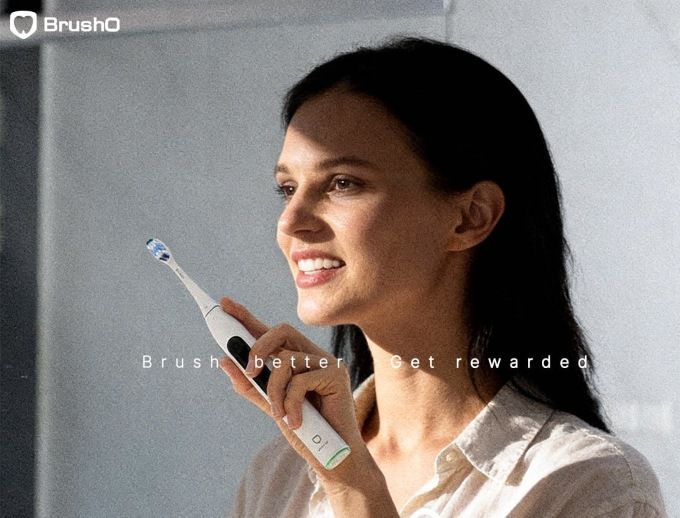
Even with the most careful lipstick application, it’s important to maintain impeccable oral hygiene. BrushO’s AI-powered smart toothbrush offers:
• Zone-Specific Coverage: Ensures complete cleaning around the lips, gumline, and tooth edges where residue may settle.
• Pressure Sensors: Prevents over-brushing or gum irritation, which can be worsened by lipstick dryness.
• Brushing Reports and Reminders: Keeps you on track with consistent routines, even when busy.
By combining smart brushing with informed lipstick choices, users can confidently maintain both beauty and health.
BrushO is a next-generation AI-powered smart toothbrush built to adapt to your brushing habits. With features like zone-specific feedback, personalized pressure sensing, brushing scores, and reward incentives in the form of $BRUSH tokens, it’s designed for people who want both effective and intelligent oral care.
Jan 6
Jan 6

Fluoride in drinking water is the most cost-effective caries preventive measure in public health, and it is also the source of most avoidable fluoride exposure in young children. The balance between benefit and risk depends on concentration, on total intake from all sources and on the age of the ...

A mouthguard is the only piece of protective equipment that a dentist can prescribe, and the difference between the cheapest and the best version is often less than the cost of a single repair. This guide explains what each type of mouthguard actually protects, how to judge fit, and what to check...

Distinguishing reversible from irreversible pulpitis is the single most consequential decision in endodontic diagnosis, because one leads to a restoration and the other to root canal treatment or extraction. The distinction rests on symptoms and pulp testing rather than on radiographs alone, and ...

A pregnancy epulis is a benign overgrowth of gum tissue that appears during pregnancy, most often in the second or third trimester. It can alarm patients because it grows quickly and bleeds easily, yet in most cases it needs no surgery and settles after delivery. Understanding what drives the gro...

When several teeth are missing, the choice usually narrows to a removable partial denture or a fixed implant-supported restoration, and cost is the factor patients raise first. Upfront price is only part of the comparison, because the two options differ in maintenance, comfort, effects on neighbo...

Most root canal failures are not caused by inadequate cleaning of canals that were found, but by canals that were never located. Molar anatomy varies widely, and the variation is not random: specific teeth in specific populations have predictable additional canals. Knowing where they hide is the ...

Gum massage is one of the oldest recommendations in oral care and one of the least understood. It has been described as a treatment for bleeding gums, a route to firmer tissue and, more recently, a way to reduce brushing force. This article separates the mechanisms that are supported by physiolog...

Interdental cleaning is the part of oral hygiene most people abandon first, and the choice between a floss pick and a length of string floss is often made on convenience. Convenience matters, because a tool that is used daily outperforms a superior tool that stays in the drawer, but the two devic...

Dementia changes the way a denture is worn, cleaned and tolerated, and the people who notice the change first are usually family carers rather than clinicians. Poor denture hygiene in this group is associated with mucosal infection, reduced food intake and, in frail patients, respiratory complica...

Chewing tobacco keeps nicotine and plant irritants in prolonged contact with a small area of mucosa, and the damage that results is concentrated exactly where the quid is held. The lesions that develop are often painless, which is why they are discovered during routine examination rather than bec...

สร้างเครือข่ายข้อมูลสุขภาพช่องปากอย่างรวดเร็วและต้นทุนต่ำในวิธีที่ทุกคนสามารถสร้างได้


Address: RM 1427, 14/F RADIO CITY 505, HENNESSY RD CAUSEWAY BAY, HONG KONG
Code: 000000
Phone: +852-53758652
Email: customerservice@brusho.com