
Dry brushing refers to brushing your teeth without using any water or toothpaste. Some people turn to it for quick cleans or as a trendy alternative to traditional brushing. While it may seem harmless — or even effective at first glance — it can do more harm than good if practiced regularly.
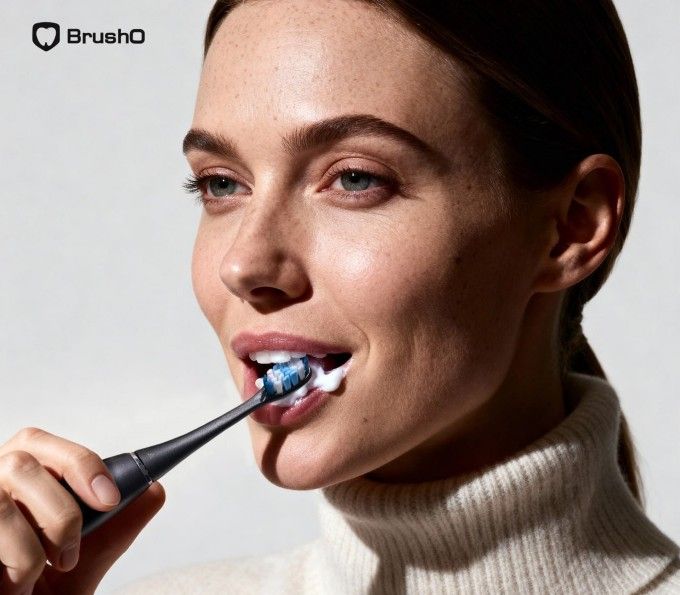
• Convenience: No sink or water required.
• Minimalism: Fewer products, less mess.
• False Assumptions: Thinking that brushing alone (without toothpaste) removes enough plaque.
However, while it might feel “clean,” dry brushing lacks the protective and restorative benefits of fluoride toothpaste — and this has real consequences for your oral health.
Toothpaste is essential not just for cleaning, but also for remineralizing enamel. Fluoride strengthens teeth and helps reverse early-stage decay — something a dry brush simply cannot provide.
Brushing without toothpaste means no lubricating agent, increasing the risk of:
• Tooth enamel erosion
• Gum irritation or recession
Especially with manual or electric toothbrushes that use strong bristles or fast movement.
Toothpaste contains mild abrasives and detergents that help lift away plaque and debris. Without it, you may be missing sticky biofilms that lead to cavities or gingivitis.
Dry brushing leaves behind:
• Bad breath
• Bacterial residue
• No anti-microbial effect
Especially important after meals or first thing in the morning.
BrushO doesn’t just clean — it enhances your brushing experience with intelligent feedback. Even if you’re tempted to skip toothpaste occasionally, BrushO’s smart system ensures you never skip on effectiveness.
Prevent over-brushing — even when there’s no paste to cushion the strokes.
BrushO ensures all zones (including hard-to-reach spots) get equal attention — no more guesswork.
If you’ve been dry brushing and feel sensitivity, BrushO’s Ultra-Gentle Mode helps you ease back into healthier habits.
Never forget the toothpaste again. The BrushO app encourages complete routines with daily scores, reminders, and habit tracking.
If you’re traveling, in a pinch, or between meals, dry brushing may help temporarily freshen your mouth — but it should not replace a complete brushing routine with toothpaste twice a day.
🔁 Always rinse afterward and follow up with proper brushing as soon as possible.
Dry brushing may seem like a quick fix, but the risks to your enamel, gums, and overall oral hygiene aren’t worth it in the long run. Using a high-performance brush like BrushO, with the right toothpaste, ensures your smile stays healthy, protected, and fresh — every time.

The shift from metal-ceramic (PFM) to all-ceramic restorations represents one of the most significant material transitions in restorative dentistry over the past two decades. In the United States, all-ceramic crowns now account for over 65% of single-unit posterior restorations according to the 2023

For over a century, the dominant paradigm in caries management has been surgical: identify cavitated lesions, remove carious tissue with rotary instruments, and restore the tooth with a synthetic material. Silver diamine fluoride (SDF) — a colorless alkaline solution containing silver (25% w/v), flu

Regenerative endodontic procedures (REPs) represent a paradigm shift in the management of immature permanent teeth with necrotic pulps. For decades, the standard of care for these teeth — typically resulting from trauma or dens evaginatus in children and adolescents aged 7–16 years — was apexificati

The use of autologous blood-derived products to enhance wound healing and tissue regeneration has been a focus of surgical research for over four decades. The first-generation product, platelet-rich plasma (PRP), was introduced in the 1970s and gained popularity in the 1990s for its ability to deliv

These prevalence figures have significant clinical implications. A general dental practice with 500 implant patients can expect approximately 95 patients to develop peri-implantitis requiring intervention. Unlike periodontitis around natural teeth, peri-implantitis presents unique challenges: the ab

Dental implantology has undergone a fundamental shift in treatment philosophy over the past two decades. The original Branemark protocol, established in the 1970s, mandated extraction socket healing for 6 to 12 months before implant placement, followed by an additional 3 to 6 months of submerged hea

Esthetic dentistry has historically relied on analog diagnostic tools: mounted study casts on semi-adjustable articulators, two-dimensional facial photographs, manual wax-ups, and diagnostic mock-ups fabricated by the dentist or laboratory technician. While these methods have produced excellent resu

This article provides a comprehensive review of dental sleep medicine and OAT, covering diagnostic pathways, MAD appliance design categories, clinical efficacy benchmarks, side effect management, the critical role of physician-dentist collaboration, and the emerging role of digital workflows and rem

Dental radiography generates an enormous volume of diagnostic images annually: bitewings, periapicals, panoramic radiographs, and cone-beam computed tomography (CBCT) scans. In the United States alone, an estimated 500 million dental radiographs are taken each year, according to a 2023 analysis by t

Additive manufacturing has moved from the margins to the core of modern dentistry, reshaping how crowns, surgical guides, dentures, aligners, and models are produced. According to a 2023 market analysis by Grand View Research, the global dental 3D printing market was valued at $3.1 billion and is pr

สร้างเครือข่ายข้อมูลสุขภาพช่องปากอย่างรวดเร็วและต้นทุนต่ำในวิธีที่ทุกคนสามารถสร้างได้


Address: RM 1427, 14/F RADIO CITY 505, HENNESSY RD CAUSEWAY BAY, HONG KONG
Code: 000000
Phone: +852-53758652
Email: customerservice@brusho.com