
Many people assume that brushing every tooth equally produces uniform oral health results. In reality, dental anatomy, saliva flow, bite forces, microbial accumulation patterns, and accessibility differences cause certain teeth to accumulate plaque faster and require more cleaning attention. Molars, gumline zones, crowded teeth, and low-saliva regions are particularly vulnerable to bacterial retention and enamel demineralization. Understanding these variations enables more targeted brushing strategies, improving plaque removal efficiency and long-term oral health outcomes. This article explores the biological, structural, and behavioral reasons some teeth demand more intensive care and how AI-guided brushing technologies can help identify and correct uneven cleaning patterns.
Teeth vary significantly in:
• Shape
• Surface complexity
• Location
• Exposure to saliva
• Mechanical stress
These differences influence plaque accumulation patterns and cavity risk distribution. Clinical observations consistently show that decay and gum inflammation often concentrate in predictable anatomical regions rather than evenly across the mouth.
Molars feature pits and fissures designed for grinding food. These structures:
• Trap food particles
• Shelter bacteria
• Resist passive saliva cleaning
As a result, molars frequently require more targeted cleaning to prevent plaque buildup and tooth decay.
Misaligned or crowded teeth create:
• Overlapping surfaces
• Limited brush access
• Increased plaque retention
These areas often receive insufficient mechanical cleaning during routine brushing.
The junction where teeth meet gums forms a natural plaque reservoir. Factors include:
• Micro-gaps that harbor biofilm
• Reduced visibility during brushing
• Sensitivity leading to avoidance
Neglecting gumline cleaning significantly increases gum disease risk.
Saliva naturally washes away bacteria and neutralizes acids.
However:
• Back teeth receive less salivary circulation
• Dry mouth conditions increase accumulation
• Nighttime dryness intensifies vulnerability
Lower protection means certain teeth require more active cleaning.
Dominant chewing sides experience:
• Higher mechanical stress
• Surface wear
• Plaque compression into fissures
This can alter bacterial retention and enamel exposure.
Even experienced brushers show pattern bias:
• Focusing on front teeth
• Rushing through molar zones
• Avoiding sensitive areas
• Repeating familiar zones
Studies on brushing coverage consistently show uneven distribution across surfaces.
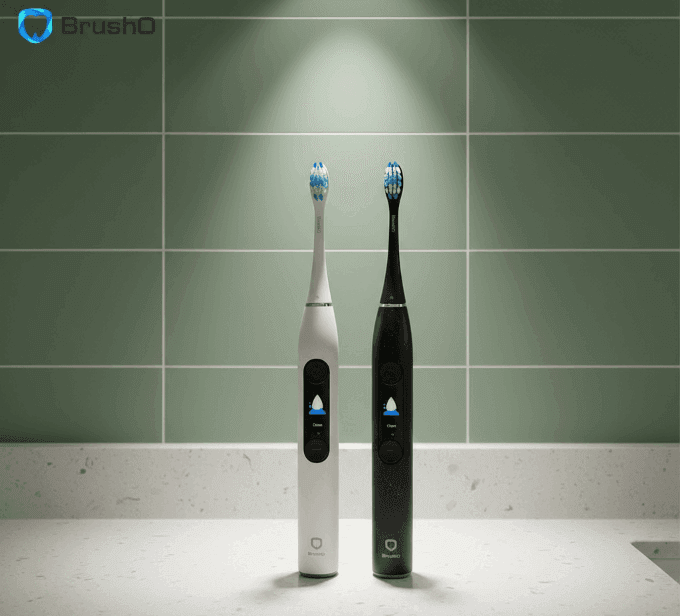
AI-powered tools such as BrushO help correct uneven cleaning patterns through:
Tracking the full 6-zone / 16-surface mouth structure ensures attention to neglected teeth.
Maintains effective plaque removal without damaging vulnerable areas.
Reports reveal patterns showing which teeth receive less cleaning over time.
Encourages targeted improvement where plaque risk is highest.
Data-driven brushing reduces human bias and improves oral hygiene precision.
• Spend extra time on molars
• Angle brushes toward gumlines
• Slow down coverage transitions
• Monitor crowding zones
• Maintain consistent routine timing
Targeted cleaning enhances overall oral health stability.
Correcting cleaning imbalance helps:
• Reduce cavity risk
• Prevent gum inflammation
• Stabilize microbiome distribution
• Minimize enamel erosion
• Improve dental checkup outcomes
Precision brushing supports whole-mouth health rather than localized treatment.
Dental cleaning needs are not uniform because teeth differ in anatomy, exposure, and function. Recognizing that certain teeth demand more attention allows individuals to move beyond generic brushing habits toward targeted oral care strategies. With behavioral awareness and smart guidance technologies, uneven plaque accumulation can be corrected, promoting balanced oral hygiene and long-term dental health stability. Effective brushing is not about equal effort — it is about intelligent distribution of care.
Feb 17
Feb 16

Trigeminal neuralgia (TN), also known as tic douloureux, is a chronic orofacial pain disorder characterized by recurrent, unilateral, brief, electric shock-like pain in the distribution of one or more divisions of the trigeminal nerve. It is widely regarded as one of the most severe pain conditions

Tooth whitening has become one of the most sought-after elective dental procedures worldwide. With increasing emphasis on facial aesthetics, a bright, white smile is now widely perceived as a marker of health, youth, and social confidence. This article provides a comprehensive review of contemporary

The edentulous posterior maxilla presents unique challenges for implant rehabilitation due to the pneumatization of the maxillary sinus and the progressive resorption of the alveolar ridge following tooth loss. Sinus floor elevation, or sinus lift surgery, is a predictable and well-documented surgic

Photodynamic therapy (PDT) is a minimally invasive therapeutic modality that combines a photosensitizing agent, light of a specific wavelength, and molecular oxygen to produce cytotoxic reactive oxygen species. Originally developed for oncological applications, PDT has been increasingly adopted in d

The introduction of temporary anchorage devices (TADs) has fundamentally transformed orthodontic treatment by providing skeletal anchorage that is independent of patient compliance. TADs, also known as mini-implants or miniscrews, enable tooth movements that were previously impossible or required co

Dental caries remains one of the most prevalent chronic diseases worldwide, disproportionately affecting children, elderly populations, and communities with limited access to conventional restorative care. The traditional restorative approach requires expensive equipment, cooperative patients, and m

Platelet-rich fibrin (PRF), a second-generation platelet concentrate, has emerged as one of the most widely adopted autologous biomaterials in contemporary dentistry and oral surgery. Developed by Dr. Joseph Choukroun and colleagues in France in 2001, PRF represents a conceptual evolution from first

The transition from conventional to digital impressions represents one of the most significant technological shifts in contemporary dentistry. Intraoral scanners (IOS) have evolved from experimental prototypes in the 1980s to sophisticated clinical instruments that now rival and, in several key metr

Gingival recession, defined as the apical migration of the gingival margin beyond the cementoenamel junction with exposure of the root surface, is a prevalent condition affecting a substantial proportion of the adult population. Epidemiological studies report that approximately 50% of adults exhibit

Cone beam computed tomography (CBCT) has revolutionized endodontic diagnosis and treatment planning by providing three-dimensional imaging that overcomes the inherent limitations of conventional periapical radiography. While two-dimensional radiographs remain the first-line imaging modality for endo

สร้างเครือข่ายข้อมูลสุขภาพช่องปากอย่างรวดเร็วและต้นทุนต่ำในวิธีที่ทุกคนสามารถสร้างได้


Address: RM 1427, 14/F RADIO CITY 505, HENNESSY RD CAUSEWAY BAY, HONG KONG
Code: 000000
Phone: +852-53758652
Email: customerservice@brusho.com