
You’ve likely heard of oil pulling — the Ayurvedic ritual of swishing oil in your mouth for several minutes each day. Fans claim it removes toxins, whitens teeth, and even heals gums. But is it enough to take the place of your daily brushing routine? In this article, we separate fact from fiction and explain why oil pulling may be helpful, but is no substitute for a proper brushing habit — especially with smart tools like BrushO.
Oil pulling is the process of swishing oil (usually coconut, sesame, or sunflower oil) in the mouth for 10–20 minutes, then spitting it out. This practice, rooted in ancient Indian medicine, is believed to “pull” toxins and bacteria from the oral cavity.
• Fresher breath
• Reduced plaque
• Healthier gums
• Whiter teeth
But while it can complement oral care, it should not be viewed as a standalone replacement.
Brushing physically scrubs plaque off teeth. Oil pulling, while it may bind to some bacteria, doesn’t remove food debris, plaque buildup, or stains effectively.
Fluoride in toothpaste strengthens enamel and helps prevent decay — something oil simply can’t do.
While a few small studies show modest benefits, there’s no large-scale scientific consensus that oil pulling prevents cavities or gum disease.
Swishing oil for 20 minutes isn’t practical for most people — and often leads to inconsistent routines, which ultimately harm oral health.
If you enjoy oil pulling, use it as a supplementary step — ideally in the morning before brushing. But never skip these essentials:
• Twice-daily brushing with a soft-bristled electric toothbrush
• Flossing at least once a day
• Fluoride toothpaste for enamel protection
• Routine dental check-ups
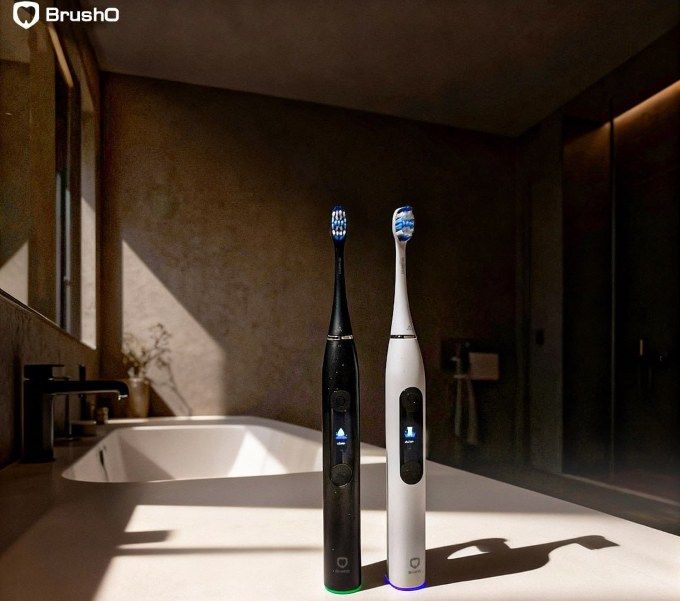
While oil pulling remains largely anecdotal, BrushO provides real data and measurable results. Here’s how:
• AI-guided coverage tracking
• Zone-by-zone brushing feedback
• Daily brushing reports via app
• Custom brushing modes for sensitivity, whitening, or deep clean
• Habit rewards system with BRUSH token incentives
With BrushO, you’re not guessing — you’re brushing smarter.
Oil pulling may offer a few fringe benefits, but it can’t replace the scientifically proven results of mechanical brushing with a smart tool like BrushO. If you’re seeking fresh breath, healthier gums, and cleaner teeth, brushing is still your best ally.
Want to make your brushing routine smarter and more rewarding?

Hyperdontia is the presence of one or more teeth in excess of the normal dental formula, and the resulting teeth are described as supernumerary. The condition is common enough to appear in routine practice but variable enough in presentation that the decision to intervene is rarely straightforwar...

Few patients complete orthodontic treatment without asking whether their teeth will move back. The honest answer is that they will, to some degree, in the majority of cases. Relapse is not a failure of treatment but a predictable biological response, and understanding why it happens is the basis ...

The mandible is the largest and most frequently fractured bone of the facial skeleton, and its management sits at the interface between trauma surgery and restorative dentistry. Treatment has shifted over four decades from prolonged maxillomandibular fixation towards rigid internal fixation with ...

Chronic liver disease affects hundreds of millions of people worldwide, and its prevalence continues to rise with the epidemic of metabolic liver disease. The liver is central to haemostasis, drug metabolism and immune competence, and its failure therefore alters the risk profile of almost every ...

Excessive gingival display, commonly described as a gummy smile, is one of the most frequent aesthetic concerns presented to dental practitioners. The condition is not a single entity but a clinical presentation that can arise from skeletal, gingival, muscular or dental factors, and the treatment...

Drug-induced gingival overgrowth is a well-recognised adverse effect of several widely prescribed medications, and it remains one of the most common drug-related findings in periodontal practice. The condition produces firm, fibrous enlargement of the gingiva that can interfere with speech, masti...

Denture stomatitis is an inflammatory condition of the denture-bearing mucosa that affects a large proportion of removable prosthesis wearers, yet it is frequently dismissed as a cosmetic annoyance. The condition is driven by a Candida biofilm on the fitting surface of the prosthesis, and it is m...

Chronic kidney disease affects an estimated 850 million people worldwide, and the number of patients surviving on dialysis or with a renal transplant continues to rise. These patients carry an oral disease burden that is substantially higher than that of the general population, and their medical ...

Angular cheilitis is an inflammatory lesion of the labial commissures that presents with erythema, fissuring and crusting at the corners of the mouth. It is one of the most common conditions encountered in general dental practice, yet it is frequently treated as a simple fungal infection and allo...

Adverse reactions to dental materials are uncommon but they are not rare, and they are frequently misdiagnosed because the oral mucosa responds to allergens in a limited number of ways. A burning sensation, a persistent ulcer or an unexplained area of erythema may all represent a hypersensitivity...

Xây dựng mạng dữ liệu sức khỏe răng miệng nhanh chóng và chi phí thấp theo cách mọi người đều có thể tham gia.
Xây dựng mạng dữ liệu sức khỏe răng miệng nhanh chóng và chi phí thấp theo cách mọi người đều có thể tham gia.


Address: RM 1427, 14/F RADIO CITY 505, HENNESSY RD CAUSEWAY BAY, HONG KONG
Code: 000000
Phone: +852-53758652
Email: customerservice@brusho.com