
Chewing gum is often thought of as a guilty pleasure or a simple breath-freshening trick. But is it actually good or bad for your teeth? The answer isn’t black and white. Depending on the type of gum and how often you chew, it can either improve your oral hygiene or accelerate damage. In this article, we’ll unpack the science behind gum chewing, its effects on saliva, enamel, and jaw health, and offer expert tips on choosing the best gum for your dental routine.
One of the most important benefits of chewing sugar-free gum is saliva stimulation. Saliva is your mouth’s natural defense system—neutralizing acids, washing away food particles, and delivering minerals like calcium and phosphate to rebuild enamel.
For people who suffer from xerostomia (dry mouth), especially the elderly or those on certain medications, chewing gum can provide immediate relief by increasing moisture levels and promoting oral comfort.
Several studies have shown that chewing gum sweetened with xylitol—a natural sugar alcohol—can reduce cavity-causing bacteria like Streptococcus mutans. Xylitol interferes with bacteria’s ability to stick to teeth, making plaque formation more difficult.
Gum containing sucrose, glucose, or corn syrup feeds oral bacteria, encouraging acid production that erodes enamel and leads to cavities. Habitual chewing of sugary gum can be as damaging as frequent soda consumption.
Chewing excessively or forcefully—especially on just one side—can lead to TMJ disorders or jaw muscle fatigue. Individuals prone to bruxism (teeth grinding) should be especially cautious.
Chewing gum for extended periods has been linked to tension headaches and migraines in sensitive individuals, particularly teens. While this isn’t a direct dental issue, it may discourage good oral habits.
Look for ADA-approved gums with xylitol, sorbitol, or mannitol as sweeteners. These do not contribute to cavities and may offer protective benefits.
Limit gum chewing to 15–20 minutes after meals to aid with cleaning, but avoid continuous chewing throughout the day.
Those with a history of jaw pain or popping should avoid prolonged gum chewing, even if the gum is sugar-free.
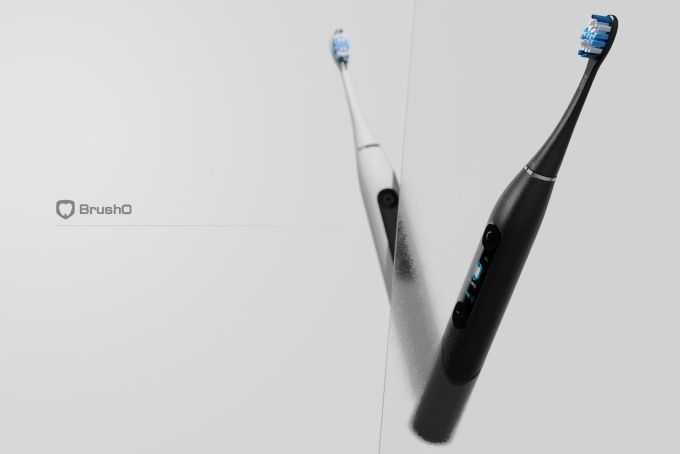
If you’re using BrushO’s smart toothbrush system, chewing gum should never replace brushing or flossing. However, BrushO’s data-driven brushing reports and reminder features can help reinforce good oral hygiene even if you chew gum regularly. You can check in the app if gum is helping maintain plaque-free zones or if you still need to pay more attention to specific areas of your mouth.
Chewing gum isn’t inherently good or bad—it depends on what kind you chew, when, and how often. Sugar-free options, especially those with xylitol, can complement your oral care routine by reducing cavity risk and promoting saliva production. Just be mindful of your jaw health and avoid sugary varieties. Paired with a smart brushing habit, chewing gum can be a small but helpful tool in your oral health toolbox.

Fluoride in drinking water is the most cost-effective caries preventive measure in public health, and it is also the source of most avoidable fluoride exposure in young children. The balance between benefit and risk depends on concentration, on total intake from all sources and on the age of the ...

A mouthguard is the only piece of protective equipment that a dentist can prescribe, and the difference between the cheapest and the best version is often less than the cost of a single repair. This guide explains what each type of mouthguard actually protects, how to judge fit, and what to check...

Distinguishing reversible from irreversible pulpitis is the single most consequential decision in endodontic diagnosis, because one leads to a restoration and the other to root canal treatment or extraction. The distinction rests on symptoms and pulp testing rather than on radiographs alone, and ...

A pregnancy epulis is a benign overgrowth of gum tissue that appears during pregnancy, most often in the second or third trimester. It can alarm patients because it grows quickly and bleeds easily, yet in most cases it needs no surgery and settles after delivery. Understanding what drives the gro...

When several teeth are missing, the choice usually narrows to a removable partial denture or a fixed implant-supported restoration, and cost is the factor patients raise first. Upfront price is only part of the comparison, because the two options differ in maintenance, comfort, effects on neighbo...

Most root canal failures are not caused by inadequate cleaning of canals that were found, but by canals that were never located. Molar anatomy varies widely, and the variation is not random: specific teeth in specific populations have predictable additional canals. Knowing where they hide is the ...

Gum massage is one of the oldest recommendations in oral care and one of the least understood. It has been described as a treatment for bleeding gums, a route to firmer tissue and, more recently, a way to reduce brushing force. This article separates the mechanisms that are supported by physiolog...

Interdental cleaning is the part of oral hygiene most people abandon first, and the choice between a floss pick and a length of string floss is often made on convenience. Convenience matters, because a tool that is used daily outperforms a superior tool that stays in the drawer, but the two devic...

Dementia changes the way a denture is worn, cleaned and tolerated, and the people who notice the change first are usually family carers rather than clinicians. Poor denture hygiene in this group is associated with mucosal infection, reduced food intake and, in frail patients, respiratory complica...

Chewing tobacco keeps nicotine and plant irritants in prolonged contact with a small area of mucosa, and the damage that results is concentrated exactly where the quid is held. The lesions that develop are often painless, which is why they are discovered during routine examination rather than bec...

Xây dựng mạng dữ liệu sức khỏe răng miệng nhanh chóng và chi phí thấp theo cách mọi người đều có thể tham gia.
Xây dựng mạng dữ liệu sức khỏe răng miệng nhanh chóng và chi phí thấp theo cách mọi người đều có thể tham gia.


Address: RM 1427, 14/F RADIO CITY 505, HENNESSY RD CAUSEWAY BAY, HONG KONG
Code: 000000
Phone: +852-53758652
Email: customerservice@brusho.com