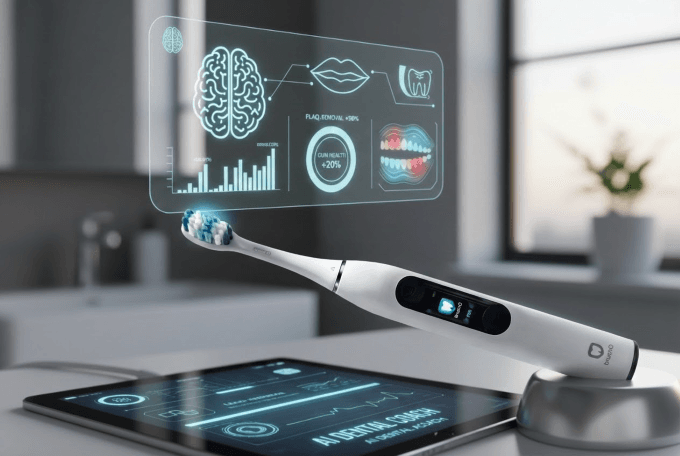
The Role of AI in Enhancing Smart Toothbrush Performance
Jan 22

Jan 22
Artificial intelligence (AI) is transforming many industries, and oral care is no exception. The integration of AI into smart toothbrushes is enhancing their performance and ensuring better brushing habits. From real-time feedback to personalized brushing modes, AI-enabled toothbrushes provide more effective cleaning while adapting to individual needs. This blog delves into how AI enhances smart toothbrush performance and the benefits it brings to oral health.


Introduction: The Intersection of AI and Oral Health

Smart toothbrushes have become an essential tool for modern oral care, combining advanced technology with traditional brushing techniques. What truly sets these devices apart from regular electric toothbrushes is the integration of artificial intelligence (AI). AI is not just a buzzword in technology; it is significantly improving how we approach oral hygiene.
AI-enabled smart toothbrushes are designed to do more than just clean teeth. They leverage machine learning algorithms and sensors to offer personalized and efficient brushing experiences. By monitoring your brushing habits, AI helps optimize cleaning performance, prevent gum damage, and ensure your mouth is properly cleaned in all areas.
 

How AI Enhances Smart Toothbrushes: Key Features

1. Personalized Brushing Modes

AI-powered smart toothbrushes come equipped with various brushing modes, which adapt to the specific needs of the user. Whether you have sensitive teeth, gums, or need a deeper clean, the toothbrush can adjust its settings to suit your condition. By continuously analyzing your brushing technique, AI customizes the brushing experience for optimal results. The toothbrush can suggest the most effective brushing pattern and pressure for you, ensuring that your oral care is as efficient as possible.

2. Real-Time Feedback and Guidance

One of the standout features of AI in smart toothbrushes is the ability to provide real-time feedback during brushing. Sensors built into the toothbrush detect pressure, speed, and coverage, offering immediate guidance via a connected app or the toothbrush’s interface. For example, if you are brushing too hard, the toothbrush will alert you to prevent enamel damage. This immediate feedback helps users improve their brushing techniques, which in turn results in better oral health outcomes.

3. Adaptive Intelligence for Long-Term Benefits

Over time, the AI within a smart toothbrush can "learn" your brushing habits. Through this continuous data collection, the device can provide long-term insights into your brushing consistency, coverage, and areas that may require more attention. By analyzing this information, AI can recommend adjustments and improvements to your brushing routine. These improvements can contribute to healthier gums, stronger teeth, and less plaque buildup, ultimately lowering the risk of oral health problems such as cavities and gum disease.

4. Comprehensive Oral Health Tracking

Smart toothbrushes integrated with AI can also track your overall oral health progress. By syncing with mobile apps, users can monitor their brushing habits, detect problem areas, and keep a record of their oral hygiene routines. AI can even notify you when it’s time to replace your toothbrush head or when you need to book a dental appointment based on the data it gathers. This comprehensive health tracking ensures you stay on top of your dental hygiene regimen and empowers users to take more control over their oral health.
 

The Benefits of AI-Enhanced Smart Toothbrushes

The role of AI in smart toothbrushes goes far beyond just convenience. The real impact is on improving your overall dental health. Here’s how:
  • Better Brushing Technique: The feedback loop helps users understand the best brushing practices, minimizing the risk of brushing too aggressively or missing crucial areas.
  • Healthier Gums: Personalized brushing modes tailored to gum health can prevent overbrushing, reducing irritation and the risk of gum recession.
  • Consistency: AI ensures that users maintain the recommended brushing time, intensity, and frequency, which are critical for effective oral care.
  • Prevention: With the continuous data analysis and insights, users can detect problems early, such as irregular brushing habits or areas of concern that may need professional attention.
By making real-time adjustments to your brushing technique and encouraging better habits, AI-powered toothbrushes significantly contribute to maintaining long-term oral health.
 

Conclusion: The Future of Smart Oral Care

As AI continues to evolve, its integration into everyday devices like smart toothbrushes will only get better. These advancements offer users a more personalized, efficient, and effective brushing experience. With AI’s ability to monitor and guide brushing habits, detect potential issues, and optimize cleaning, the future of oral care is brighter than ever. Whether you're using a smart toothbrush for the first time or are already a seasoned user, embracing AI-driven technology can be the key to achieving superior oral health.

最近發文

Evidence-Based Dentistry: Integrating Research into Clinical Decision Making

Evidence-Based Dentistry: Integrating Research into Clinical Decision Making

Evidence-based dentistry (EBD) represents a fundamental paradigm shift in how dental professionals approach clinical decision making. Rather than relying solely on tradition, anecdotal experience, or expert opinion, EBD provides a systematic framework for integrating the best available scientific ev

Xerostomia and Hyposalivation: Etiology, Diagnosis, and Management Strategies

Xerostomia and Hyposalivation: Etiology, Diagnosis, and Management Strategies

Xerostomia, the subjective sensation of oral dryness, and hyposalivation, the objective reduction in salivary flow, represent one of the most common yet underrecognized complaints encountered in dental practice. Affecting an estimated 20-30% of the general population and up to 40% of older adults, t

Orofacial Myofunctional Therapy: Clinical Applications in Airway and Craniofacial Development

Orofacial Myofunctional Therapy: Clinical Applications in Airway and Craniofacial Development

Orofacial myofunctional therapy (OMT) has emerged as a critical adjunctive intervention in modern dentistry, bridging the gap between orthodontics, sleep medicine, and pediatric airway management. This therapeutic approach targets the neuromuscular re-education of the orofacial musculature, addressi

Evidence-Based Dentistry: Integrating Research into Clinical Decision Making

Evidence-Based Dentistry: Integrating Research into Clinical Decision Making

Evidence-based dentistry (EBD) represents a fundamental paradigm shift in how dental professionals approach clinical decision making. Rather than relying solely on tradition, anecdotal experience, or expert opinion, EBD provides a systematic framework for integrating the best available scientific ev

Dental Practice Management: Modern Economics, Marketing, and Patient Retention

Dental Practice Management: Modern Economics, Marketing, and Patient Retention

The contemporary dental practice operates at the intersection of healthcare delivery and small business management, requiring practitioners to master competencies far beyond clinical excellence. Success in today's competitive landscape demands sophisticated understanding of practice economics, strat

Cleft Lip and Palate: Multidisciplinary Management from Birth to Adulthood

Cleft Lip and Palate: Multidisciplinary Management from Birth to Adulthood

Cleft lip and palate (CLP) represents the most common congenital craniofacial anomaly, occurring in approximately 1 in 700 live births worldwide, with significant variation across ethnic groups. The condition results from failure of fusion of the facial processes during early embryogenesis, specific

Zirconia and Lithium Disilicate: Contemporary All-Ceramic Restorations

Zirconia and Lithium Disilicate: Contemporary All-Ceramic Restorations

The transition from metal-ceramic to all-ceramic restorations represents one of the most significant material shifts in restorative dentistry over the past three decades. Driven by aesthetic demands, concerns about metal hypersensitivity, and remarkable advances in ceramic materials and CAD/CAM tech

Socket Preservation and Alveolar Ridge Augmentation: Evidence-Based Techniques

Socket Preservation and Alveolar Ridge Augmentation: Evidence-Based Techniques

Tooth extraction initiates a cascade of biological events that inevitably results in alveolar ridge remodeling—a process characterized by dimensional changes in both the horizontal and vertical planes that can compromise subsequent implant placement. The clinical significance of post-extraction ridg

Infection Control in Dentistry: Post-COVID Standards and Emerging Pathogens

Infection Control in Dentistry: Post-COVID Standards and Emerging Pathogens

Infection control has always been fundamental to safe dental practice, but the COVID-19 pandemic brought unprecedented scrutiny to dental infection prevention protocols. The recognition that SARS-CoV-2 transmits primarily through respiratory droplets and aerosols—and that dental procedures generate

Forensic Odontology: Identification Methods and Mass Disaster Response

Forensic Odontology: Identification Methods and Mass Disaster Response

Forensic odontology occupies a unique position at the intersection of dentistry, forensic science, and the legal system. The discipline applies dental knowledge to the identification of human remains, the analysis of bite mark evidence, and the estimation of age in both living and deceased individua
