
It is a common misconception that oral health outcomes depend primarily on the tools used. In reality, behavioral technique, biomechanical pressure application, coverage accuracy, brushing duration, and oral microbiome variability all play far greater roles than the toothbrush model alone. Clinical research consistently shows that users of identical toothbrushes can produce vastly different plaque removal rates, gum responses, and enamel preservation outcomes. Understanding the behavioral and physiological variables behind these differences provides insight into how oral hygiene effectiveness can be optimized. Modern smart brushing technologies that provide real-time feedback and performance tracking help reduce human variability, ensuring that brushing results are determined by precision rather than guesswork.
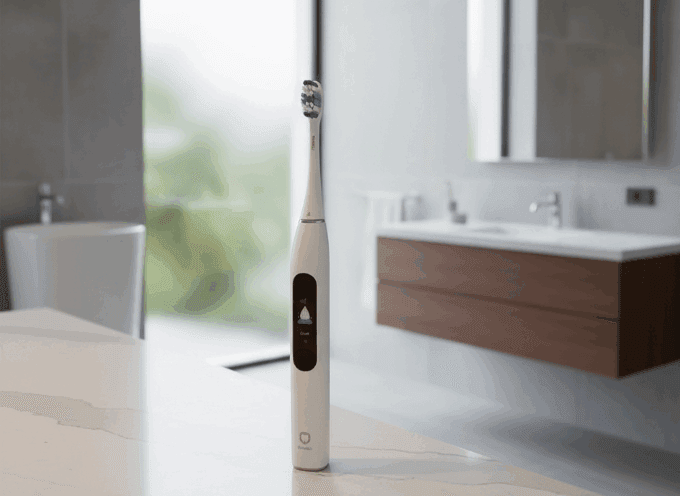
Many individuals assume that purchasing a high-quality toothbrush guarantees improved dental outcomes. However, dental science shows that user behavior accounts for the majority of brushing effectiveness variation.
Two users with identical equipment can produce:
• Different plaque reduction levels
• Different gum irritation responses
• Different enamel wear patterns
• Different long-term oral health outcomes
The toothbrush is only a delivery mechanism — technique determines performance.
Angle, motion, and positioning dramatically influence plaque removal.
Effective technique typically includes:
• 45-degree gumline angle
• Small controlled strokes
• Full-surface coverage
Incorrect technique leaves bacterial biofilm intact regardless of brush quality.
Force variability affects both cleaning efficiency and tissue safety.
Too much pressure leads to:
• Gum recession
• Enamel abrasion
• Sensitivity
Too little pressure results in:
• Plaque retention
• Tartar formation
Humans are poor at self-assessing applied force without feedback.
Studies show users commonly miss:
• Back molars
• Inner tooth surfaces
• Gumline edges
Even experienced brushers may leave up to 30% of surfaces insufficiently cleaned. Uneven coverage explains large outcome discrepancies.
The recommended brushing duration is two minutes, yet behavioral data indicates many users stop early.
Short sessions reduce:
• Mechanical plaque disruption
• Fluoride distribution
• Biofilm destabilization
Time inconsistency produces measurable hygiene differences.
Individual physiology also contributes:
• Saliva composition
• Microbiome diversity
• Tooth alignment
• Gum sensitivity
These factors affect how quickly plaque accumulates and how tissue responds to brushing.
Manual and standard electric brushes provide limited performance feedback. Users rely on perception rather than measurement, leading to:
• Inconsistent habit formation
• Undetected technique errors
• Persistent coverage gaps
This behavioral variability explains why identical tools yield unequal results.
Smart oral care systems like BrushO address variability by introducing measurable guidance.
Sensors alert users to excessive force, protecting gums and enamel.
Tracking of the 6 oral zones and 16 surfaces ensures uniform cleaning.
Session monitoring encourages full-duration brushing.
Performance reports help users refine technique over time.
Reducing behavioral variability produces measurable improvements:
• More consistent plaque control
• Reduced gingival inflammation
• Slower enamel wear
• Predictable oral health outcomes
Data-guided brushing transforms hygiene from habit-based variability to performance-based consistency.
The effectiveness of oral hygiene is determined far less by the toothbrush itself and far more by human behavioral execution. Differences in technique, pressure, coverage, duration, and biology explain why identical tools produce different results. AI-guided brushing technologies like BrushO narrow these performance gaps by introducing measurable feedback, helping users refine technique and achieve consistent, predictable oral health outcomes regardless of baseline habits.
Feb 6
Feb 6

The uncontrolled hypertension is the condition that the dental practice meets in the patient who presents with the elevated pressure that the guideline does not permit for the elective treatment, and the management of this patient requires the deferral of the dental procedure and the referral to ...

The closure of the extraction space in the orthodontic treatment is the phase that demands the careful selection of the mechanics and the monitoring of the force that the appliance delivers. The sliding mechanics that rely on the continuous archwire and the power chain that connects the brackets ...

The transverse discrepancy of the maxilla is the problem that the crowding and the posterior crossbite often hide, and the maxillary expansion is the treatment that addresses the width of the arch rather than the position of the individual tooth. The clinician who diagnoses the constriction early...

The local anaesthesia is the daily procedure that the modern dentistry treats as the routine, and the complications that follow it range from the transient and the trivial to the permanent and the serious. The clinician who injects by the habit without the anatomy in the mind is the clinician who...

The hypertension is the condition that the dental practice meets in the every day, and the patient who carries the elevated pressure without the symptoms is the patient who presents the risk that the chair-side measurement reveals. The dental team occupies the position that no other profession ho...

The glass-ceramic crown has become the default restoration for the anterior and the many posterior teeth, and the material selection within the family is the decision that determines the strength, the aesthetics, and the longevity of the result. The lithium disilicate, the leucite, and the zircon...

The dental phobia is the extreme form of the dental fear that prevents the patient from attending the treatment that the oral health requires, and the management of the phobia demands the skill that extends beyond the routine behaviour guidance. The systematic desensitization, the exposure therap...

The dental fear of the child is the condition that shapes the attitude for the lifetime, and the clinician who manages the first visits with the skill builds the patient who attends the recall without the dread. The fear that the child develops follows the many sources, and the practice that reco...

The patient with controlled hypertension is the patient who requires the dental care that the oral health demands and the treatment that the blood pressure permits, and the clinician who manages the controlled case safely follows the guideline that the evidence supports. The controlled hypertensi...

The ceramic veneer is the restoration that the aesthetic dentistry depends on, and the bond that retains the veneer on the enamel is the critical link that determines whether the restoration survives the function or fractures and debonds. The clinical technique from the preparation to the cementa...


Address: RM 1427, 14/F RADIO CITY 505, HENNESSY RD CAUSEWAY BAY, HONG KONG
Code: 000000
Phone: +852-53758652
Email: customerservice@brusho.com
