
In today’s fast-paced routines, brushing your teeth is often done while checking emails, scrolling TikTok, or rushing to get dressed. But this habit of multitasking may be quietly undermining your oral hygiene. Distracted brushing leads to missed zones, inconsistent pressure, and rushed routines—all of which contribute to plaque buildup and long-term dental issues. The solution? Smarter tools and more mindful habits.
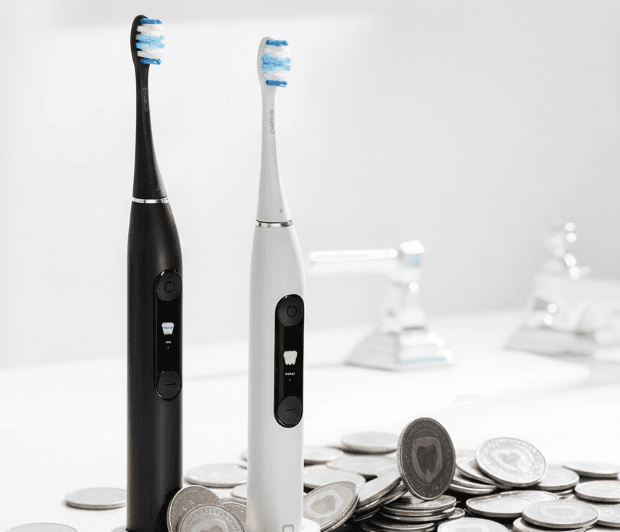
Brushing teeth is a deceptively simple habit—but it’s also one that requires full attention to be effective. When your brain is split between brushing and something else (like a phone screen or a conversation), your brushing becomes:
• Shorter: Most distracted brushers don’t hit the 2-minute mark.
• Uneven: Some zones are skipped or not brushed thoroughly.
• Too rough or too light: Without feedback, you may apply excessive or insufficient pressure.
• Technique-degraded: You lose the precision of angling the brush properly along the gumline or focusing on problem areas.
Over time, these small slips can lead to plaque buildup, gum inflammation, cavities, or even enamel wear.
BrushO’s AI brushing data shows that when users are distracted (especially in the morning), they:
• Brush 25–40% fewer surfaces
• Apply irregular pressure—often too hard on the left side
• Miss at least one zone (often molars or gumline edges)
• Stop brushing before 90 seconds
That means even users who think they’re brushing well may be falling short.
Devices like BrushO are built to tackle exactly this issue:
Real-Time Pressure Alerts: If you’re brushing too hard, it lets you know.
Zone-by-Zone Coaching: Breaks your mouth into 6 zones and 16 surfaces so you know where you’ve missed.
Timing Guidance: Ensures full 2-minute coverage—even if your mind wanders.
Daily Performance Reports: Reveal patterns like “always miss bottom right molars” or “too short brushing before bedtime”.
This turns brushing into a measurable habit, helping you stay accountable—even on your busiest mornings.
1. Stand still and look in the mirror – It boosts focus and technique.
2. Leave your phone outside the bathroom – Especially in the morning.
3. Play a 2-minute brushing song or timer – Helps track time passively.
4. Use your BrushO brushing score as a daily reminder of how present you were.
5. Turn brushing into a ritual, not a chore – Use this time to mentally reset.
Mindless brushing might not seem harmful in the moment, but it compounds over time:
➡️ Incomplete plaque removal = cavities & tartar
➡️ Uneven brushing = gumline damage or tooth sensitivity
➡️ Missed areas = early stages of gum disease
Focusing for just 2 minutes twice a day can protect you from years of dental treatment ahead.
Multitasking during brushing may feel productive—but your teeth disagree. With smart feedback from tools like BrushO, you can retrain yourself to brush better, longer, and more evenly. Your smile deserves your full attention—even for just two minutes. BrushO is an AI-powered smart toothbrush that transforms brushing into a data-driven habit. With 6-zone guidance, real-time pressure sensing, and personalized daily scores, BrushO helps you brush with purpose, not distraction. It’s time to stop multitasking—and start smart brushing.
Jan 23
Jan 23

Evidence-based dentistry (EBD) represents a fundamental paradigm shift in how dental professionals approach clinical decision making. Rather than relying solely on tradition, anecdotal experience, or expert opinion, EBD provides a systematic framework for integrating the best available scientific ev

Xerostomia, the subjective sensation of oral dryness, and hyposalivation, the objective reduction in salivary flow, represent one of the most common yet underrecognized complaints encountered in dental practice. Affecting an estimated 20-30% of the general population and up to 40% of older adults, t

Orofacial myofunctional therapy (OMT) has emerged as a critical adjunctive intervention in modern dentistry, bridging the gap between orthodontics, sleep medicine, and pediatric airway management. This therapeutic approach targets the neuromuscular re-education of the orofacial musculature, addressi

Evidence-based dentistry (EBD) represents a fundamental paradigm shift in how dental professionals approach clinical decision making. Rather than relying solely on tradition, anecdotal experience, or expert opinion, EBD provides a systematic framework for integrating the best available scientific ev

The contemporary dental practice operates at the intersection of healthcare delivery and small business management, requiring practitioners to master competencies far beyond clinical excellence. Success in today's competitive landscape demands sophisticated understanding of practice economics, strat

Cleft lip and palate (CLP) represents the most common congenital craniofacial anomaly, occurring in approximately 1 in 700 live births worldwide, with significant variation across ethnic groups. The condition results from failure of fusion of the facial processes during early embryogenesis, specific

The transition from metal-ceramic to all-ceramic restorations represents one of the most significant material shifts in restorative dentistry over the past three decades. Driven by aesthetic demands, concerns about metal hypersensitivity, and remarkable advances in ceramic materials and CAD/CAM tech

Tooth extraction initiates a cascade of biological events that inevitably results in alveolar ridge remodeling—a process characterized by dimensional changes in both the horizontal and vertical planes that can compromise subsequent implant placement. The clinical significance of post-extraction ridg

Infection control has always been fundamental to safe dental practice, but the COVID-19 pandemic brought unprecedented scrutiny to dental infection prevention protocols. The recognition that SARS-CoV-2 transmits primarily through respiratory droplets and aerosols—and that dental procedures generate

Forensic odontology occupies a unique position at the intersection of dentistry, forensic science, and the legal system. The discipline applies dental knowledge to the identification of human remains, the analysis of bite mark evidence, and the estimation of age in both living and deceased individua

সবাই যেন নিজের মতো করে গড়তে পারে – এমনভাবে দ্রুত ও কম খরচে ওরাল হেলথ ডেটা নেটওয়ার্ক তৈরি করুন।
সবাই যেন নিজের মতো করে গড়তে পারে – এমনভাবে দ্রুত ও কম খরচে ওরাল হেলথ ডেটা নেটওয়ার্ক তৈরি করুন।


Address: RM 1427, 14/F RADIO CITY 505, HENNESSY RD CAUSEWAY BAY, HONG KONG
Code: 000000
Phone: +852-53758652
Email: customerservice@brusho.com