
Nail biting is often dismissed as a nervous habit or a childhood behavior people never outgrow. But behind this seemingly minor action lies a surprising threat to your oral health. From microscopic enamel damage to jaw strain and gum irritation, nail biting can quietly undermine the health of your teeth over time—often without immediate pain or obvious warning signs. Understanding how nail biting affects your teeth is the first step toward preventing long-term damage and maintaining a healthy smile.
Unlike food, fingernails are hard, uneven, and often contaminated with bacteria. Repeated pressure from nail biting puts your teeth under stress, they were never designed to handle.
• Micro-cracks in tooth enamel
• Uneven tooth wear
• Increased tooth sensitivity
• Higher risk of chipped or fractured teeth
Because the damage happens gradually, many people don’t connect nail biting with their dental problems until visible issues appear.
Your tooth enamel is strong—but not indestructible. Constant biting against hard nail edges wears down enamel, especially on the front teeth. Once enamel is damaged, it cannot regenerate.
• Teeth become more sensitive to hot and cold
• Stains penetrate more easily
• The risk of cavities increases
What starts as a stress habit can eventually lead to irreversible tooth damage.
Nail biting often involves unnatural jaw positioning and repetitive pressure. This can strain the jaw muscles and contribute to:
• Jaw pain or tightness
• Clicking or popping sounds when opening the mouth
• Bite misalignment over time
In some cases, chronic nail biting can worsen symptoms of bruxism (teeth grinding), further increasing tooth wear and jaw discomfort.
Fingernails carry bacteria from everything you touch—phones, keyboards, door handles. When nails repeatedly contact the mouth, bacteria transfer directly to the gums and teeth.
This can increase the risk of:
• Gum inflammation
• Bleeding gums
• Oral infections
If small cuts or irritation already exist around the gumline, bacteria can enter more easily, slowing healing and worsening gum health.
Unlike cavities or toothaches, nail-biting damage doesn’t cause immediate pain. The signs are subtle:
• Slight sensitivity
• Minor chipping
• Gum tenderness
• Jaw fatigue
By the time visible damage appears, the habit may already have caused lasting effects.
Breaking the habit is ideal—but protecting your teeth in the meantime is essential.
• Keeping nails trimmed short to reduce biting impact
• Using bitter-tasting nail treatments to discourage biting
• Managing stress triggers that lead to nail biting
• Maintaining excellent oral hygiene to reduce bacterial risk
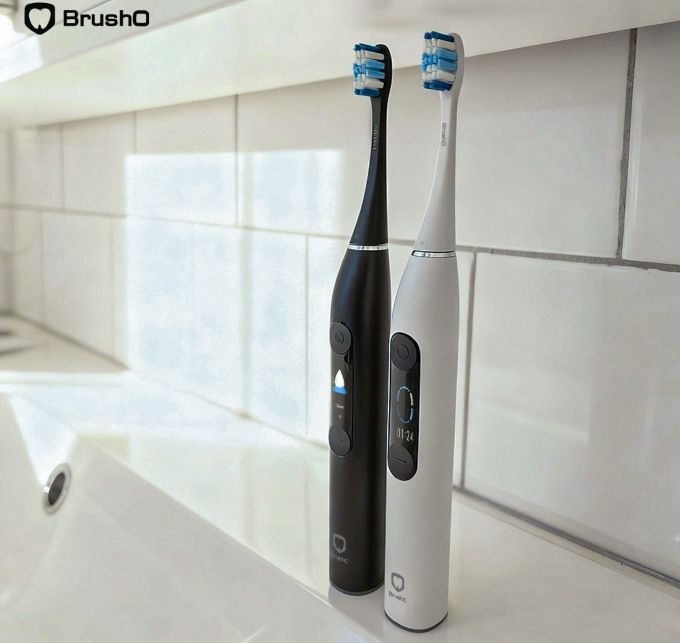
Using smart oral care tools can also help. Toothbrushes with pressure awareness and brushing feedback—like BrushO—support healthier enamel and gum protection by ensuring gentle, effective brushing that compensates for everyday habits that strain teeth.
Nail biting is more than a cosmetic habit—it’s a silent threat to your teeth, gums, and jaw health. From enamel erosion to bacterial exposure, the long-term effects can be significant if left unaddressed. By understanding the risks and taking proactive steps, you can protect your teeth before small habits turn into lasting dental problems.
BrushO is an AI-powered smart toothbrush designed to protect teeth and gums through precision brushing guidance. By monitoring pressure, coverage, and brushing habits in real time, BrushO helps users reduce enamel damage, improve gum health, and build smarter daily oral care routines—especially important for those with stress-related habits like nail biting.

Hyperdontia is the presence of one or more teeth in excess of the normal dental formula, and the resulting teeth are described as supernumerary. The condition is common enough to appear in routine practice but variable enough in presentation that the decision to intervene is rarely straightforwar...

Few patients complete orthodontic treatment without asking whether their teeth will move back. The honest answer is that they will, to some degree, in the majority of cases. Relapse is not a failure of treatment but a predictable biological response, and understanding why it happens is the basis ...

The mandible is the largest and most frequently fractured bone of the facial skeleton, and its management sits at the interface between trauma surgery and restorative dentistry. Treatment has shifted over four decades from prolonged maxillomandibular fixation towards rigid internal fixation with ...

Chronic liver disease affects hundreds of millions of people worldwide, and its prevalence continues to rise with the epidemic of metabolic liver disease. The liver is central to haemostasis, drug metabolism and immune competence, and its failure therefore alters the risk profile of almost every ...

Excessive gingival display, commonly described as a gummy smile, is one of the most frequent aesthetic concerns presented to dental practitioners. The condition is not a single entity but a clinical presentation that can arise from skeletal, gingival, muscular or dental factors, and the treatment...

Drug-induced gingival overgrowth is a well-recognised adverse effect of several widely prescribed medications, and it remains one of the most common drug-related findings in periodontal practice. The condition produces firm, fibrous enlargement of the gingiva that can interfere with speech, masti...

Denture stomatitis is an inflammatory condition of the denture-bearing mucosa that affects a large proportion of removable prosthesis wearers, yet it is frequently dismissed as a cosmetic annoyance. The condition is driven by a Candida biofilm on the fitting surface of the prosthesis, and it is m...

Chronic kidney disease affects an estimated 850 million people worldwide, and the number of patients surviving on dialysis or with a renal transplant continues to rise. These patients carry an oral disease burden that is substantially higher than that of the general population, and their medical ...

Angular cheilitis is an inflammatory lesion of the labial commissures that presents with erythema, fissuring and crusting at the corners of the mouth. It is one of the most common conditions encountered in general dental practice, yet it is frequently treated as a simple fungal infection and allo...

Adverse reactions to dental materials are uncommon but they are not rare, and they are frequently misdiagnosed because the oral mucosa responds to allergens in a limited number of ways. A burning sensation, a persistent ulcer or an unexplained area of erythema may all represent a hypersensitivity...

সবাই যেন নিজের মতো করে গড়তে পারে – এমনভাবে দ্রুত ও কম খরচে ওরাল হেলথ ডেটা নেটওয়ার্ক তৈরি করুন।
সবাই যেন নিজের মতো করে গড়তে পারে – এমনভাবে দ্রুত ও কম খরচে ওরাল হেলথ ডেটা নেটওয়ার্ক তৈরি করুন।


Address: RM 1427, 14/F RADIO CITY 505, HENNESSY RD CAUSEWAY BAY, HONG KONG
Code: 000000
Phone: +852-53758652
Email: customerservice@brusho.com