
Chewing gum is a go-to for quick breath fixes, especially after meals or during long workdays. But can it really keep your breath fresh all day? This article explores the science behind how gum works, its limitations, and why smart oral hygiene—like brushing with BrushO—is the real solution for long-lasting freshness. Discover the truth behind minty myths and how to build a routine that addresses the root causes of bad breath.
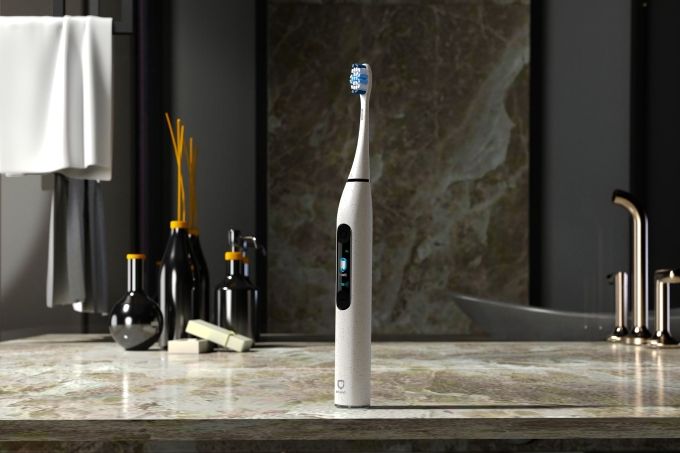
Gum freshens breath in two main ways:
Chewing increases saliva, which helps wash away food particles and neutralize acids produced by bacteria.
Minty or fruity flavors mask odors temporarily, while xylitol (a common sugar substitute) may reduce cavity-causing bacteria.
However, these effects are short-lived, usually lasting 15 to 60 minutes, depending on the gum and oral conditions.
Despite its convenience, chewing gum can’t address the root causes of bad breath, such as:
Bacteria trapped on teeth, gums, and tongue create odor-producing sulfur compounds.
The rough surface of the tongue harbors bacteria and food debris, especially when not cleaned properly.
Rushing or skipping brushing sessions leaves behind odor-causing particles.
Gum only temporarily increases saliva; underlying causes like dehydration or medication still persist.
Long-lasting fresh breath depends on removing the source of odor, not masking it.
| Method | Short-Term Effect | Long-Term Benefit |
| Chewing Gum | ✅ Yes (15–60 mins) | ❌ No |
| Brushing Teeth | ✅ Yes | ✅ Yes |
| Cleaning Tongue | ✅ Yes | ✅ Yes |
| Flossing | ❌ No | ✅ Yes |
| Staying Hydrated | ✅ Yes | ✅ Yes |
With smart toothbrushes like BrushO, breath care becomes proactive, not reactive. Here’s how:
BrushO’s 6-zone guidance ensures no area is left behind, especially molars and tongue zones, which are common sources of bad breath.
Real-time feedback avoids over-brushing, which can irritate gums and contribute to inflammation-based odor.
Twice-daily brushing reminders build long-term habits that target plaque and bacterial overgrowth—the real cause of halitosis.
Sensitive or deep clean modes allow for customized breath control without damaging enamel or gums.
Stay motivated with $BRUSH tokens when you brush correctly—making fresh breath part of a daily reward loop.
• Brush your teeth AND tongue twice a day
• Stay hydrated throughout the day
• Use floss or interdental brushes
• Chew xylitol gum after meals, not as a substitute for brushing
• Avoid alcohol-based mouthwashes, which dry the mouth
Chewing gum can offer a quick fix, but it’s not a solution for all-day fresh breath. To maintain oral freshness and health, you need a comprehensive routine built on effective brushing, hydration, and tongue care. With BrushO, you get real-time coaching, personalized brushing feedback, and the tools you need to fight bad breath at the source—not just cover it up.

The uncontrolled hypertension is the condition that the dental practice meets in the patient who presents with the elevated pressure that the guideline does not permit for the elective treatment, and the management of this patient requires the deferral of the dental procedure and the referral to ...

The closure of the extraction space in the orthodontic treatment is the phase that demands the careful selection of the mechanics and the monitoring of the force that the appliance delivers. The sliding mechanics that rely on the continuous archwire and the power chain that connects the brackets ...

The transverse discrepancy of the maxilla is the problem that the crowding and the posterior crossbite often hide, and the maxillary expansion is the treatment that addresses the width of the arch rather than the position of the individual tooth. The clinician who diagnoses the constriction early...

The local anaesthesia is the daily procedure that the modern dentistry treats as the routine, and the complications that follow it range from the transient and the trivial to the permanent and the serious. The clinician who injects by the habit without the anatomy in the mind is the clinician who...

The hypertension is the condition that the dental practice meets in the every day, and the patient who carries the elevated pressure without the symptoms is the patient who presents the risk that the chair-side measurement reveals. The dental team occupies the position that no other profession ho...

The glass-ceramic crown has become the default restoration for the anterior and the many posterior teeth, and the material selection within the family is the decision that determines the strength, the aesthetics, and the longevity of the result. The lithium disilicate, the leucite, and the zircon...

The dental phobia is the extreme form of the dental fear that prevents the patient from attending the treatment that the oral health requires, and the management of the phobia demands the skill that extends beyond the routine behaviour guidance. The systematic desensitization, the exposure therap...

The dental fear of the child is the condition that shapes the attitude for the lifetime, and the clinician who manages the first visits with the skill builds the patient who attends the recall without the dread. The fear that the child develops follows the many sources, and the practice that reco...

The patient with controlled hypertension is the patient who requires the dental care that the oral health demands and the treatment that the blood pressure permits, and the clinician who manages the controlled case safely follows the guideline that the evidence supports. The controlled hypertensi...

The ceramic veneer is the restoration that the aesthetic dentistry depends on, and the bond that retains the veneer on the enamel is the critical link that determines whether the restoration survives the function or fractures and debonds. The clinical technique from the preparation to the cementa...

एक मौखिक स्वास्थ्य डेटा नेटवर्क जल्दी और कम लागत पर इस तरह से बनाएं जिसमें हर कोई भाग ले सके।


Address: RM 1427, 14/F RADIO CITY 505, HENNESSY RD CAUSEWAY BAY, HONG KONG
Code: 000000
Phone: +852-53758652
Email: customerservice@brusho.com