The Role of AI in Enhancing Smart Toothbrush Performance
Jan 22

Jan 22
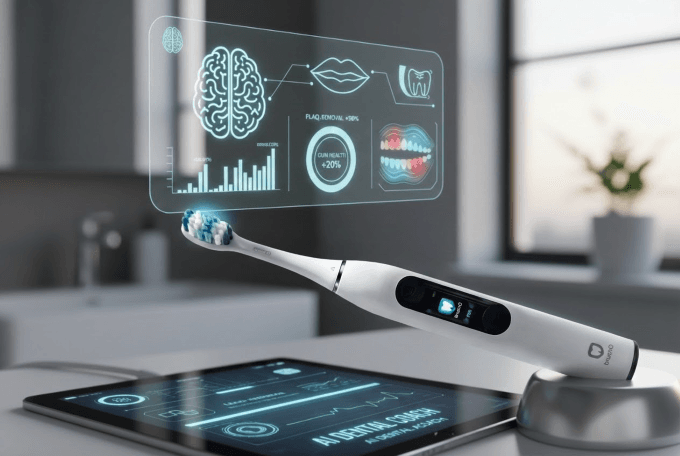
Artificial intelligence (AI) is transforming many industries, and oral care is no exception. The integration of AI into smart toothbrushes is enhancing their performance and ensuring better brushing habits. From real-time feedback to personalized brushing modes, AI-enabled toothbrushes provide more effective cleaning while adapting to individual needs. This blog delves into how AI enhances smart toothbrush performance and the benefits it brings to oral health.


Introduction: The Intersection of AI and Oral Health

Smart toothbrushes have become an essential tool for modern oral care, combining advanced technology with traditional brushing techniques. What truly sets these devices apart from regular electric toothbrushes is the integration of artificial intelligence (AI). AI is not just a buzzword in technology; it is significantly improving how we approach oral hygiene.
AI-enabled smart toothbrushes are designed to do more than just clean teeth. They leverage machine learning algorithms and sensors to offer personalized and efficient brushing experiences. By monitoring your brushing habits, AI helps optimize cleaning performance, prevent gum damage, and ensure your mouth is properly cleaned in all areas.
 

How AI Enhances Smart Toothbrushes: Key Features

1. Personalized Brushing Modes

AI-powered smart toothbrushes come equipped with various brushing modes, which adapt to the specific needs of the user. Whether you have sensitive teeth, gums, or need a deeper clean, the toothbrush can adjust its settings to suit your condition. By continuously analyzing your brushing technique, AI customizes the brushing experience for optimal results. The toothbrush can suggest the most effective brushing pattern and pressure for you, ensuring that your oral care is as efficient as possible.

2. Real-Time Feedback and Guidance

One of the standout features of AI in smart toothbrushes is the ability to provide real-time feedback during brushing. Sensors built into the toothbrush detect pressure, speed, and coverage, offering immediate guidance via a connected app or the toothbrush’s interface. For example, if you are brushing too hard, the toothbrush will alert you to prevent enamel damage. This immediate feedback helps users improve their brushing techniques, which in turn results in better oral health outcomes.

3. Adaptive Intelligence for Long-Term Benefits

Over time, the AI within a smart toothbrush can "learn" your brushing habits. Through this continuous data collection, the device can provide long-term insights into your brushing consistency, coverage, and areas that may require more attention. By analyzing this information, AI can recommend adjustments and improvements to your brushing routine. These improvements can contribute to healthier gums, stronger teeth, and less plaque buildup, ultimately lowering the risk of oral health problems such as cavities and gum disease.

4. Comprehensive Oral Health Tracking

Smart toothbrushes integrated with AI can also track your overall oral health progress. By syncing with mobile apps, users can monitor their brushing habits, detect problem areas, and keep a record of their oral hygiene routines. AI can even notify you when it’s time to replace your toothbrush head or when you need to book a dental appointment based on the data it gathers. This comprehensive health tracking ensures you stay on top of your dental hygiene regimen and empowers users to take more control over their oral health.
 

The Benefits of AI-Enhanced Smart Toothbrushes

The role of AI in smart toothbrushes goes far beyond just convenience. The real impact is on improving your overall dental health. Here’s how:
  • Better Brushing Technique: The feedback loop helps users understand the best brushing practices, minimizing the risk of brushing too aggressively or missing crucial areas.
  • Healthier Gums: Personalized brushing modes tailored to gum health can prevent overbrushing, reducing irritation and the risk of gum recession.
  • Consistency: AI ensures that users maintain the recommended brushing time, intensity, and frequency, which are critical for effective oral care.
  • Prevention: With the continuous data analysis and insights, users can detect problems early, such as irregular brushing habits or areas of concern that may need professional attention.
By making real-time adjustments to your brushing technique and encouraging better habits, AI-powered toothbrushes significantly contribute to maintaining long-term oral health.
 

Conclusion: The Future of Smart Oral Care

As AI continues to evolve, its integration into everyday devices like smart toothbrushes will only get better. These advancements offer users a more personalized, efficient, and effective brushing experience. With AI’s ability to monitor and guide brushing habits, detect potential issues, and optimize cleaning, the future of oral care is brighter than ever. Whether you're using a smart toothbrush for the first time or are already a seasoned user, embracing AI-driven technology can be the key to achieving superior oral health.

最新の投稿

Electric Toothbrush True Cost Comparison: Brush Heads, Battery Life, and Hidden Fees

Electric Toothbrush True Cost Comparison: Brush Heads, Battery Life, and Hidden Fees

The price tag on an electric toothbrush is misleading. A $70 brush with $36 annual replacement heads costs $250 over five years. A $150 brush with free lifetime heads costs $150 over the same period. The sticker price is not the cost — the replacement heads are. Here is a transparent total cost o...

Sonic vs Oscillating vs AI: Your Guide to Electric Toothbrush Types

Sonic vs Oscillating vs AI: Your Guide to Electric Toothbrush Types

Walk into the electric toothbrush aisle and you face a choice that most shoppers resolve by picking the color they like best. But underneath the plastic housings and marketing claims, electric toothbrushes fall into three fundamentally different technological categories — sonic, oscillating-rotat...

How to Brush Your Teeth Properly: The Technique Most People Get Wrong

How to Brush Your Teeth Properly: The Technique Most People Get Wrong

Most people brush their teeth twice a day and do it wrong. Not out of negligence, but because nobody ever taught them the right way — and the wrong way feels perfectly fine until the damage accumulates over years. A 2018 study in the British Dental Journal found that only 1 in 10 adults consisten...

How Do AI Toothbrushes Work? Sensors, Algorithms, and Real-Time Feedback Explained

How Do AI Toothbrushes Work? Sensors, Algorithms, and Real-Time Feedback Explained

An AI toothbrush does not simply vibrate for two minutes and stop. It runs a continuous perception pipeline — sensing position, pressure, and motion up to 200 times per second, classifying that data through onboard neural networks, and delivering feedback in under 100 milliseconds — all on a micr...

BrushO vs Oral-B iO: Which Smart Toothbrush Fits Your Routine?

BrushO vs Oral-B iO: Which Smart Toothbrush Fits Your Routine?

Two smart toothbrushes, two radically different engineering philosophies. Oral-B's iO series represents the culmination of decades of oscillating-rotating refinement — a small round head that spins, pulsates, and micro-vibrates, paired with app-based AI zone tracking. BrushO takes the opposite ap...

How to Set Up Your BrushO Smart Toothbrush: A Step-by-Step Guide

How to Set Up Your BrushO Smart Toothbrush: A Step-by-Step Guide

Unboxing a smart toothbrush should be exciting, not confusing. BrushO is designed to get you from packaging to first brush in under five minutes, but there are a few steps worth doing correctly to ensure the AI calibration is accurate and the companion app is configured to give you the most usefu...

Understanding Your BrushO App: Brushing Score, Zone Map, and Progress Tracking

Understanding Your BrushO App: Brushing Score, Zone Map, and Progress Tracking

The BrushO handle does the heavy lifting — sensing motion, classifying zones, and delivering real-time pressure alerts through its LED ring. But the companion app is where the data becomes actionable. It is not a dashboard you need to stare at while brushing; it is a post-session review tool that...

Best Smart Toothbrush 2026: AI-Powered Picks Compared

Best Smart Toothbrush 2026: AI-Powered Picks Compared

The smart toothbrush category has matured significantly. What began as Bluetooth-connected timers has evolved into a genuine health-tech category, with onboard neural networks classifying brushing zones in real time, pressure sensors preventing gum damage, and companion apps that turn a twice-dai...

AI Toothbrush vs Regular Electric Toothbrush: Is the Upgrade Worth It?

AI Toothbrush vs Regular Electric Toothbrush: Is the Upgrade Worth It?

A regular electric toothbrush does one thing well: it moves bristles faster than your hand ever could. A modern sonic brush generates 30,000 to 40,000 brush strokes per minute, mechanically disrupting plaque biofilm far more efficiently than any manual technique. That alone has been enough to mak...

Tooth Enamel Microhardness: Vickers, Knoop, and Nanoindentation Explained

Tooth Enamel Microhardness: Vickers, Knoop, and Nanoindentation Explained

An in-depth exploration of the three principal hardness testing methodologies used in dental enamel research—Vickers, Knoop, and nanoindentation—and what they reveal about remineralization, erosion, and the anisotropic mechanical properties of the body's hardest tissue.
