
Oral hygiene doesn’t just affect your teeth—it has a direct link to your digestive health. Poor brushing habits, gum disease, and bacterial imbalances in your mouth can impact how well your body breaks down food, absorbs nutrients, and maintains gut health. This article explores the science-backed connection between oral and digestive health, the signs of imbalance, and how smart toothbrushes like BrushO can help protect your body from the inside out.
Your digestive system starts in the mouth. Every time you chew, enzymes in your saliva begin breaking down food. But there’s more going on:
• Oral bacteria travel to the gut through saliva, especially if brushing is poor.
• Gum inflammation can signal immune responses that affect the gut lining.
• Tooth infections or decay can alter what and how you eat—impacting digestion.
If your mouth is not in balance, your gut often isn’t either.
Your oral microbiome—just like your gut microbiome—is made up of good and bad bacteria. If harmful bacteria dominate:
• They can be swallowed and colonize the gut.
• They may cause digestive issues like bloating or inflammation.
• They trigger immune responses that damage gut health long term.
Gingivitis and periodontitis don’t stay in the mouth. Inflammatory compounds released in gum disease can:
• Enter the bloodstream.
• Disrupt the gut barrier, leading to leaky gut symptoms.
• Contribute to chronic gastrointestinal issues like IBS.
Saliva is essential for:
• Pre-digesting carbs with amylase.
• Coating food to make it easier to swallow.
• Sending signals to your stomach to start acid production.
Poor oral hygiene can reduce healthy saliva flow or alter its composition, interfering with early digestion.
If your oral hygiene is poor and you’re noticing gut discomfort, watch for these signs:
• Persistent bad breath, even after brushing
• Bleeding or inflamed gums
• Coated tongue or dry mouth
• Frequent indigestion or bloating
• Difficulty chewing due to tooth pain
• Avoidance of fibrous foods that support gut health
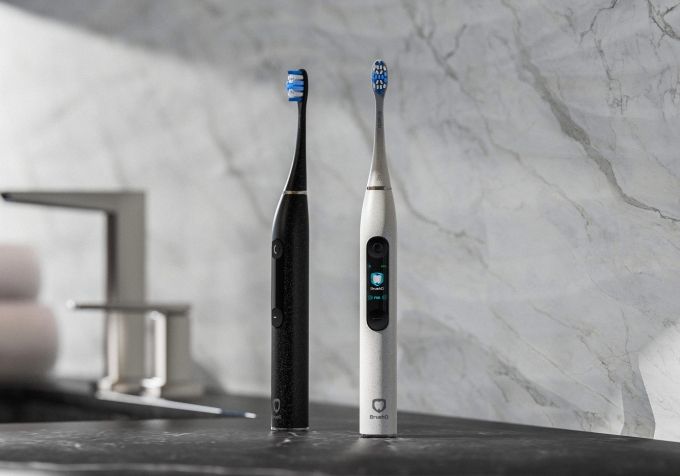
Smart toothbrushes like BrushO do more than clean teeth—they help maintain a balanced microbiome and reduce inflammation:
• 6-zone, 16-surface coverage ensures no plaque is left behind.
• Real-time pressure guidance protects enamel and reduces gum irritation.
• Custom brushing modes (sensitive, deep clean, polish) tailored to individual needs.
• App feedback + brushing scores that track your consistency and technique.
• $BRUSH token rewards to gamify daily brushing and build better habits.
With better brushing, you reduce bacterial overload in the mouth, supporting a healthier digestive tract.
Oral and digestive health are deeply connected. To support both:
• Brush twice daily with AI guidance using tools like BrushO
• Floss and rinse to prevent bacterial buildup
• Chew slowly and thoroughly to activate digestive enzymes
• Stay hydrated to support saliva production
• Eat gut-friendly foods like yogurt, leafy greens, and high-fiber veggies
• Visit your dentist and doctor regularly to check for hidden issues
The connection between oral hygiene and digestive health is stronger than many people realize. A healthy mouth sets the stage for effective digestion, nutrient absorption, and immune protection. By using smart tools like BrushO, you’re not just brushing your teeth—you’re optimizing your body’s first line of defense. Make brushing smarter, more personalized, and more impactful for your whole-body health.
Jan 19
Jan 19

Squamous cell carcinoma is not a single, uniform disease, and two of its oral variants illustrate the extremes of its behavior. Verrucous carcinoma is a slow-growing, exophytic tumor that almost never metastasizes, while spindle cell carcinoma is an aggressive, sarcomatoid malignancy that can be ...

Most people expect a toothache to be the first sign of pulp disease, but some forms of pulpitis are surprisingly silent. A pulp polyp is the visible result of chronic hyperplastic pulpitis, a condition in which the dental pulp grows out of a large carious opening as a fleshy mass. Recognizing thi...

Dry mouth is not merely uncomfortable; it is a medical condition with real consequences for teeth, speech, swallowing and quality of life. When the salivary glands cannot produce enough saliva, medications called sialogogues can restore some of the missing fluid. Pilocarpine and cevimeline are th...

A blister in the mouth can be the first warning of a systemic autoimmune disease, and two disorders deserve particular attention in the dental chair: pemphigus vulgaris and mucous membrane pemphigoid. Both produce chronic oral ulceration, yet their immunologic targets, clinical behavior and long-...

When infection drains from a tooth, the body often creates a visible escape route, and the dentist must interpret these fistulous openings correctly. A parulis is the common gum boil that signals chronic periapical infection, while an oroantral fistula is a communication between the mouth and the...

Among the fibro-osseous lesions of the jaws, the ossifying fibroma holds a unique position because it is a true neoplasm, unlike the reactive cemento-osseous dysplasia discussed in an earlier article. It grows continuously, expands bone and requires surgical removal, and its cemental variant adds...

Not all keratocystic lesions of the jaw behave alike, and one of the most important distinctions in oral pathology separates the orthokeratinized odontogenic cyst from its better-known relative, the odontogenic keratocyst. Although the two lesions look similar under the microscope at first glance...

Periodontal disease is usually a slowly progressive infection, but a rare form called necrotizing ulcerative periodontitis destroys tissue with alarming speed. Unlike ordinary periodontitis, this condition produces necrotic, cratered papillae, deep pocketing and rapid bone loss, and it appears al...

Every parent has met the child who refuses to eat because of painful mouth sores, and most of these children have one of two viral illnesses: herpangina or hand, foot and mouth disease. Both are caused by enteroviruses, both produce fever and oral ulcers, and both are overwhelmingly common in you...

Cementoosseous dysplasia is one of the most common fibro-osseous lesions found on dental radiographs, yet it is also one of the most frequently misdiagnosed. The lesion replaces normal bone with cellular fibrous tissue and cementum-like material, and it appears in several forms that range from a ...

모두가 쉽게 구축할 수 있는 방식으로 구강 건강 데이터 네트워크를 저렴한 비용으로 빠르게 구축하세요.


Address: RM 1427, 14/F RADIO CITY 505, HENNESSY RD CAUSEWAY BAY, HONG KONG
Code: 000000
Phone: +852-53758652
Email: customerservice@brusho.com