
While most athletes focus on strength, endurance, and diet, few consider how their oral health impacts performance. From dry mouth caused by dehydration to enamel erosion from energy drinks, athletes face hidden dental challenges that can affect not only their teeth but also their overall performance. This article explores why athletes need to be extra cautious with their dental care, and how smart solutions like BrushO’s AI-guided brushing system can help maintain peak oral health on and off the field.
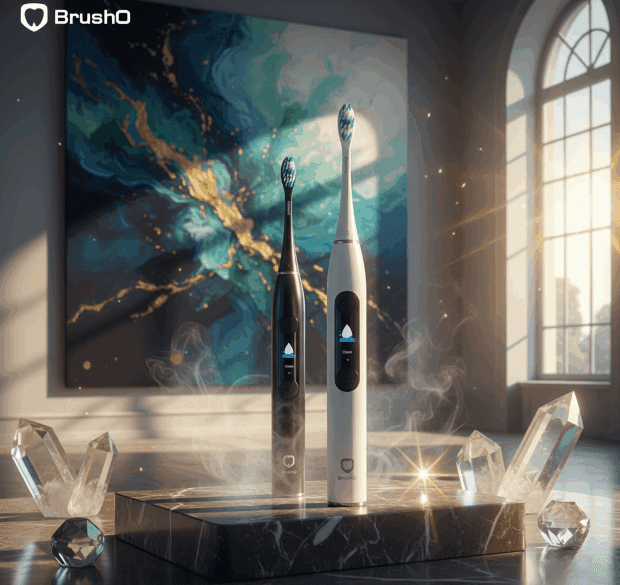
During intense training or long workouts, athletes tend to become dehydrated—reducing saliva flow, which is your mouth’s natural defense against bacteria and acids. A dry mouth increases the risk of:
• Tooth decay
• Bad breath
• Gum inflammation
💡 BrushO Insight: Our brushing report reminds users when their enamel may be more vulnerable and suggests hydration tips in the app.
Many athletes rely on sports drinks, energy gels, or protein bars for fuel—but these are often acidic or high in sugar, which:
• Erode enamel over time
• Feed harmful oral bacteria
• Lead to cavities if not cleaned promptly
Using BrushO’s 6-zone, 16-surface coverage system, athletes can ensure they remove residue from hard-to-reach areas even after consuming sticky or sugary supplements.
During strenuous activity, many athletes breathe through their mouths, which:
• Dries out the mouth even more
• Promotes plaque buildup
• Can irritate the gums
Wearing a mouthguard—especially if unclean—can trap bacteria and lead to oral infections.
💡 Pro Tip: Use BrushO’s smart brushing reminders before and after training to protect your enamel and reduce bacterial load.
Poor oral health can cause chronic low-grade inflammation, which may:
• Slow muscle recovery
• Disrupt sleep
• Weaken immune response
Studies have linked gum disease to increased systemic inflammation—something no athlete can afford.
BrushO’s AI brushing assistant ensures:
• Full-mouth coverage in every session
• Personalized brushing plans for athletes with dietary habits and training loads
• Real-time feedback on pressure, duration, and technique
Hydration isn’t just for muscles—saliva is critical to keep teeth protected.
Use antiseptic solutions and store guards properly to avoid bacterial buildup.
Balance energy needs with oral safety. Choose low-sugar, enamel-friendly snacks when possible.
Athletes should see a dentist every 6 months, or more often if they consume lots of supplements or wear gear in the mouth.
Neglecting oral health doesn’t just lead to cavities—it can undermine your athletic performance and recovery. With tools like BrushO, you can integrate smarter habits without changing your routine. Your body works hard. Your mouth should too.

Physiologic root resorption is the normal, programmed process by which the roots of primary teeth are progressively dissolved so that the crowns can exfoliate and make room for the permanent successors. It is a tightly regulated event that begins near the apex, advances toward the crown, and is c...

A periapical abscess is an acute collection of pus at the apex of a tooth root, the endpoint of an endodontic infection that has escaped the confines of the root canal and entered the surrounding bone. The pressure of the accumulating pus produces intense pain, and when the infection spreads thro...

The maxillary canine is the second most frequently impacted tooth after the third molar, and its proper eruption is essential for a functional occlusion, a stable arch, and an esthetic smile. When the canine fails to erupt, it may remain buried in the palate or the alveolus, and the management of...

A diastema is a gap between teeth, and the term is most commonly applied to the space between the upper central incisors, the midline diastema. It is a frequent esthetic complaint, because the anterior teeth dominate the smile, and it may be a normal feature of the developing dentition in childre...

Bruxism, the involuntary clenching and grinding of the teeth, affects a substantial proportion of adults and children and is a major cause of tooth wear, muscle pain, headache, and temporomandibular disorders. Conventional management relies on occlusal splints, behavioral modification, and muscle...

Torus mandibularis and torus palatinus are benign bony overgrowths that arise on the lingual surface of the mandible and on the midline of the hard...

Oral pigmented lesions are a diverse group of conditions that appear as areas of abnormal color in the oral mucosa, ranging from brown and black...

Gingivoplasty is a periodontal surgical procedure designed to reshape the gingiva and restore a natural, harmonious contour to the gum line. Unlike...

Fusion and gemination are developmental dental anomalies in which two teeth appear to be joined together, producing a single crown that is wider than...

An anterior open bite is a malocclusion in which the anterior teeth fail to meet in the vertical dimension when the posterior teeth are in occlusion,...

모두가 쉽게 구축할 수 있는 방식으로 구강 건강 데이터 네트워크를 저렴한 비용으로 빠르게 구축하세요.


Address: RM 1427, 14/F RADIO CITY 505, HENNESSY RD CAUSEWAY BAY, HONG KONG
Code: 000000
Phone: +852-53758652
Email: customerservice@brusho.com